Noise and water flow
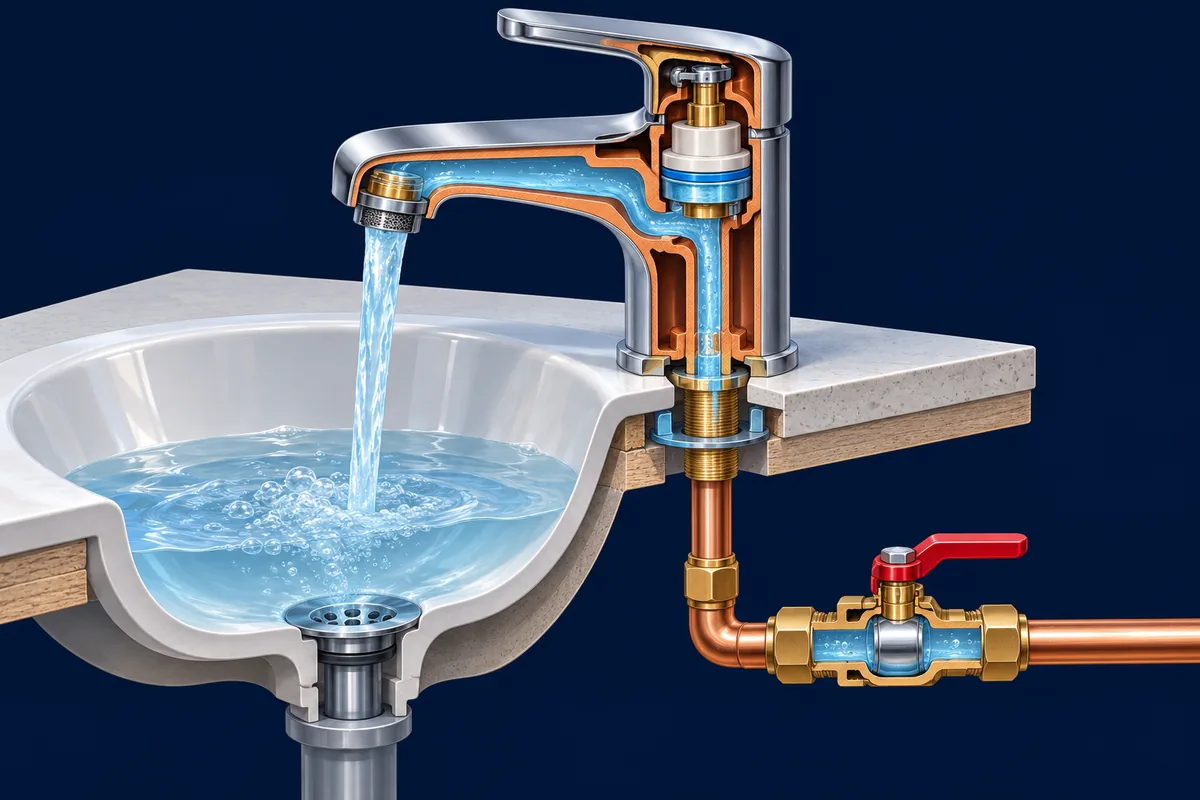
Count the affected outlets before anything else. One tap points to that tap or its branch. One floor or one side of the system points to a shared pipe, valve or cistern. Everything at once points to the incoming supply.
| What is affected | First thing to look at |
|---|---|
| One outlet | Its aerator, internal parts and isolating valve |
| Cold outlets upstairs | No cold water upstairs |
| You need numbers before deciding | How to test water pressure and flow |
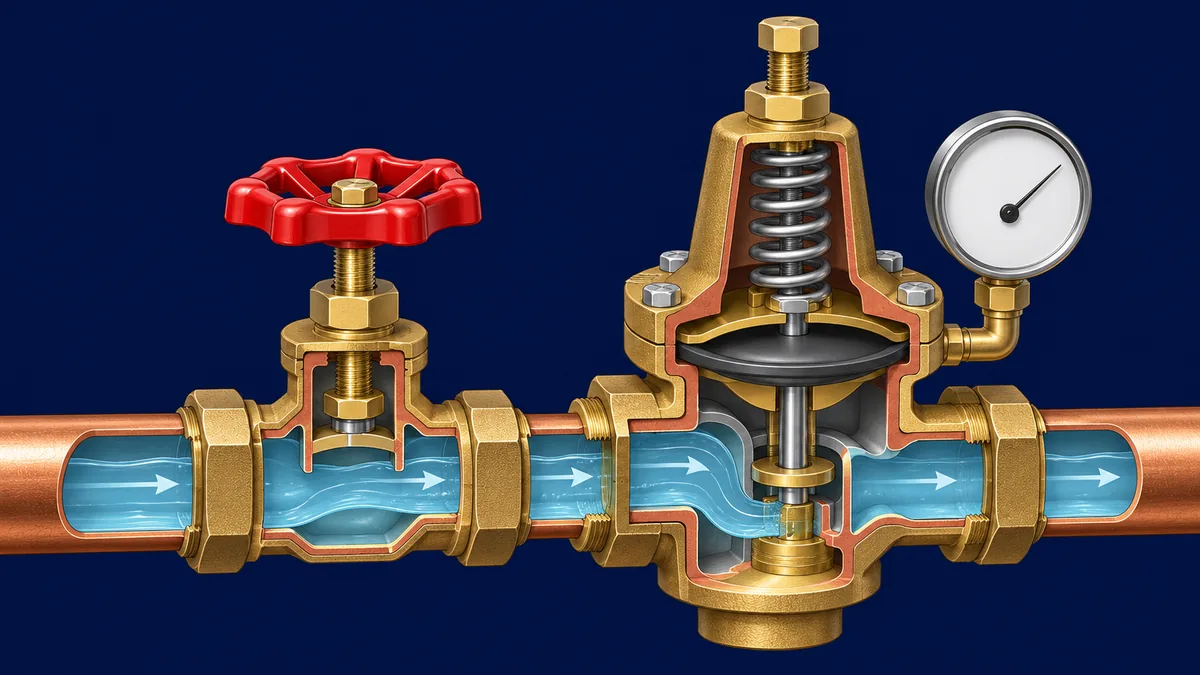
| Pressure is measurably high | Pressure reducing valve fitting |
| Every outlet, suddenly | Your water company and your inside stop valve |
| Flow falls when a second tap opens | Two taps at once |
| Spurting and air at the spout | Spluttering taps |
| Weak at certain hours | Changes overnight |
| Neighbours draw from the same pipe | Shared supply |
| A pump is being considered | Booster pumps and remedies |
| Flow needs limiting | Flow restrictors and regulators |
Thames Water's flow guidance suggests starting at the cold kitchen tap. If water arrives there but nowhere else, the fault is likely to be in the home's own plumbing. It also suggests checking that the inside stop valve is fully open and asking neighbours whether they are affected.
Two kinds of cold supply
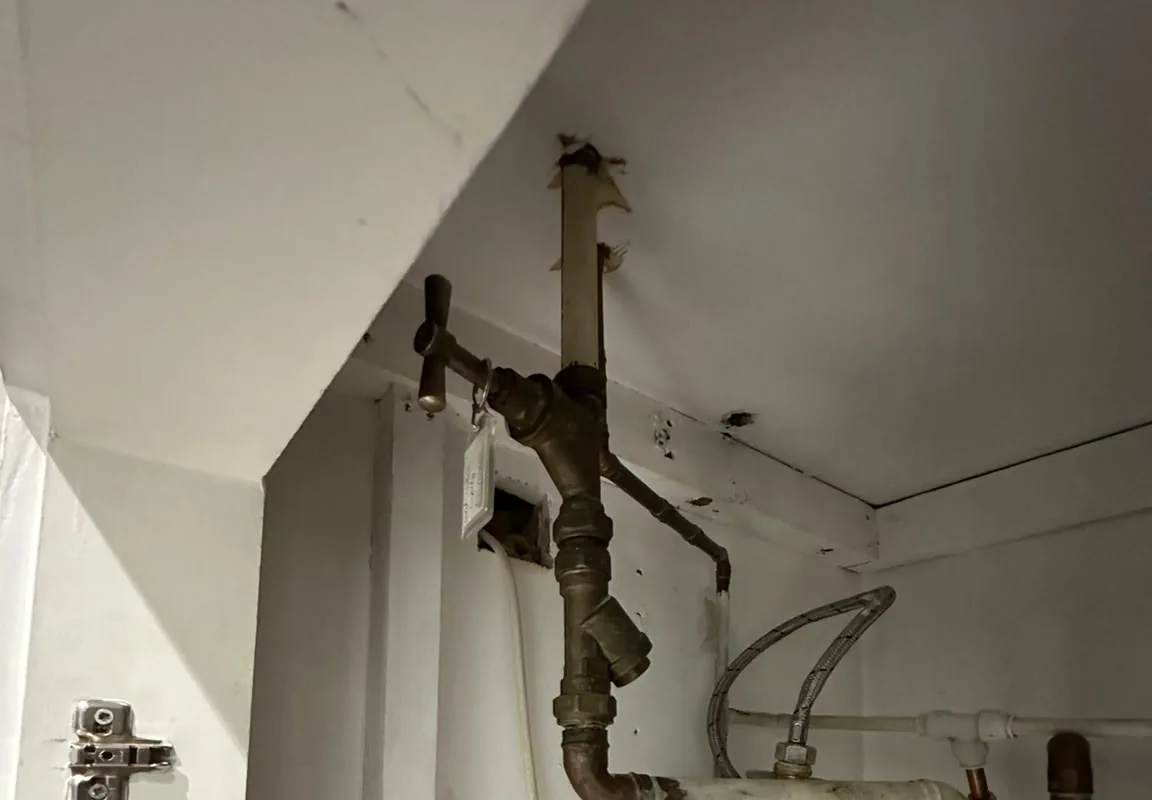
Some taps are fed straight from the incoming pipe. Others are fed by gravity from a storage cistern, usually in the loft. The two behave differently and fail differently, so it helps to know which you have. A loft tank with pipes leaving near its base is the giveaway for a gravity system.
Water escaping anywhere is not a flow question. Turn off the supply and get urgent help.
To describe a fault, use the contact form and say which outlets work and which do not.