Waste pipes
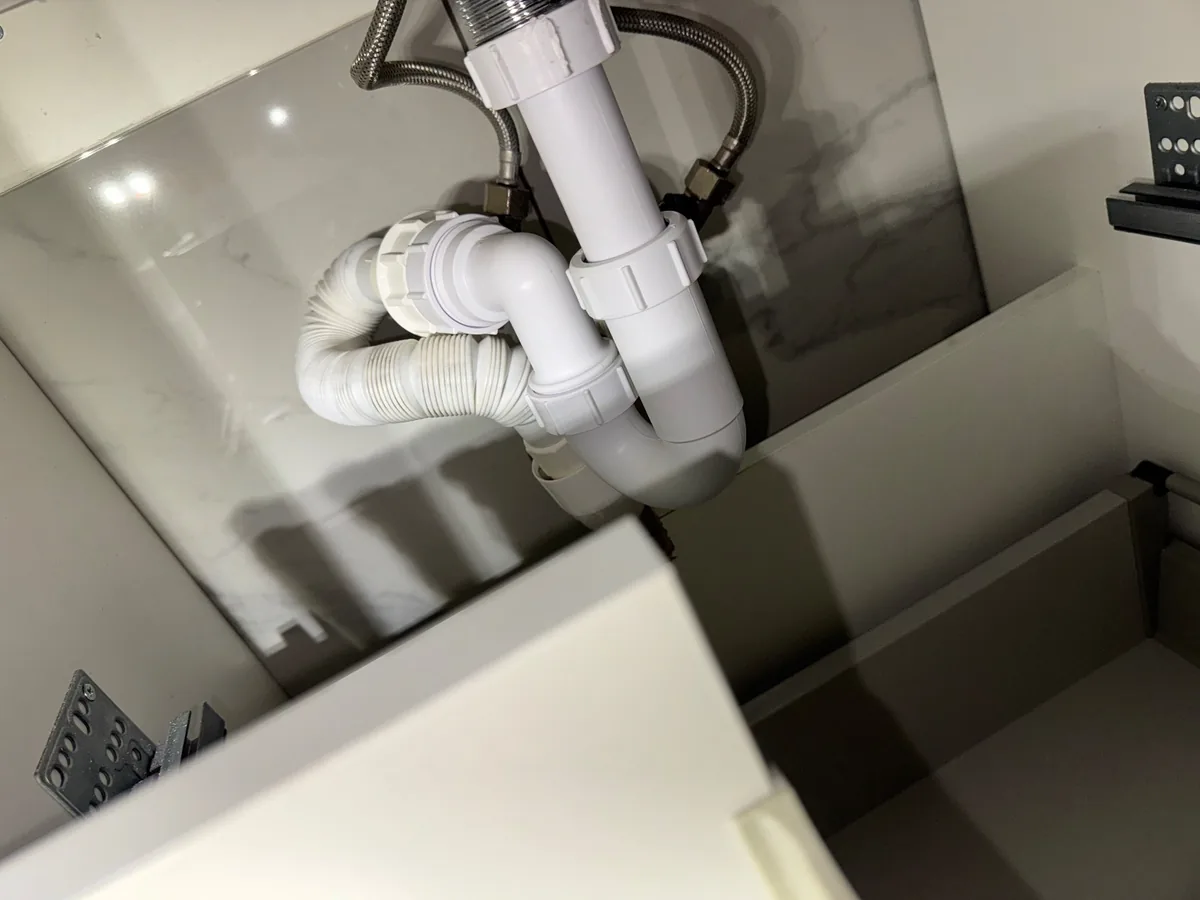
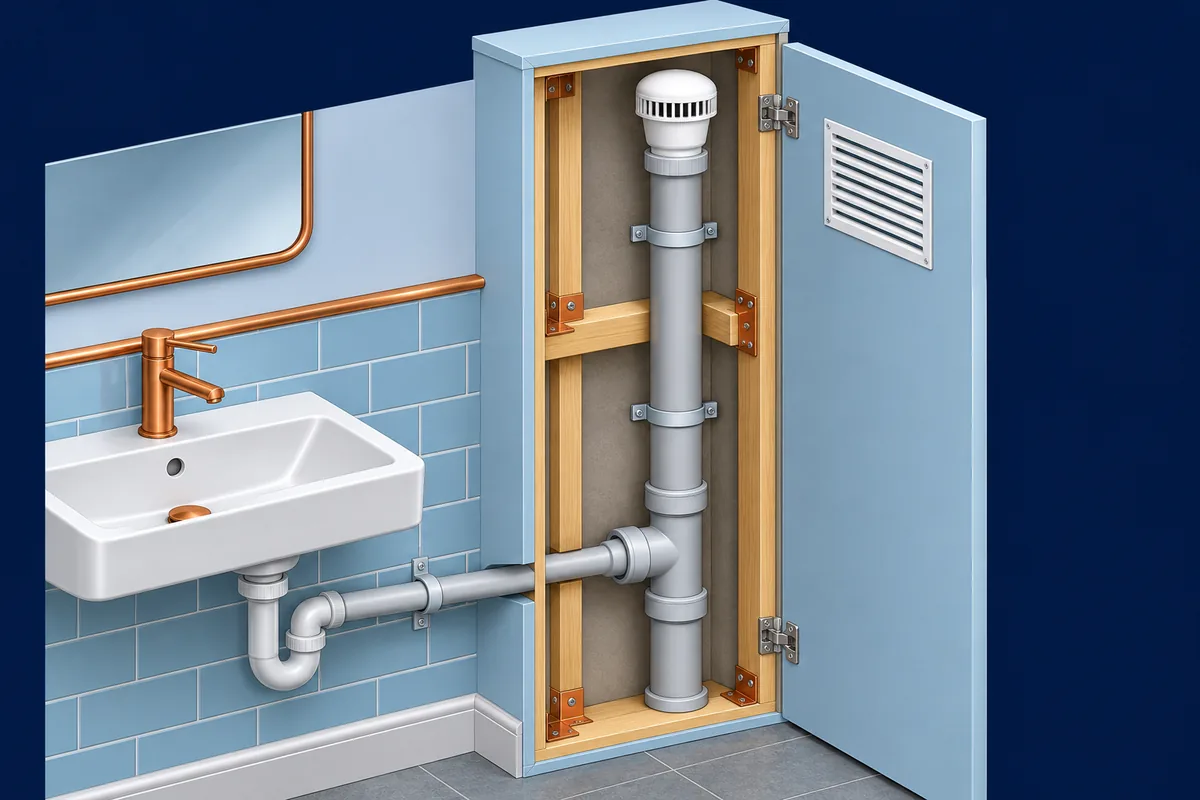
An air admittance valve lets air into drainage pipework when flow creates suction, then closes to keep drain air in. It can ventilate a long branch or finish a stack inside the building. It has to be chosen for the pipe and flow, fitted upright at a suitable height, and left where it gets air and can be reached.
When it is needed
- A new or lengthened branch exceeds the unventilated limits
- A stack is to stop inside the building without passing through the roof
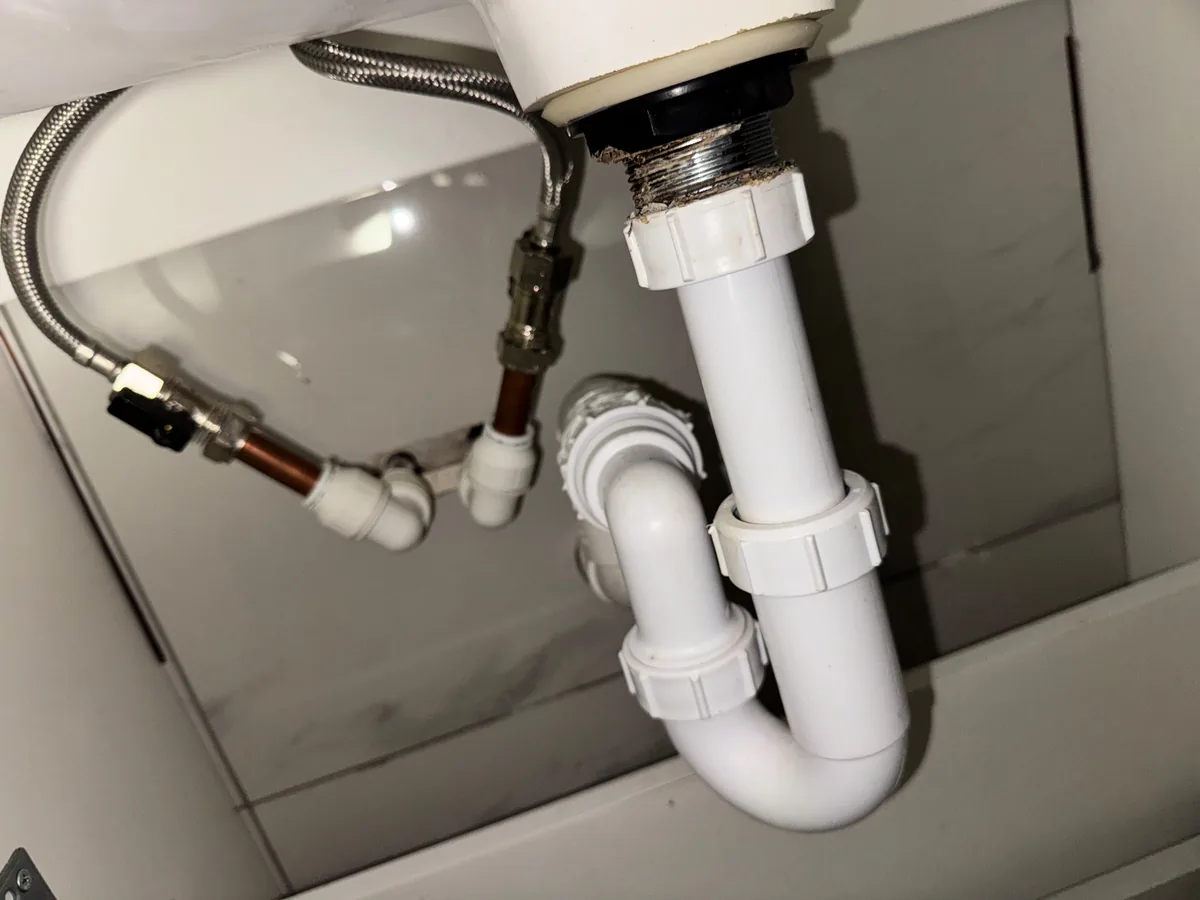
- A trap is being siphoned and diagnosis points to lack of air
- An existing valve has stuck, split or started to smell
Rules that shape the job
Approved Document H says ventilated discharge stacks may end inside a building when fitted with valves complying with BS EN 12380. It adds that:
- the valve should not reduce the ventilation the below-ground drains need from open stacks
- it should sit in an area with adequate ventilation, be accessible for maintenance and be removable to clear blockages
- valves should not be used outside buildings or in dusty atmospheres
- where there is no open vent on the system or connected drains, another way of relieving positive pressure should be considered
McAlpine's guidance for its valves also recommends installing them inside the building, requires them to be vertical, and asks for adequate ventilation and access. The instructions for the chosen model set the height above the highest connection.
What gets looked at
- The symptom and whether a blockage or bad fall explains it instead
- Whether the building's drains have at least one open vent
- Pipe diameter and which appliances are connected
- Highest point at which water enters, which affects valve height
- An indoor location with air supply, access and reasonable protection from freezing
Options
| Option | Use | Trade-off |
|---|---|---|
| Small valve on a branch or trap | One appliance or short group | Needs a reachable spot above the connection |
| Large valve on a stack top | Internal termination | Loft or duct needs ventilation and access |
| Open vent to outside | Where positive pressure also needs relief | Roof or wall penetration and siting rules |
| Re-pipe within unventilated limits | Run can be shortened or enlarged | No valve to maintain, but more pipework |
An open ventilating pipe should finish at least 900 mm above any opening into the building within 3 m, according to the same document.
Inside boxing
A sealed duct starves the valve of air and hides it. Fit a ventilated, removable panel, as covered in boxing in pipes.
What changes the price
- Diameter and valve class
- Whether pipework must be extended upward to reach the right height
- Access in lofts and ducts, and adding a panel or grille
- Working on cast iron or other older material
- Extra investigation if the real fault is in the drain
Ask for a quote
Email photos of the pipe or stack, its diameter, the fixtures connected, where an open vent exists if you know, and what you hear or smell. The contact form takes text only, so describe the job there and email the pictures.
Related reading
Background on venting is in how these valves work.
At a glance
- Service
- Air admittance valve installation
- Area
- All of Greater London (service-area business, no showroom)
- Quote
- Free. Get the price in writing before work starts
- Phone
- 020 3961 8088
Questions
Can an air admittance valve go in a loft or behind boxing?
Yes, if it stays upright, has adequate ventilation, can be reached and removed, and sits at the height its maker requires. A sealed box is unsuitable. Check the maker's conditions for unheated spaces.
Does fitting one need building control?
It depends on the work. Part H covers sanitary pipework, so a new branch, bathroom or altered stack may fall within it. Ask your building control body before closing anything up.
Can it go outside?
Approved Document H says valves should not be used outside buildings. Some manufacturers certify particular models for it, so agree that departure with building control first.