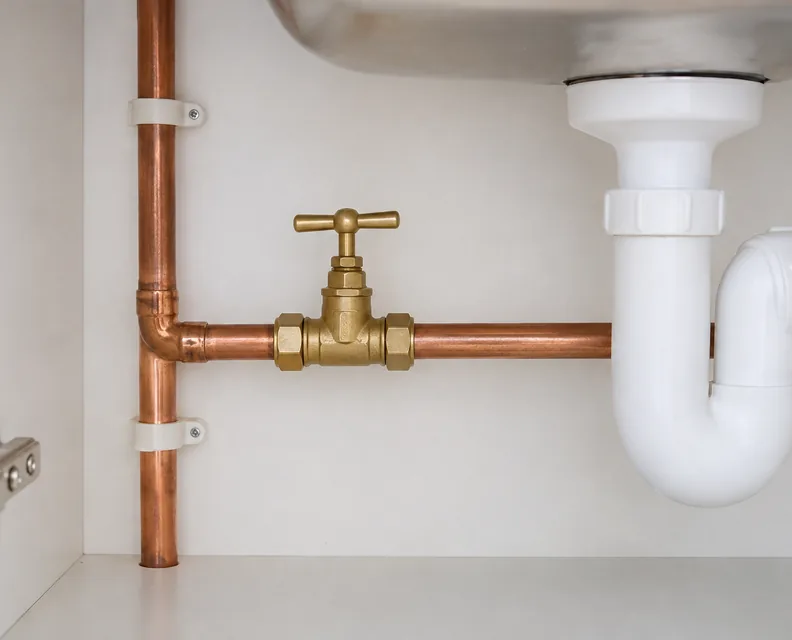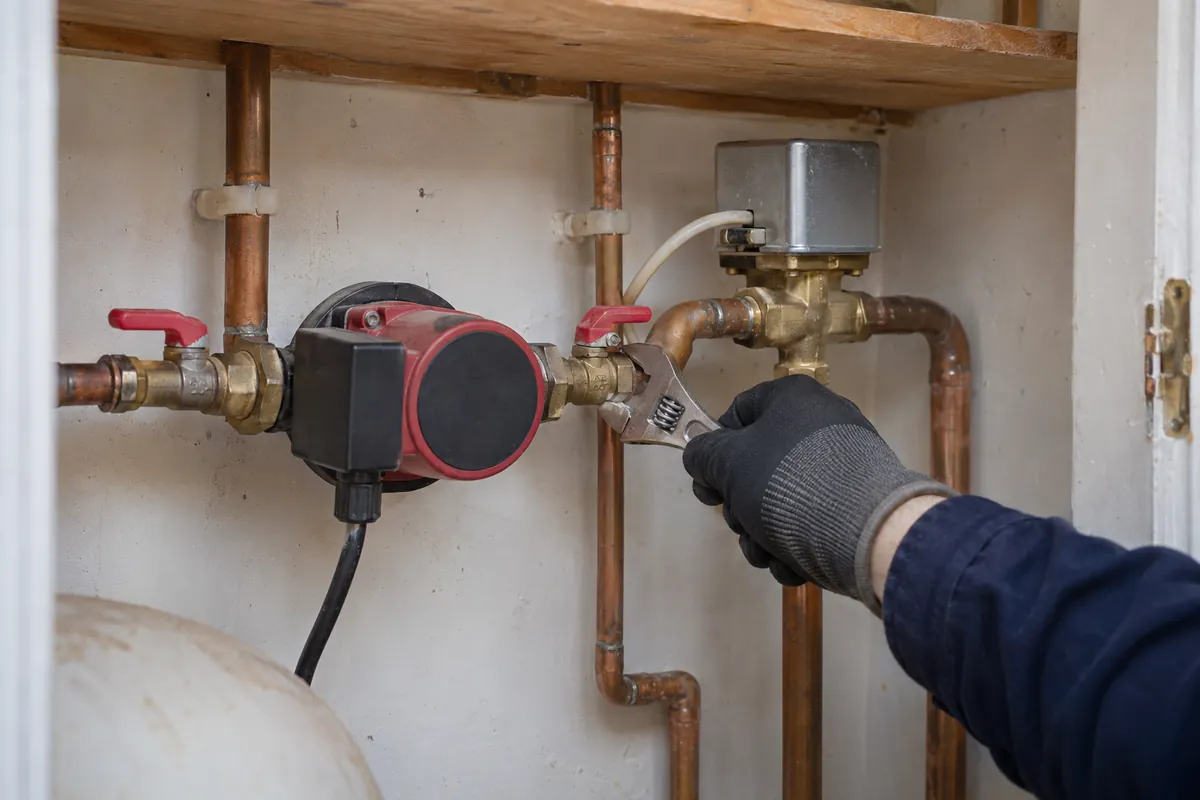
If water is escaping, shut the stop tap first. Proper Plumbing London repairs burst and leaking pipes across Greater London at £110 an hour on weekdays; 24/7 emergency visits add a £60 call-out.
For a pipe that is leaking, the order is: stop the water, protect electrics, find the cause, cut back to sound pipe and rejoin it with fittings made for that material. The repair is proved with the line under pressure before anything is covered.
First actions
- Close the inside stop valve. Thames Water explains how to find it.
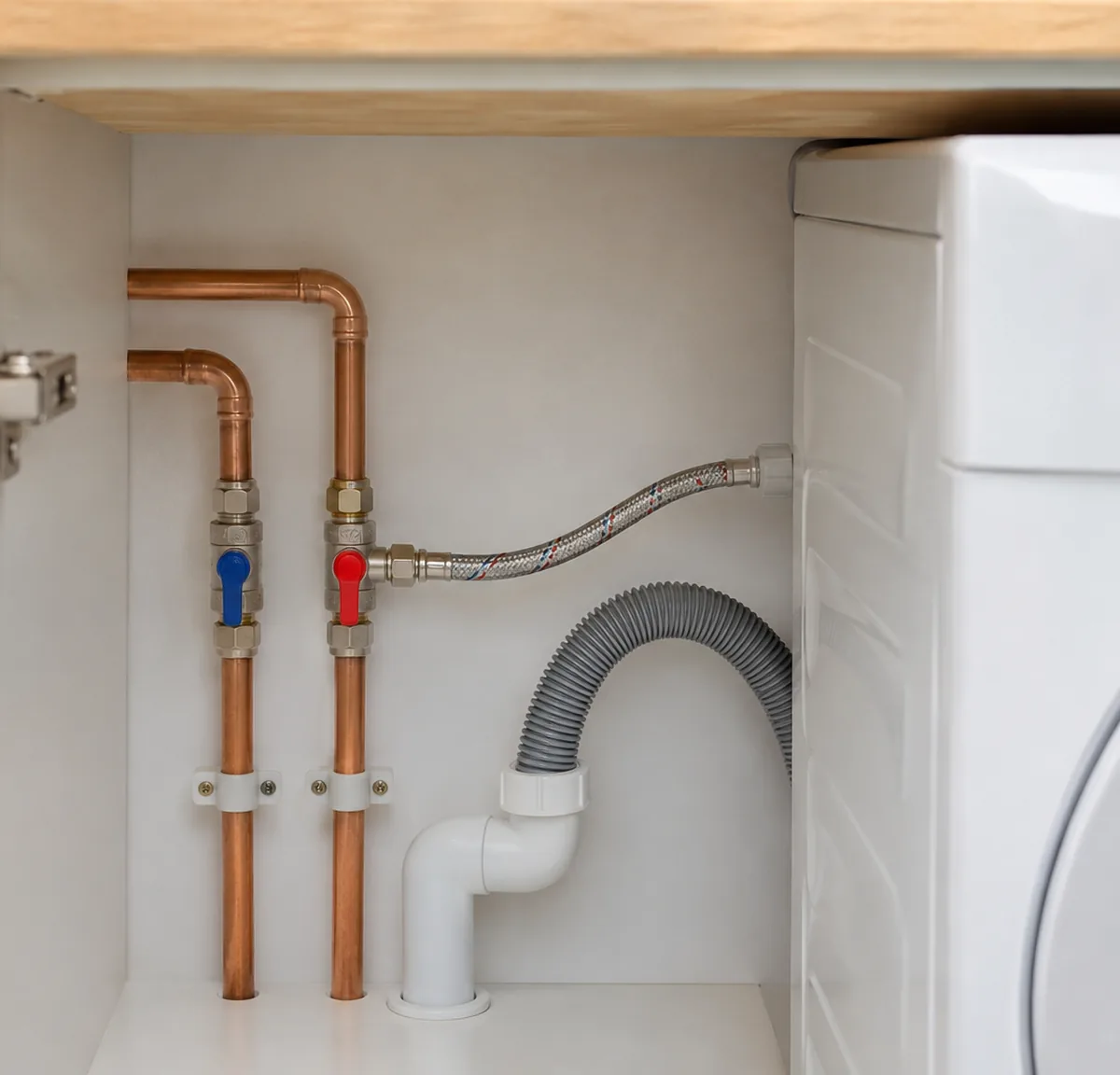
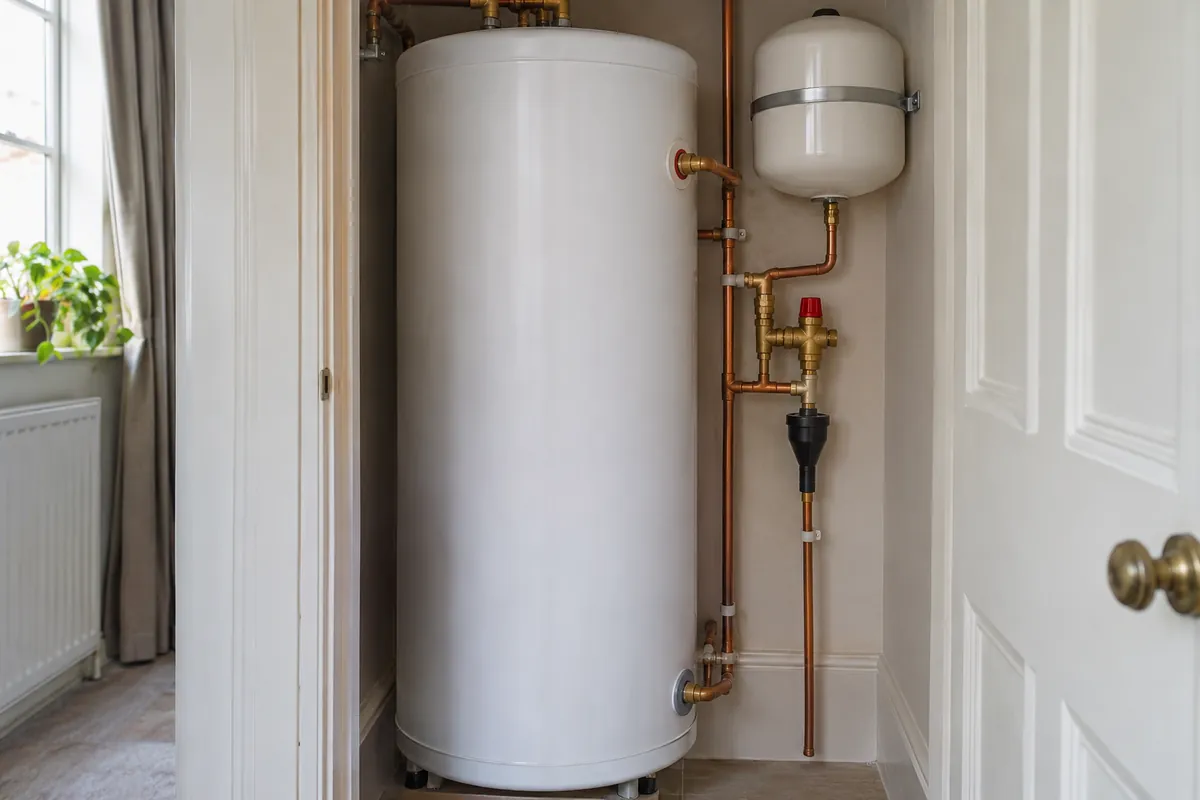
- For a tank-fed or hot pipe, close the outlet valve from the tank if there is one, and open taps to drain the section.
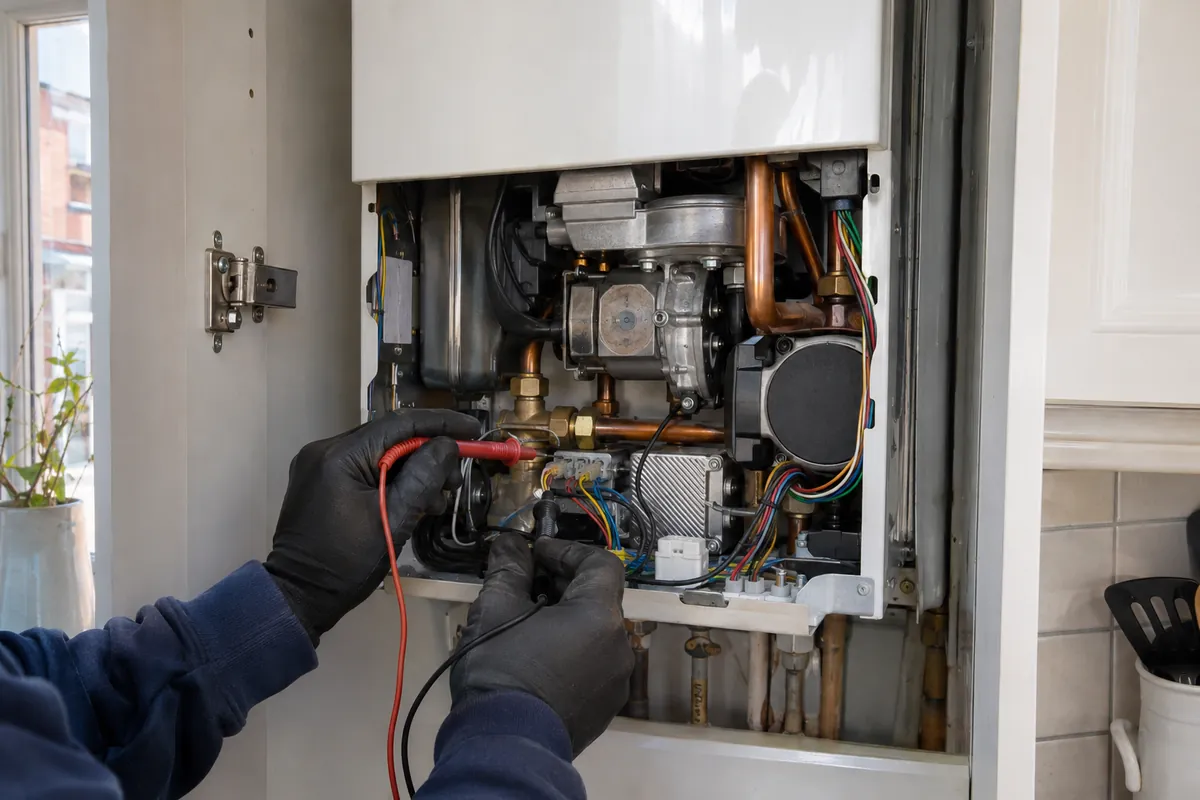
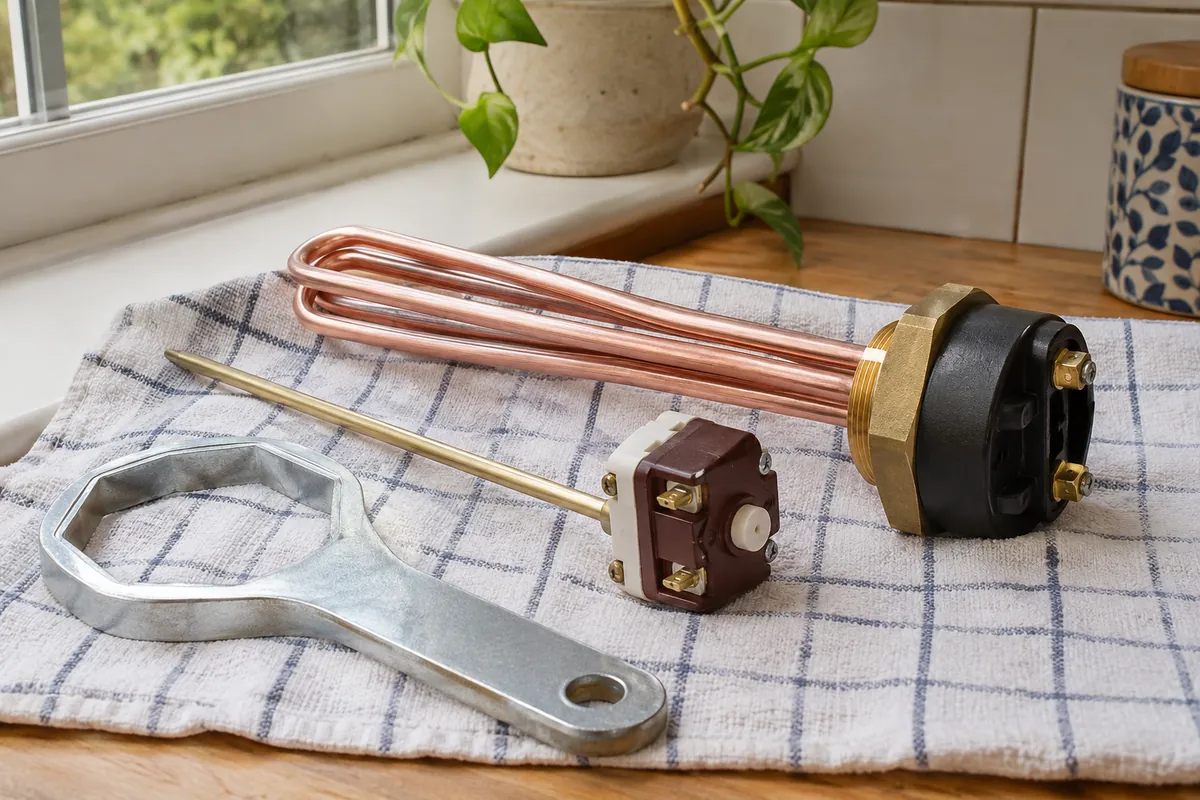
- Turn off heating or immersion heaters if their water supply is affected.
- Keep away from wet sockets, fittings and ceilings that are bulging. Have electrics checked by an electrician.
Why pipes fail
| Evidence | Probable cause |
|---|---|
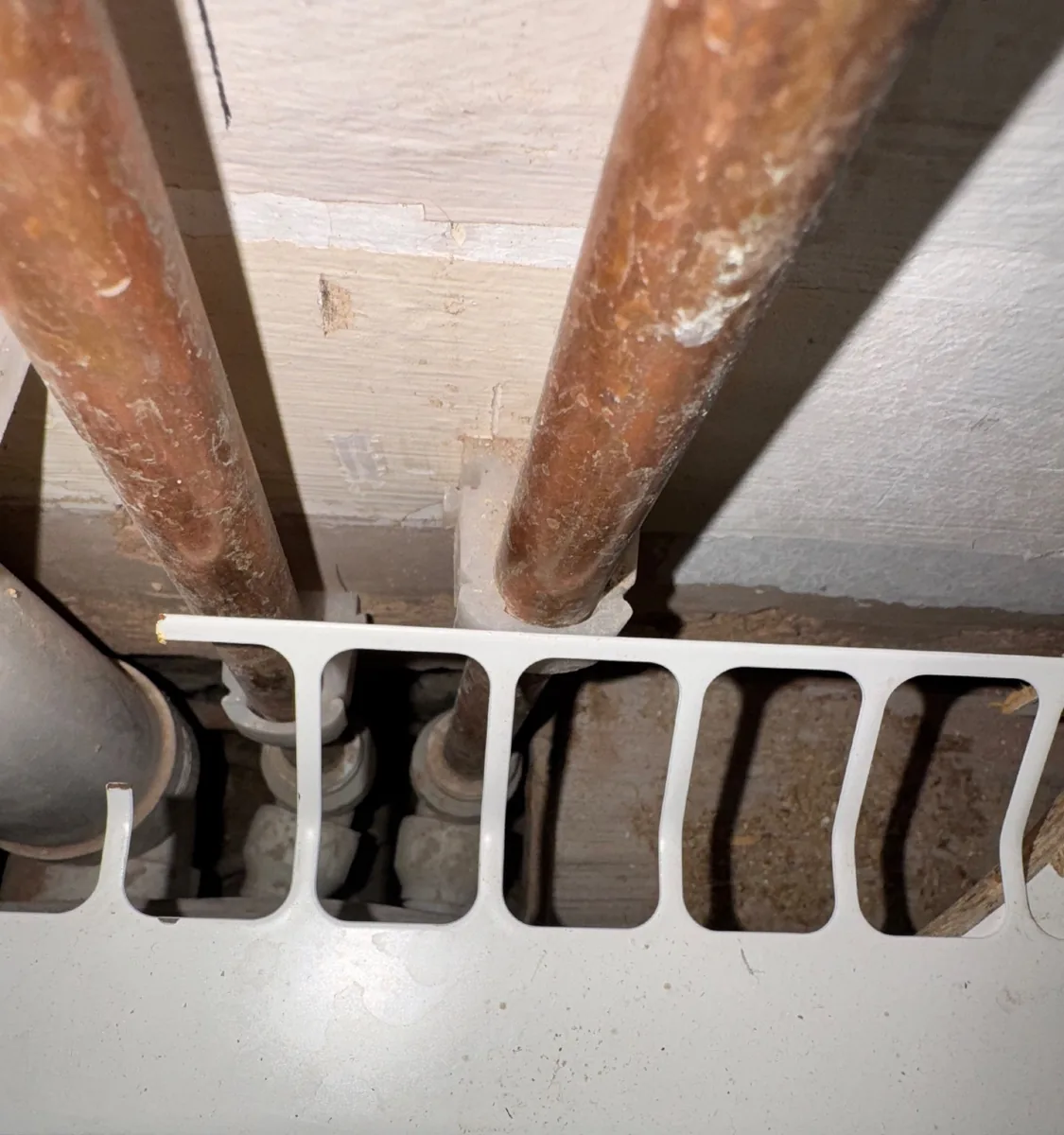
| Split along the length, often in a cold space | Freezing |
| Green crust or pinhole | Corrosion |
| Joint pulled apart | Poor insertion, movement or missing support |
| Flattened or scored patch | Rubbing, impact or kinking |
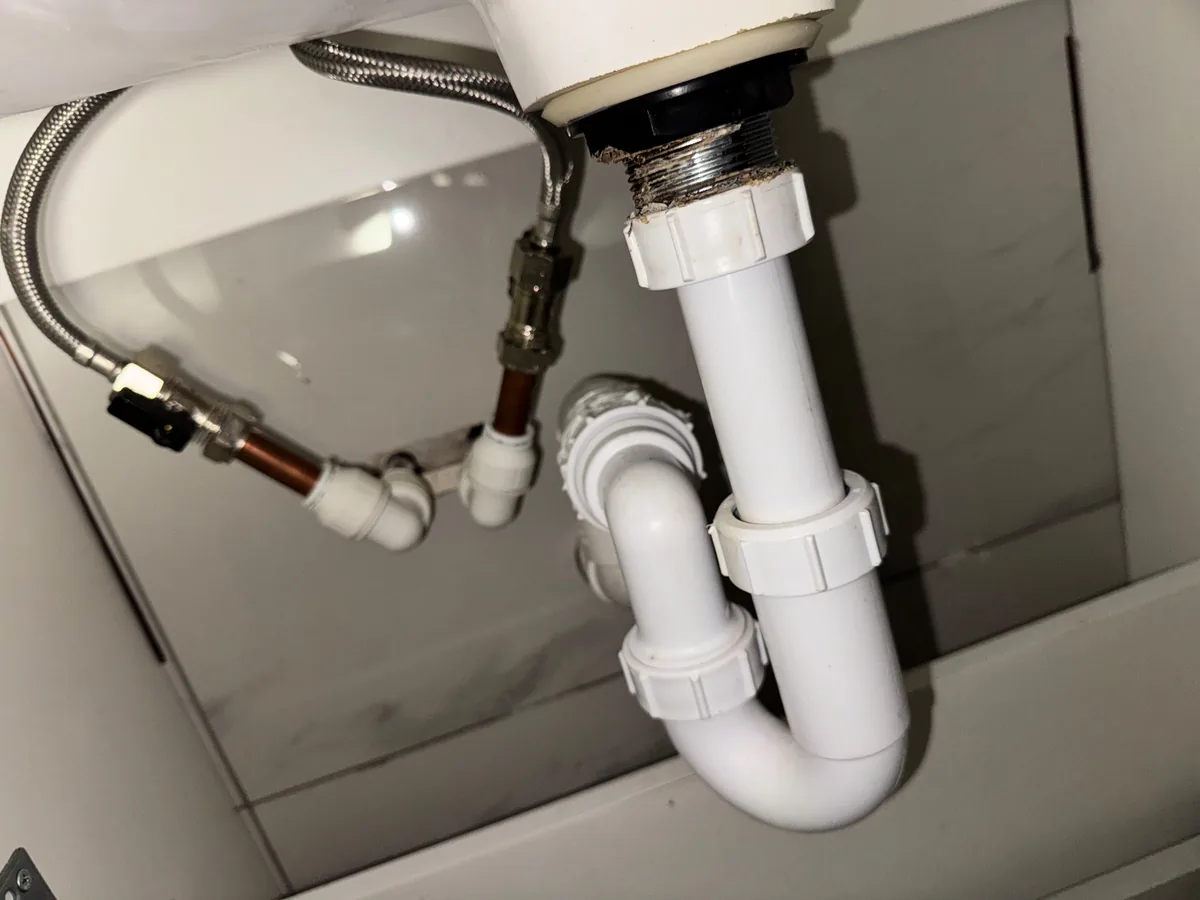
| Weep at a threaded or compression joint | Washer, olive or alignment fault |
A frozen pipe may not leak until it thaws, so check the whole exposed run, not just the first split found.
Choosing the repair
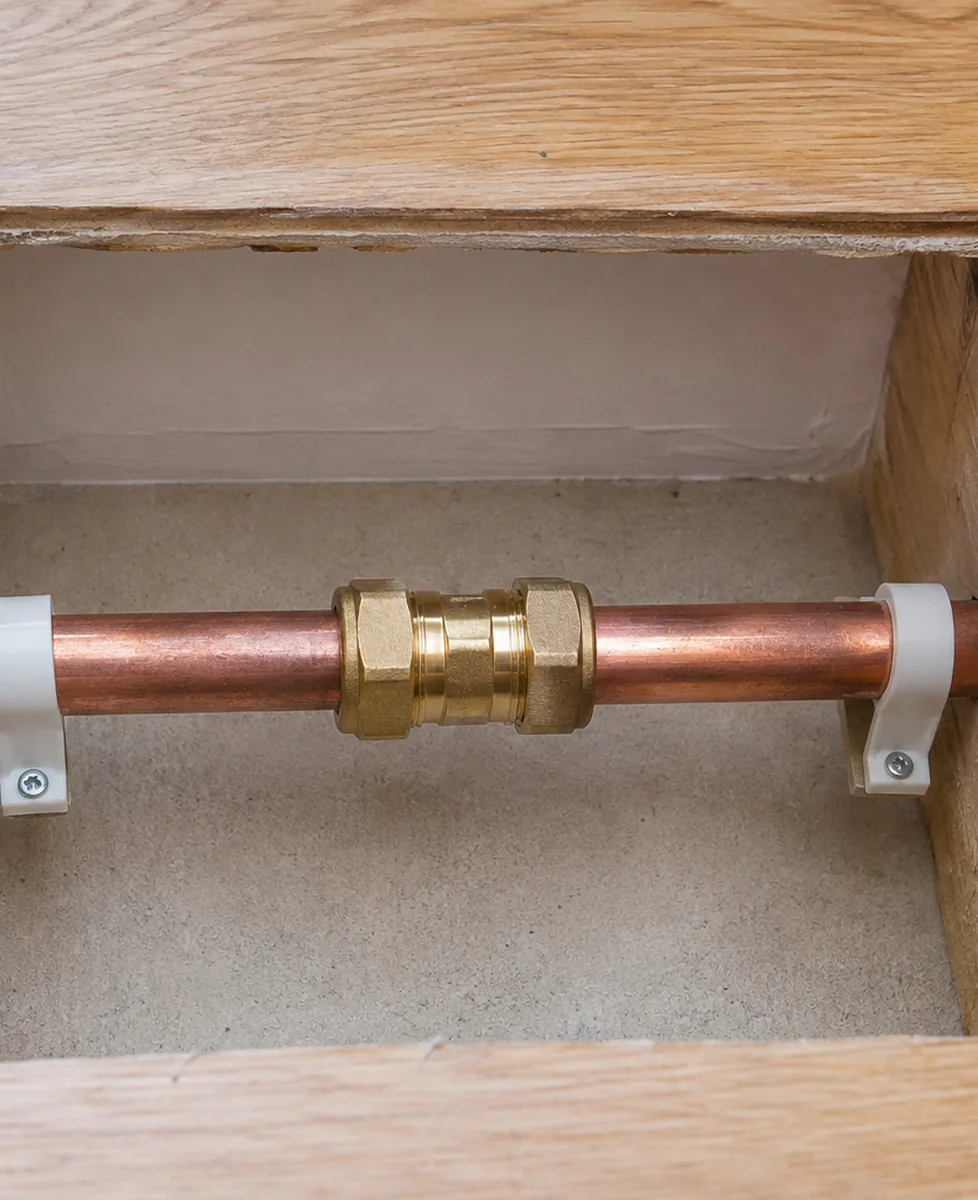
Copper can take compression, push-fit, press or soldered fittings. Soldering needs a dry pipe and safe heat clearance. Plastic needs the matching size, a square cut and an insert where the fitting maker requires one. Lead should not be soldered to or patched as a long-term answer: it calls for an approved transition fitting, and replacement is worth discussing. Thames Water gives advice on lead pipes. Steel may need cutting back well beyond visible rust to find a surface that will seal.
Temporary clamps and tapes buy time on a split. They should be recorded and replaced.
Electrical bonding can use metal pipework. Putting a plastic section into a metal run may interrupt it, so an electrician should confirm continuity; see earth bonding.
The work
The section is drained, the damaged length removed and both ends deburred and checked for roundness. Replacement pipe is clipped so the joints carry no weight, and sleeved or insulated where it passes through structure or an unheated space.
Testing
- Open the supply a little and check each joint as the pipe fills.
- Open it fully and clear air at the outlets.
- Wipe joints dry and recheck after several minutes and again later.
- Run hot water through any hot section so expansion can reveal a weak joint.
- Confirm the meter is still with everything closed.
Preventing a repeat
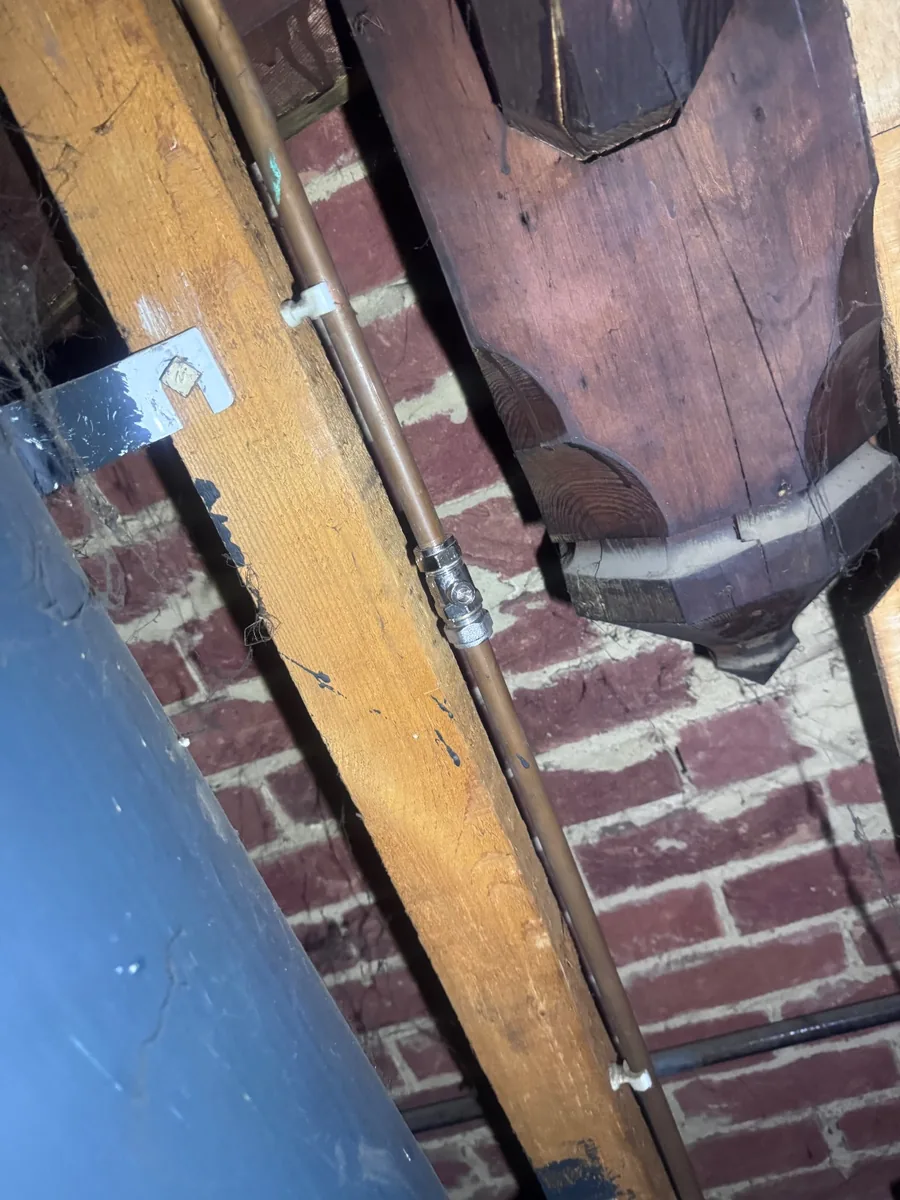
Look at the neighbouring pipe before closing the job. Unlagged lengths in a loft or outbuilding need insulation, long unsupported runs need clips, and pipes passing through masonry need sleeves so that movement does not wear them. Where several pinholes have appeared on one run, renewing that length is usually more sensible than repairing each point. Make sure the stop valve used during the incident still opens and closes properly afterwards.
Billing for this work
| Time | Rate |
|---|---|
| Weekday, 1 hour minimum | £110 per hour |
| Evening or weekend | from £140 per hour |
24/7 emergency visits: £110 an hour plus a £60 call-out on weekdays in the daytime, from £140 an hour plus £60 in the evening or at weekends. Booked jobs carry no call-out fee. Materials are extra and agreed first. VAT is not added. Quotation free. Rates verified 28 November 2026: billing detail.
Send these details
Say where the water appears, whether it has stopped, what the pipe looks like and whether access is open. Use the contact form.
Related reading
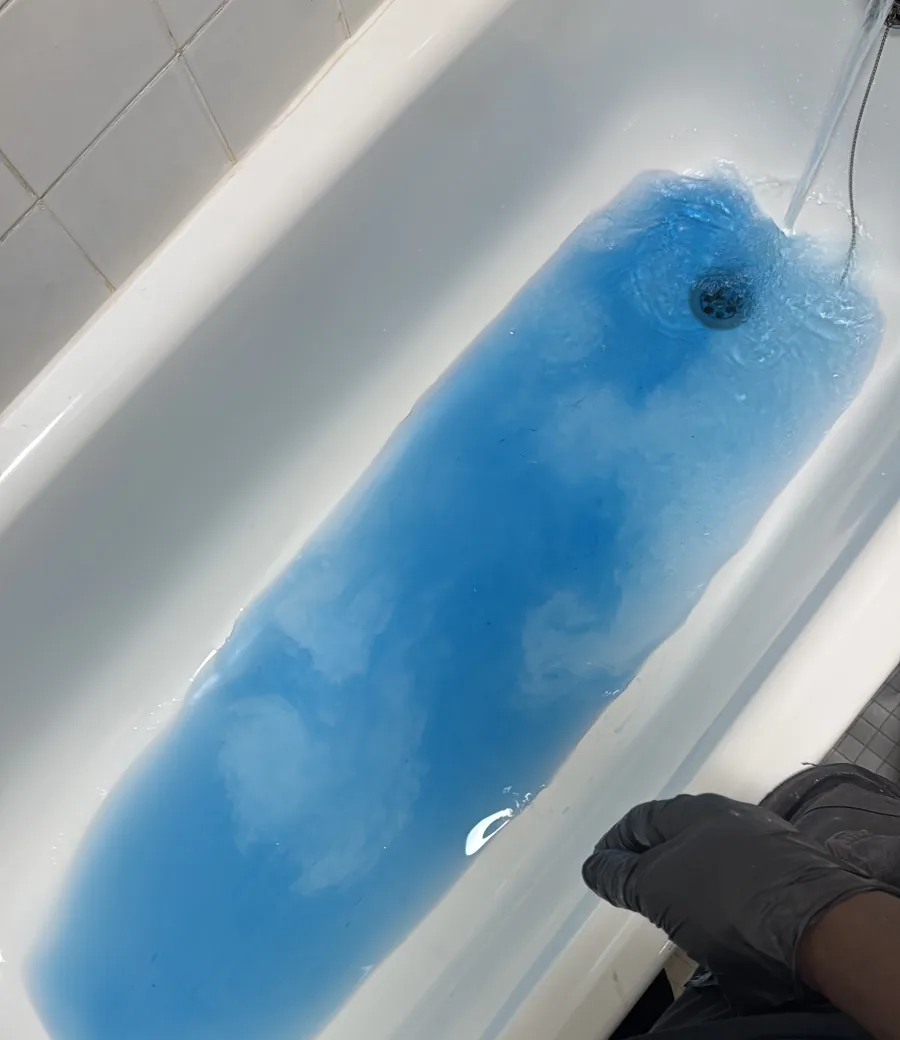
Protecting a repaired run involves sleeving through walls, room for expansion, corrosion between mixed metals, condensation that looks like a leak, corroded galvanised pipe and blue or green water. Where the weak point is an old steel run, see replacing galvanised water pipe.
At a glance
- Service
- Burst and leaking pipes
- Area
- All of Greater London (service-area business, no showroom)
- Quote
- Free. Get the price in writing before work starts
- Phone
- 020 3961 8088
Questions
Is a temporary clamp enough?
A clamp or wrap can hold back water for a short time, but the cause of the failure still needs identifying and the damaged section a lasting repair.
Pipe leaking: which step comes first?
Close the inside stop valve and keep away from wet sockets, light fittings and bulging ceilings. For a tank-fed or hot pipe, close the outlet valve from the tank if there is one.
Can new plastic pipe be joined into a copper run?
It can with suitable fittings, but metal pipework may form part of electrical bonding, so an electrician should confirm continuity.