No hot water from an immersion heater, or a weep at the element? Proper Plumbing London covers testing and replacement in Greater London at £110 an hour on weekdays, one hour minimum, with a free quote.
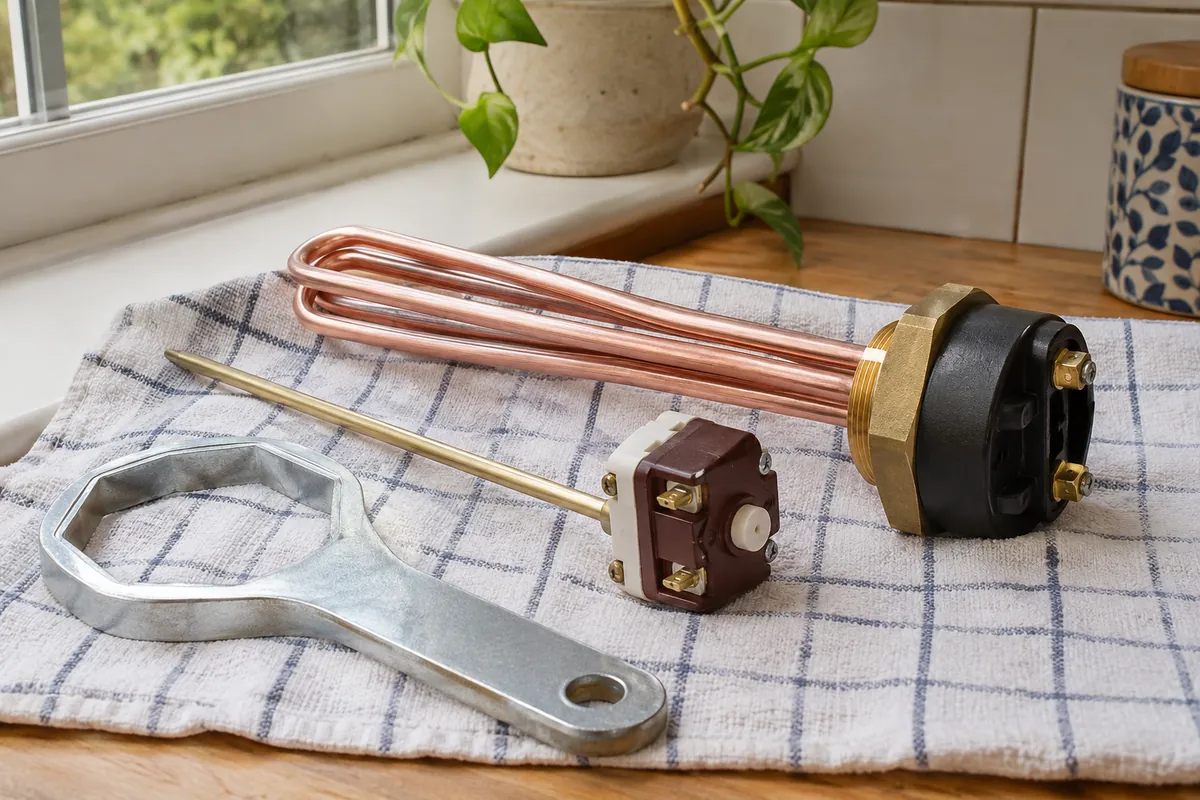
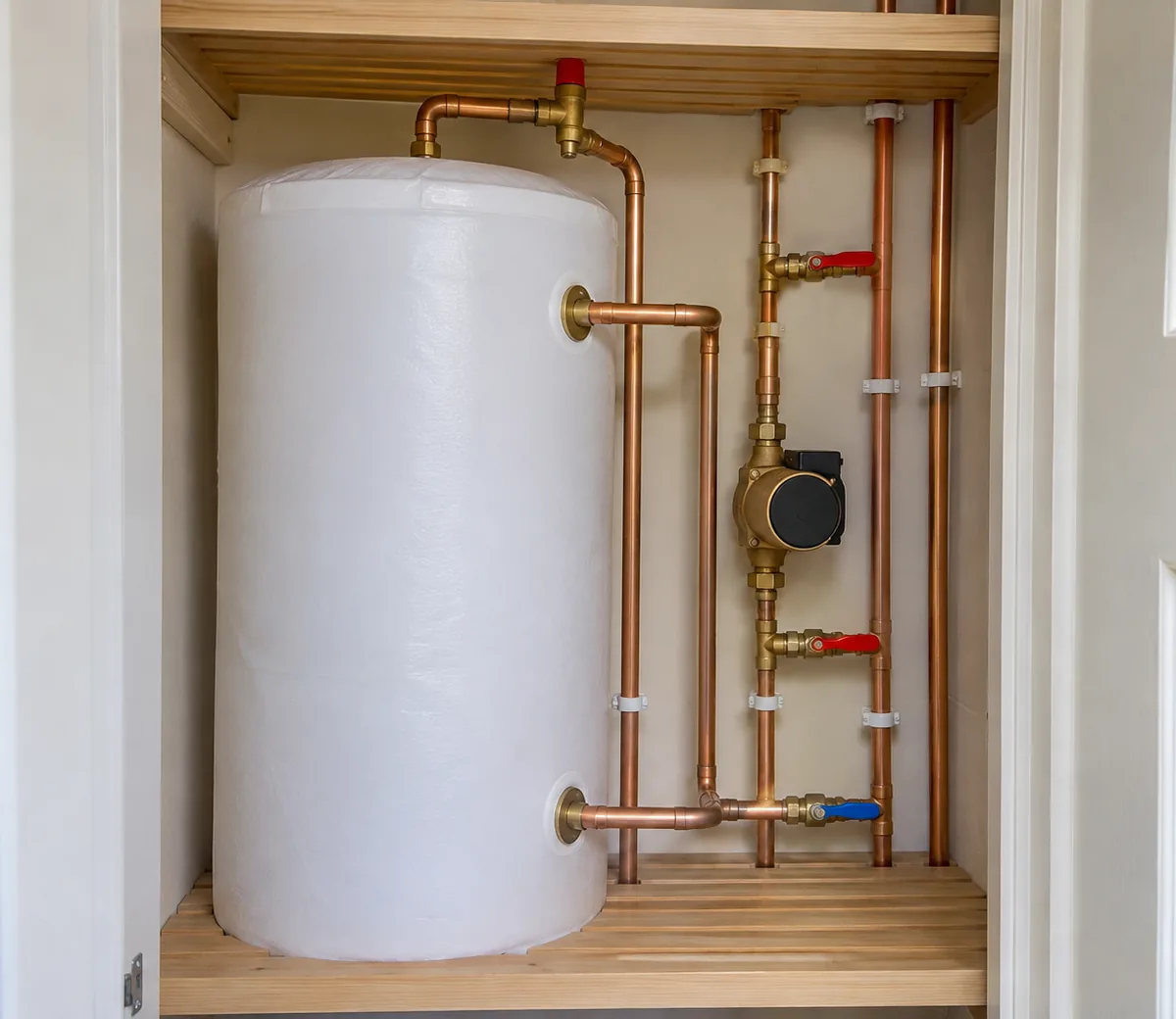
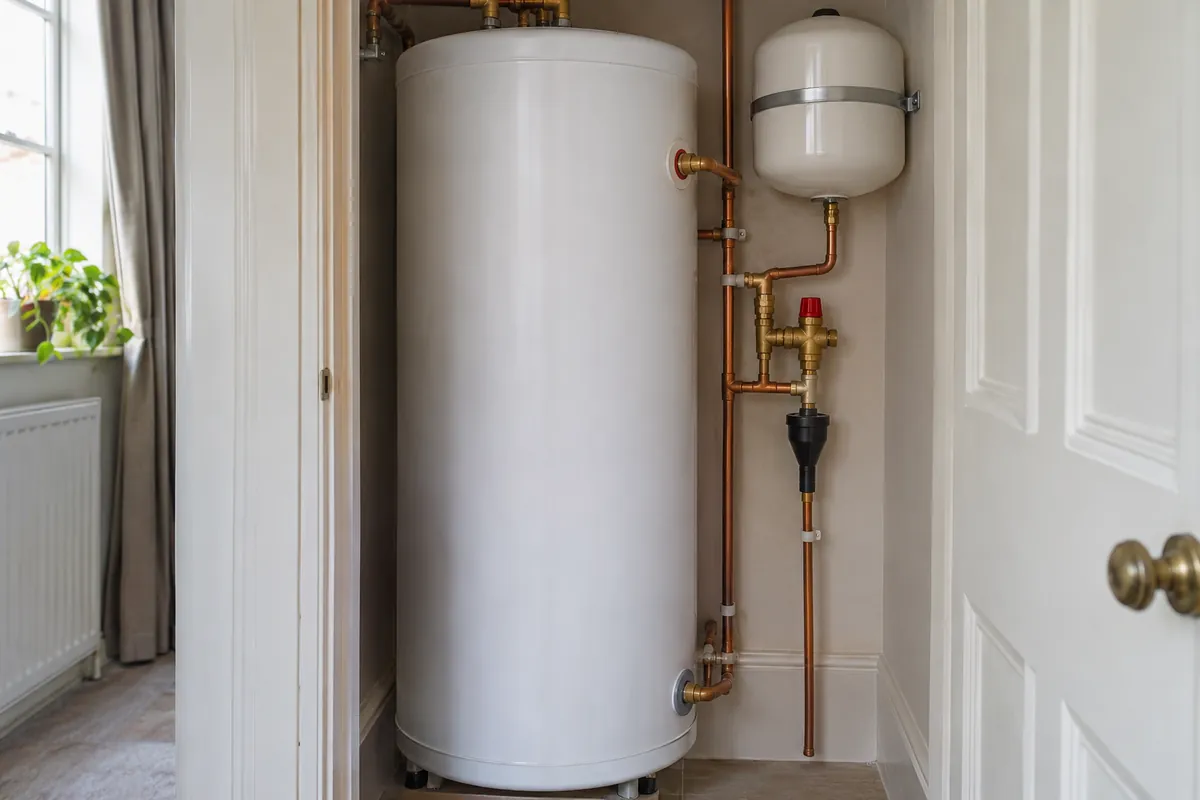
The electric element in a hot water cylinder screws into it and is controlled by a thermostat with a safety cut-out. It may be the only heat source, a boost or a backup, and some cylinders have two.
Fault patterns
| Symptom | What is tested |
|---|---|
| Nothing heats | Supply, fused switch, flex, cut-out, element continuity |
| Trips the breaker or residual current device | Insulation breakdown or water in the terminal cover |
| Lukewarm or small quantity | Which element is on, length, thermostat setting, scale |
| Very hot water or steam | Failed thermostat; isolate at once |
| Drip at the head | Washer, thread, element pocket or the cylinder boss |
| Hissing or knocking | Scale built up on the element |
Terminal covers and wiring are not safe to open while connected. Electrical testing and replacement belong with a competent electrician. If water is at the cover or there is a burning smell, switch off at the consumer unit and leave it off.
Choosing a replacement
Length, thread, material and thermostat type are matched to the cylinder. A top-entry short element heats only the upper layer; a longer or lower element heats more of the store. Corrosion-resistant sheaths suit some water and cylinder combinations better than basic copper. Approved Document G covers the energy cut-out on electrically heated storage, which should not reset itself.
Changing an element
- Isolate the electricity and prove it dead.
- Shut the cold feed, relieve pressure and draw water down below the boss.
- Loosen the old element with a correctly fitted spanner while supporting the cylinder. A thin or corroded copper shell can tear.
- Clean the seating, fit the new washer and tighten without distorting the wall.
- Refill fully and vent before power, since a dry element burns out quickly.
- Check the seal cold and hot, then confirm the thermostat switches off.
On a pressurised cylinder, draining and refilling affects the safety controls, which restricts the task to G3 qualified engineers. See unvented cylinders.
Timers and running pattern
A heater left on around the clock is not always faulty equipment but may be a control choice that wastes heat from a poorly insulated store. Check the timer, any boost switch and off-peak wiring against how hot water is actually used. Stored water also needs to reach a temperature that limits bacterial growth, and the HSE explains legionella control.
Billing for this work
| Time | Rate |
|---|---|
| Weekday, 1 hour minimum | £110 per hour |
| Evening or weekend | from £140 per hour |
24/7 emergency visits: £110 an hour plus a £60 call-out on weekdays in the daytime, from £140 an hour plus £60 in the evening or at weekends. Booked jobs carry no call-out fee. Materials are extra and agreed first. VAT is not added. Quotation free. Rates verified 28 November 2026: billing detail.
What to send
Say on the contact form whether other heating of the water works, whether anything trips and what the cylinder label states. A picture of the head cover from outside, the switch or timer and any staining helps. Email photographs to info@properplumbinglondon.co.uk after sending.
Related reading
See also hot water cylinder types, hard water in pipes and draining the cold water system.
At a glance
- Service
- Immersion heaters
- Area
- All of Greater London (service-area business, no showroom)
- Quote
- Free. Get the price in writing before work starts
- Phone
- 020 3961 8088
Questions
Can a tripped thermostat cut-out simply be reset?
Not as a first step. A cut-out operates because water overheated or the thermostat failed, so the thermostat and wiring are tested before the heater is used again.
Why does an immersion heater trip the electrics?
Insulation breakdown or water in the terminal cover are the things to test for. Leave it switched off until a competent electrician has checked it.
Why must the cylinder be full before the power goes on?
A dry element burns out quickly, so the cylinder is refilled and vented first.