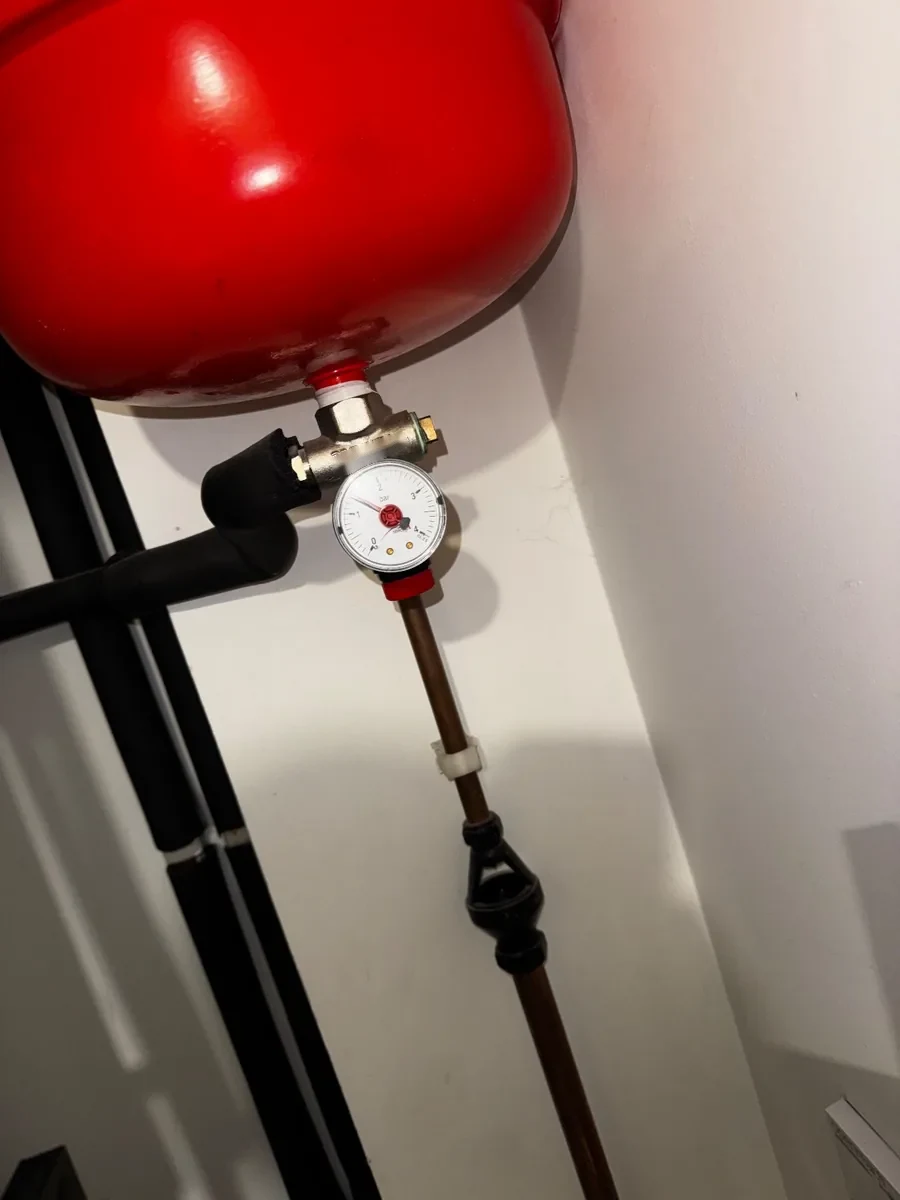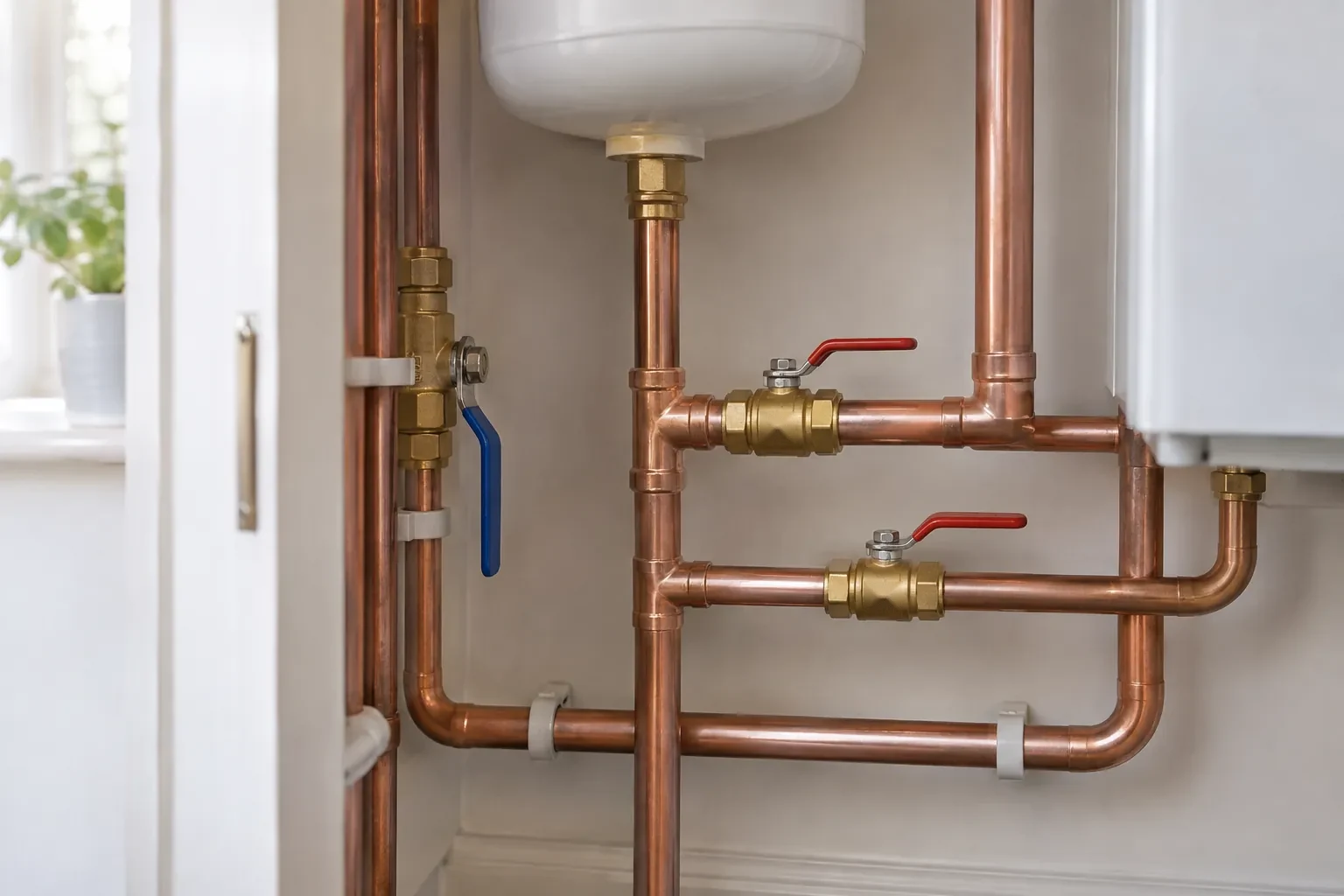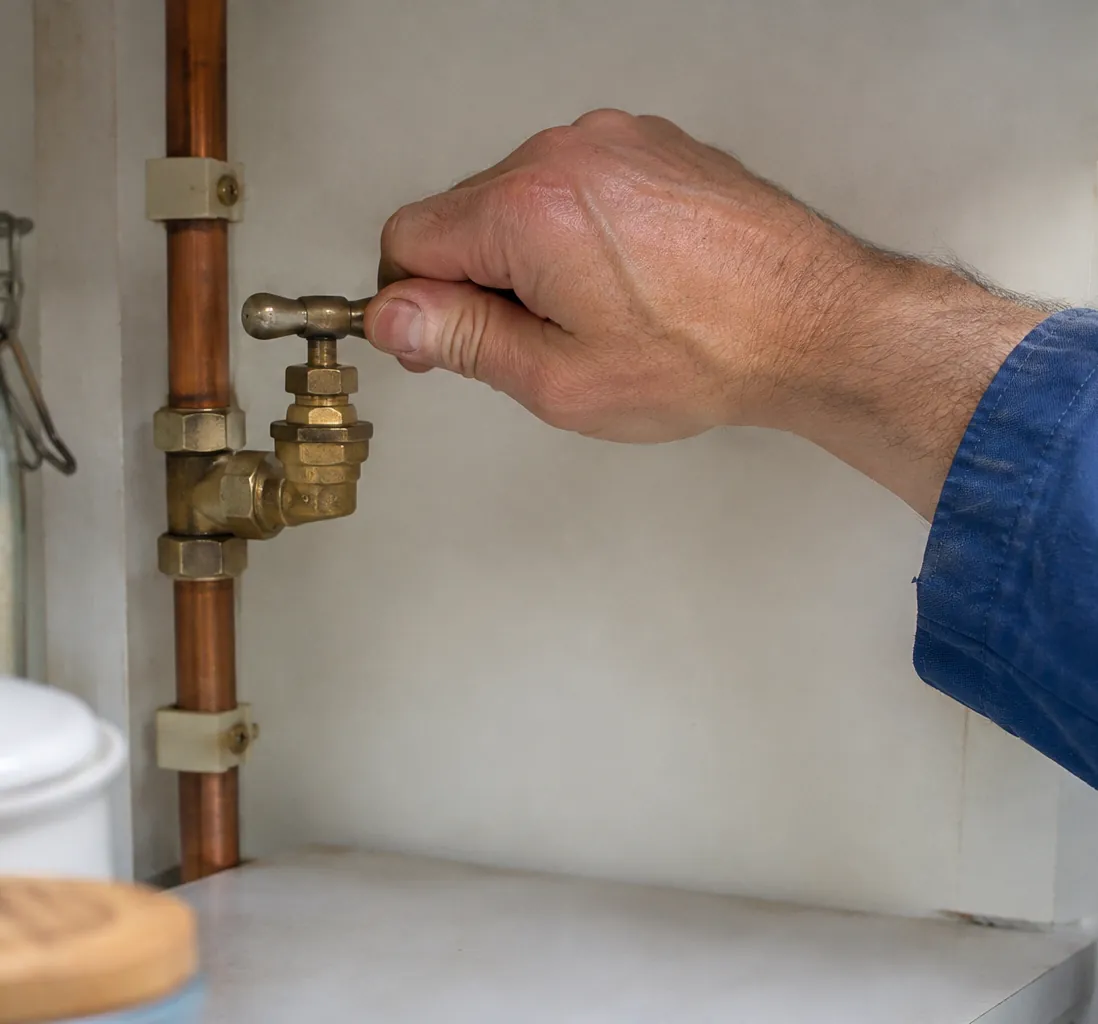
Pipework and valves
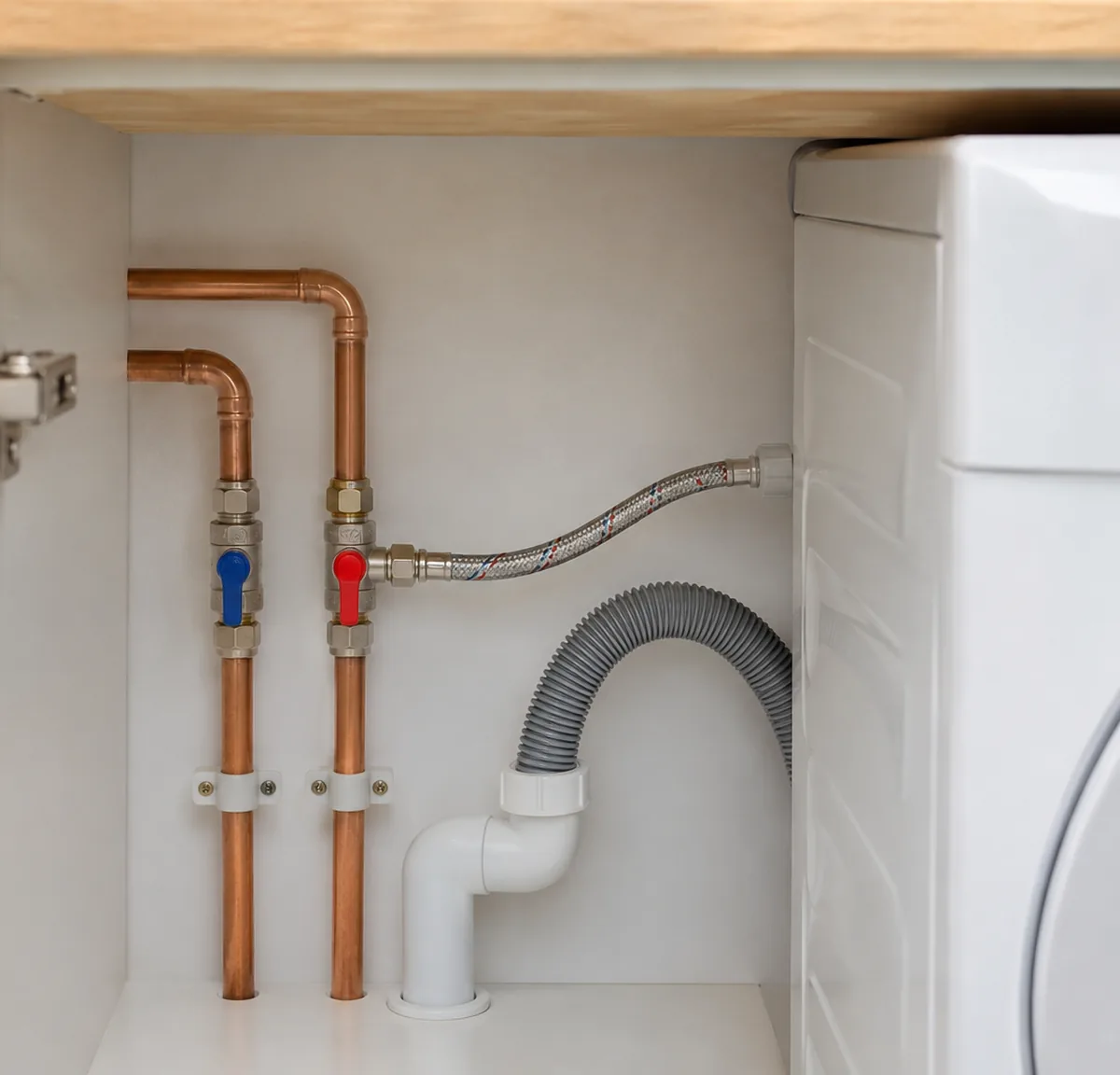
To cap off a water pipe, isolate it, drain it, cut it where the unused section begins and fit a stop end suited to the pipe, then restore water and check it. For a permanent job, cut the redundant branch back as close as possible to the pipe that is still in use, instead of capping it where the old fitting used to stand.
Which stop end for which pipe
| Pipe | Stop end to look for | Check before fitting |
|---|---|---|
| 15 mm or 22 mm copper | Compression, push-fit or soldered, in the matching size | Outside diameter, and a clean round end with no burrs |
| Plastic barrier pipe | Push-fit or compression that the pipe maker allows | The maker's support insert is in the pipe |
| Old imperial copper | Fitting with the correct imperial olive or adaptor | Measure the tube; 15 mm and 22 mm do not behave alike |
| Blue MDPE supply pipe | Fitting made for MDPE in that outside diameter | A liner; Philmac requires one in metric MDPE sizes from 20 to 63 mm |
Steps for a mains or tank-fed cold or hot pipe
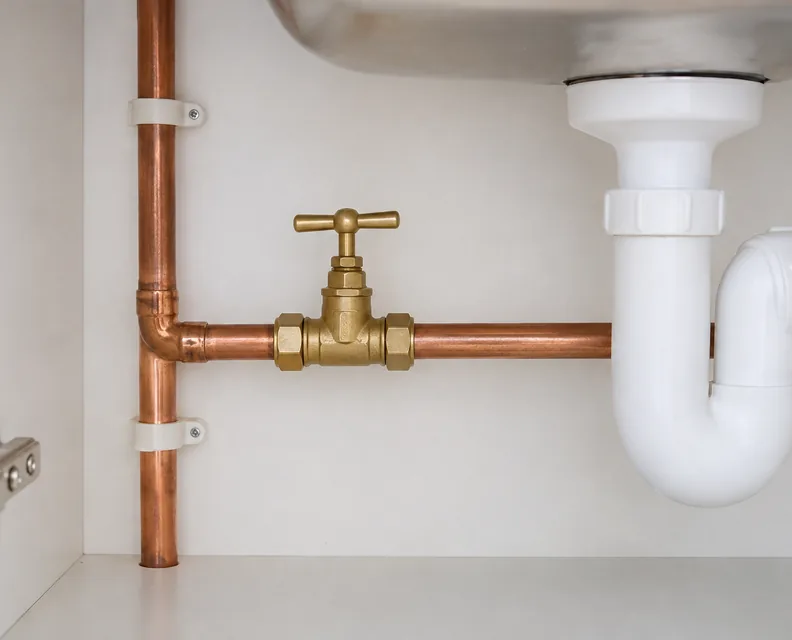
These do not apply to gas or heating pipes. Close the valve that feeds the pipe, open the outlet to drain it and confirm the flow has stopped. Cut square with a pipe cutter and remove burrs.
Push-fit: insert the support sleeve if the pipe is plastic, push the stop end fully on to its insertion mark and pull to check the grip, as the Speedfit guide describes.
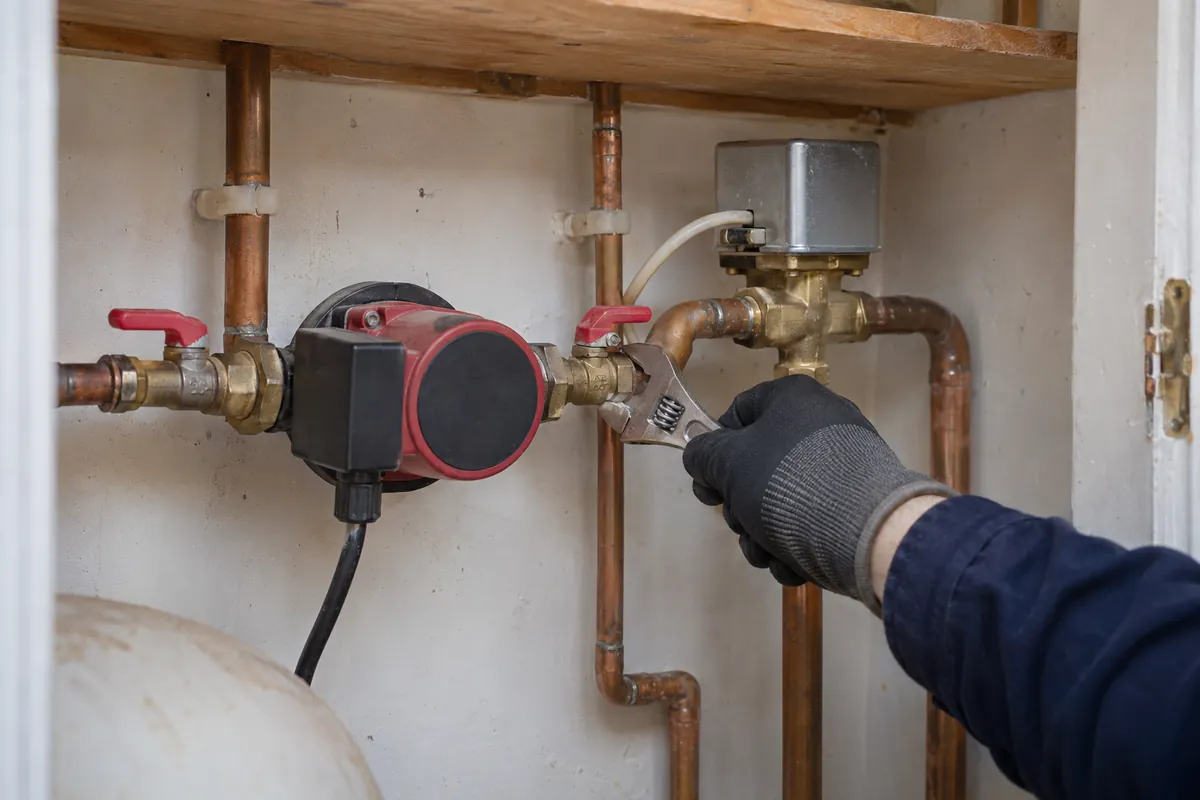
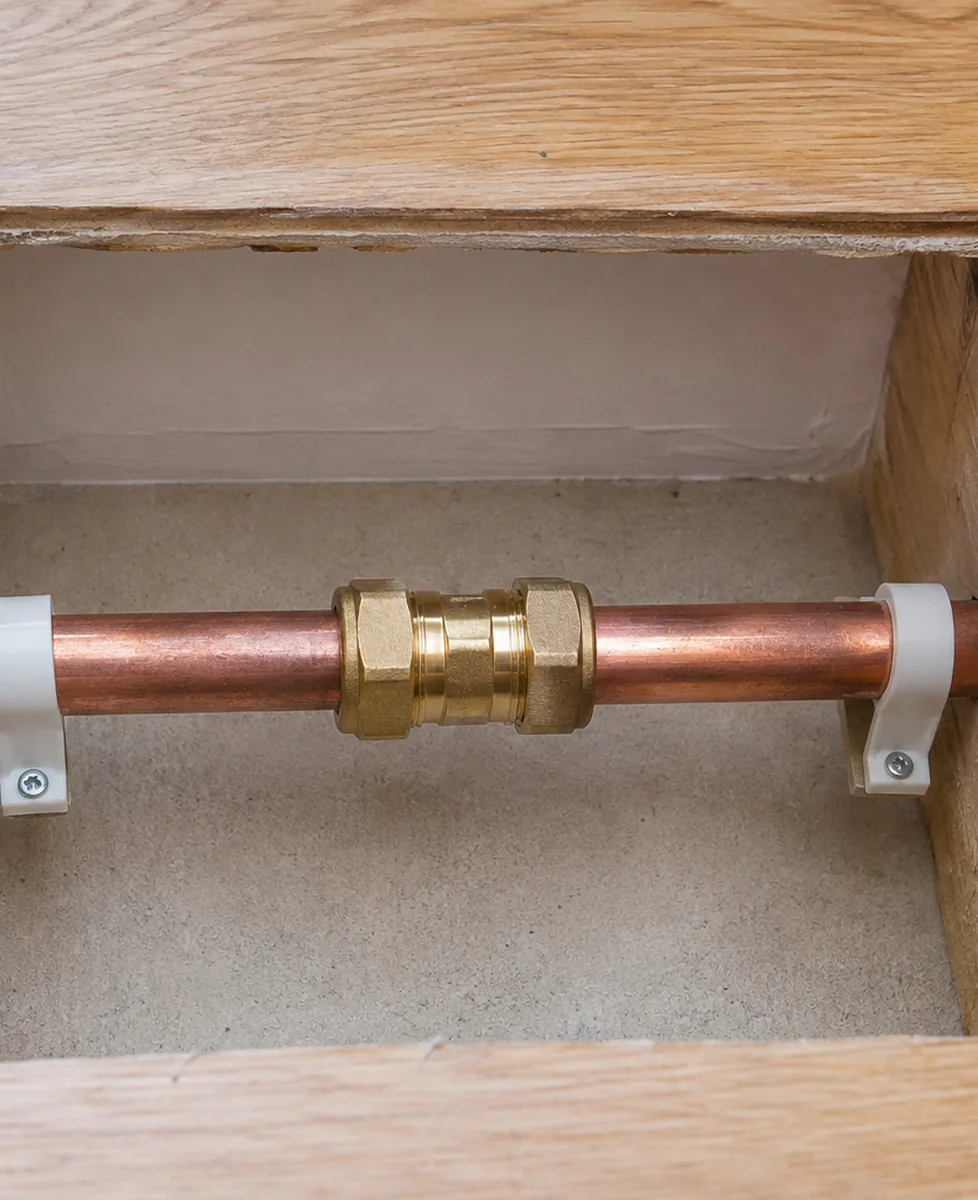
Compression: slide on the nut and then the olive, fit the insert in plastic pipe, seat the pipe fully in the body and hand tighten. Hold the body with one spanner while turning the nut with another, following the maker's tightening instructions.
When it is needed
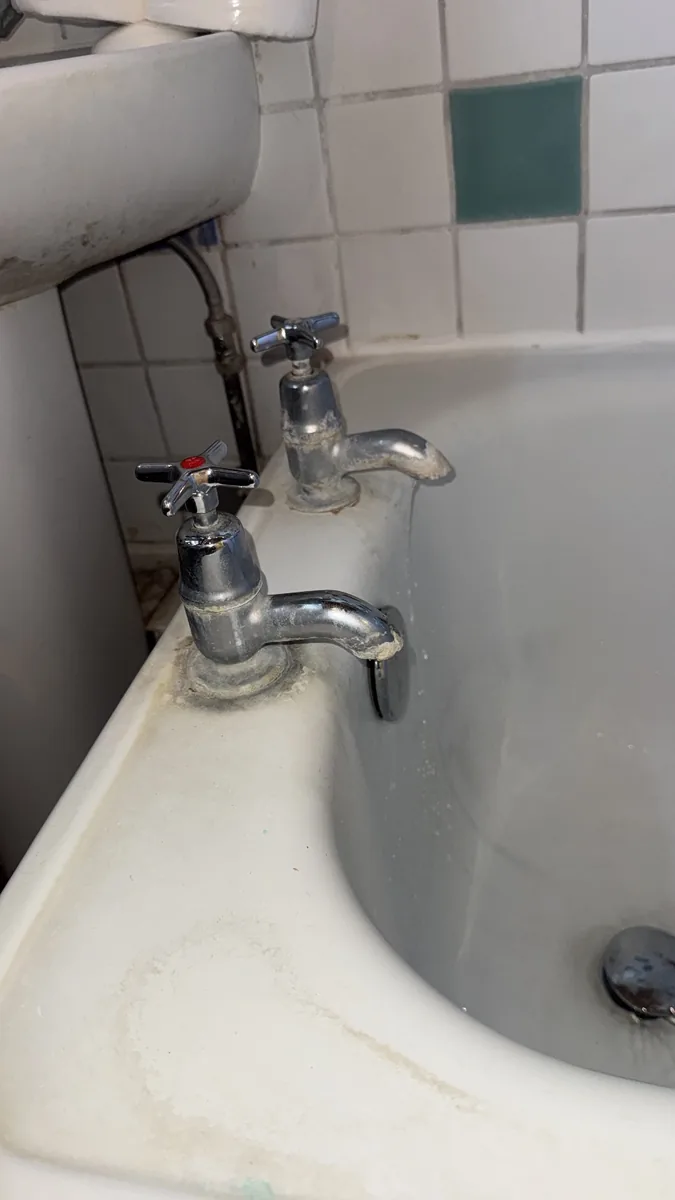
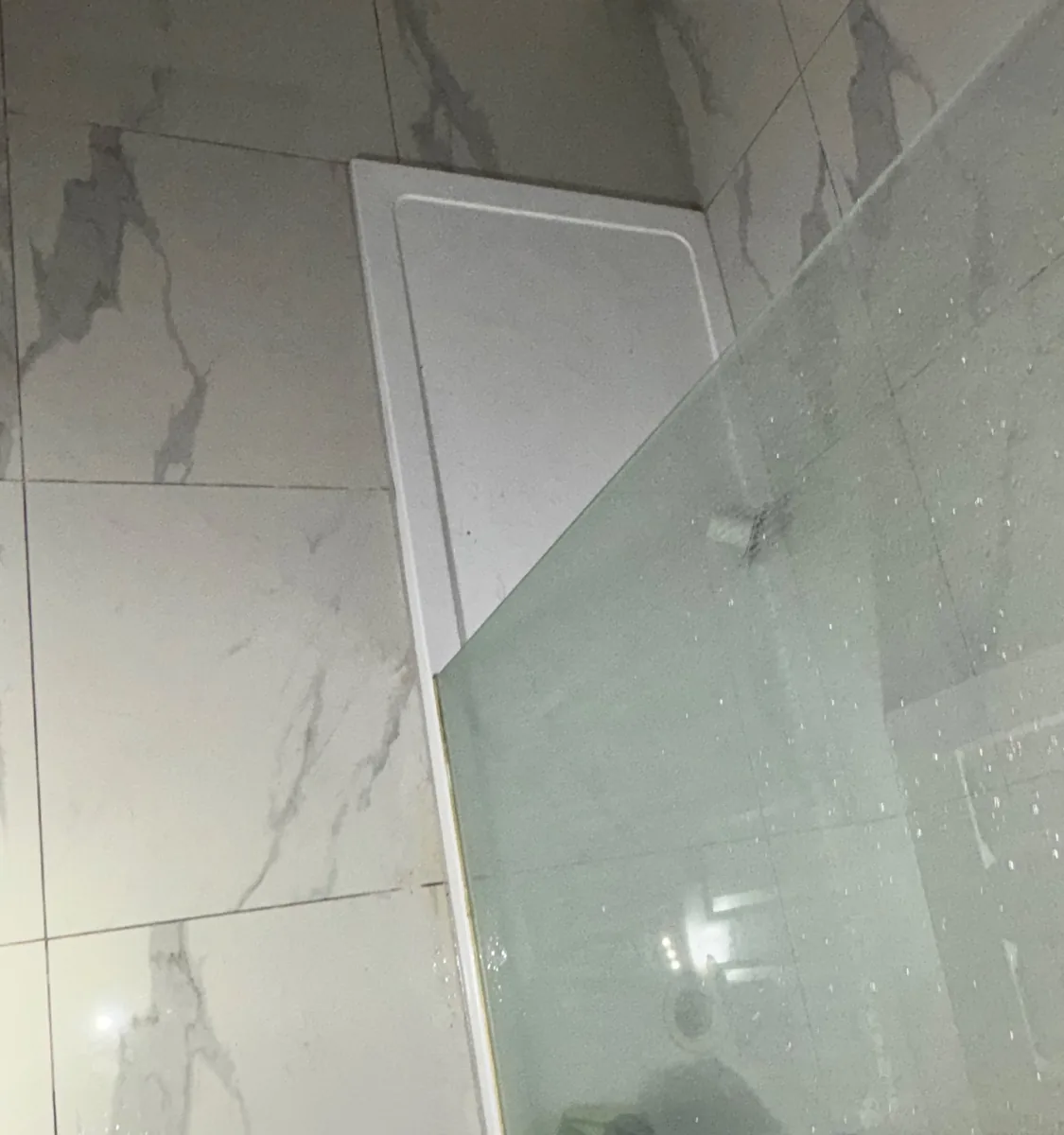
- Removing a bath, basin, appliance or outside tap for good
- Stripping out a room before alterations
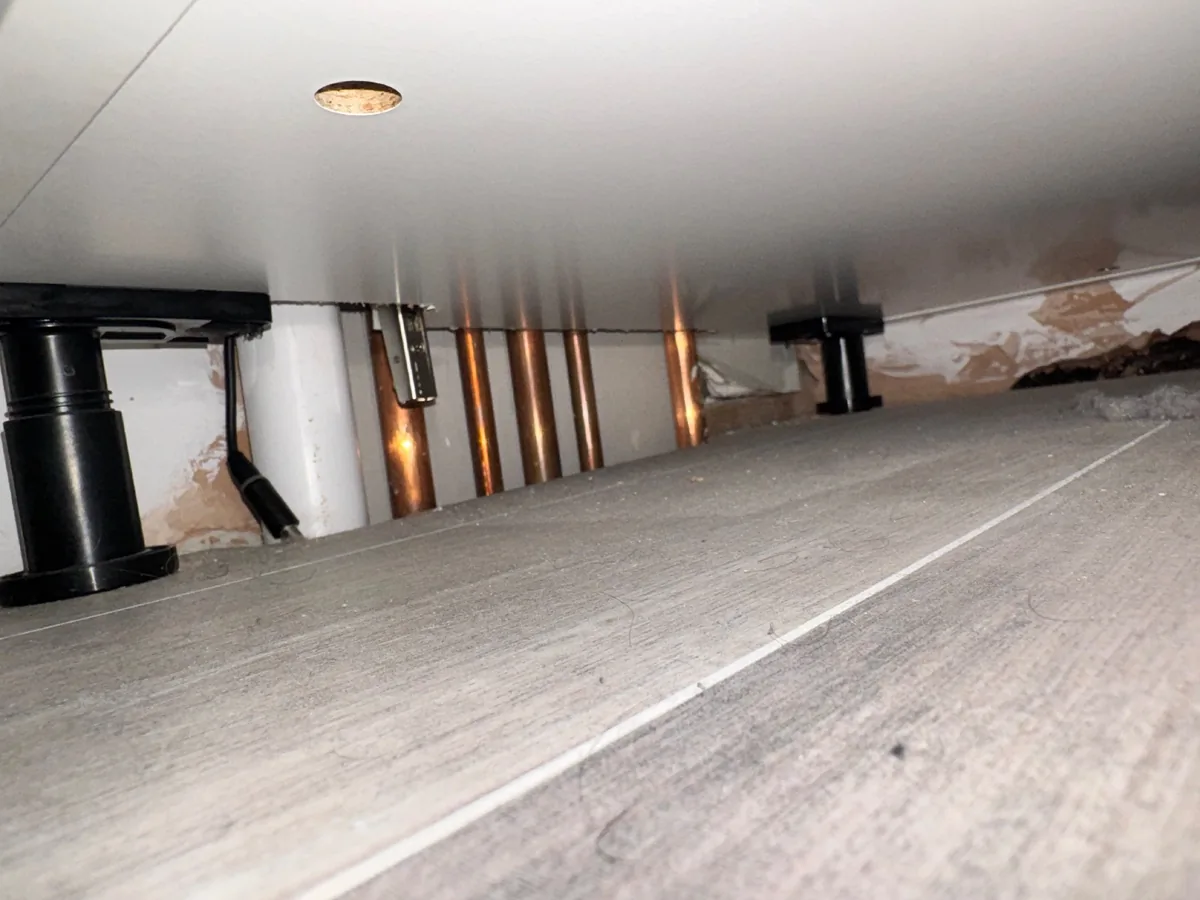
- Dealing with a leftover branch found under a floor
- Securing a damaged spur that will not be used again
Why the position matters
Water Regs UK describes a dead leg as pipework holding water that is not turned over, such as a pipe to something since removed. Its guidance is that dead legs should be removed because they can contaminate the supply, and any blind end that cannot be removed entirely should be as short as possible.
What gets looked at
- Whether the pipe is hot, cold, mains-fed or tank-fed, and not part of heating
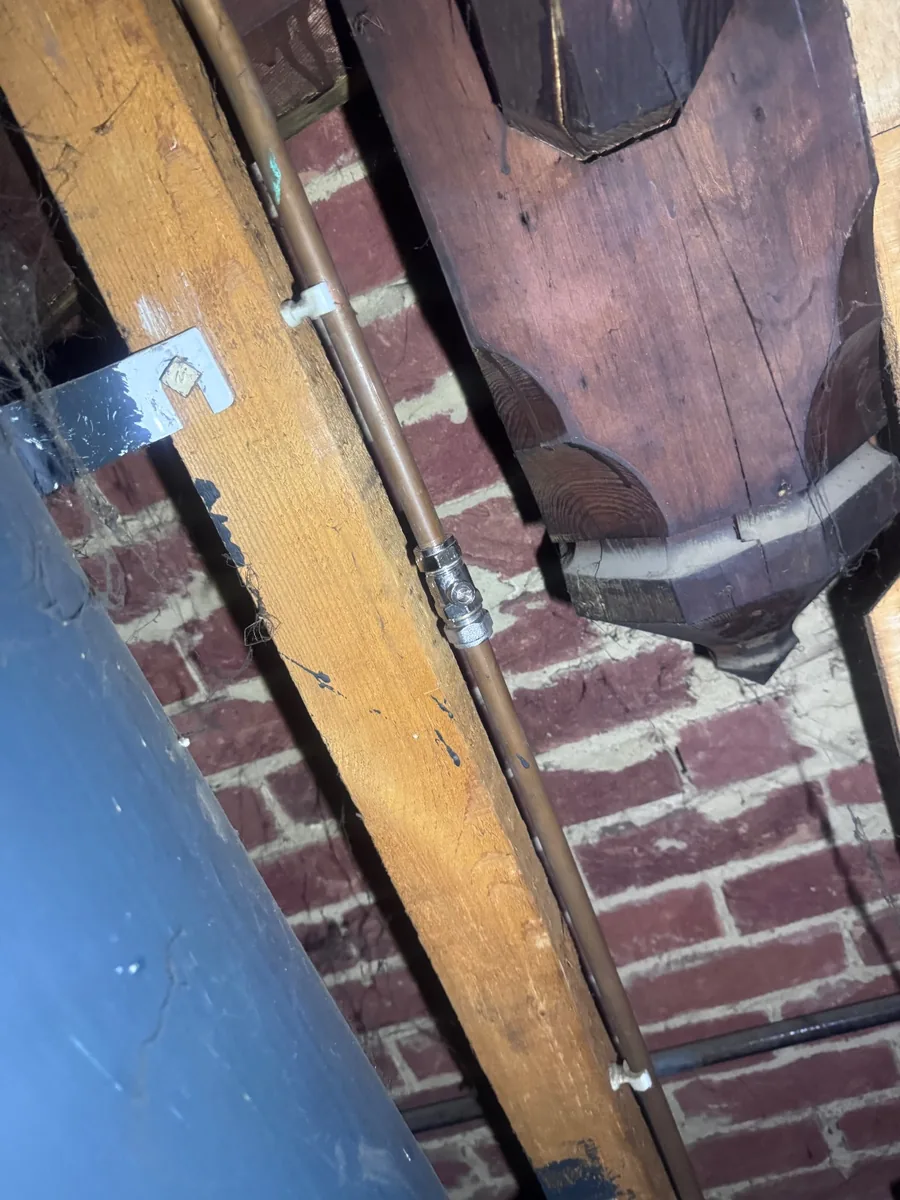
- Where it leaves the live pipe and whether that point can be reached
- Material, size and condition at the cut
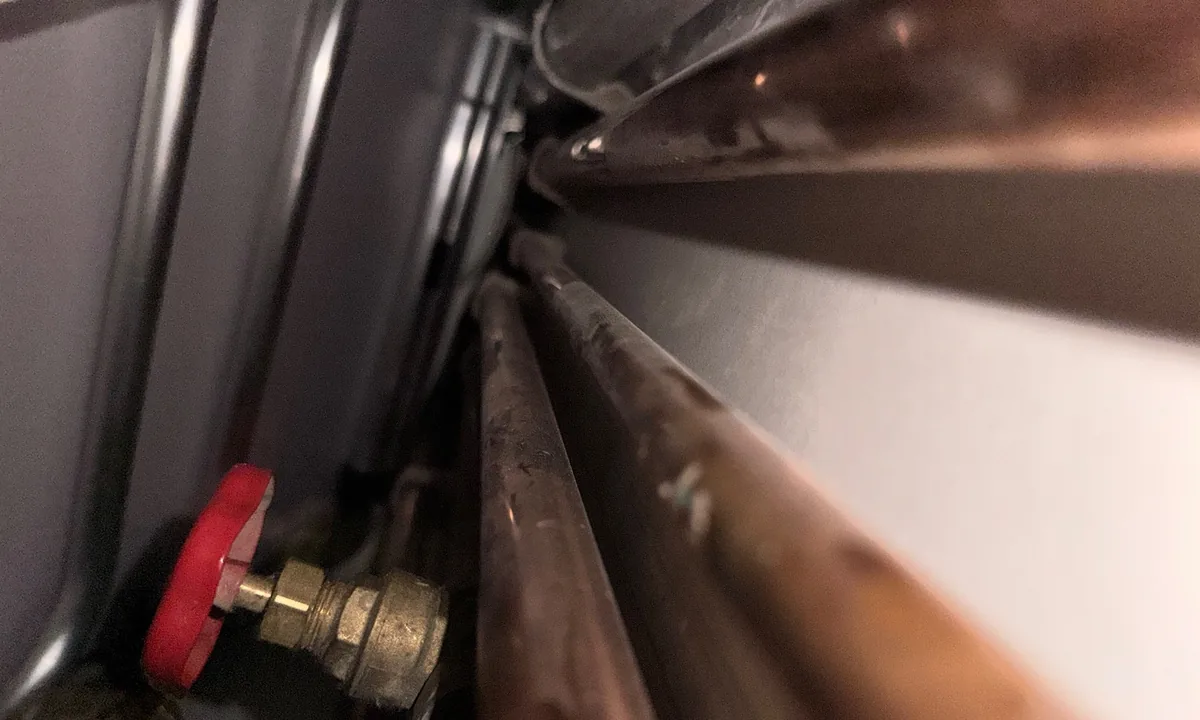
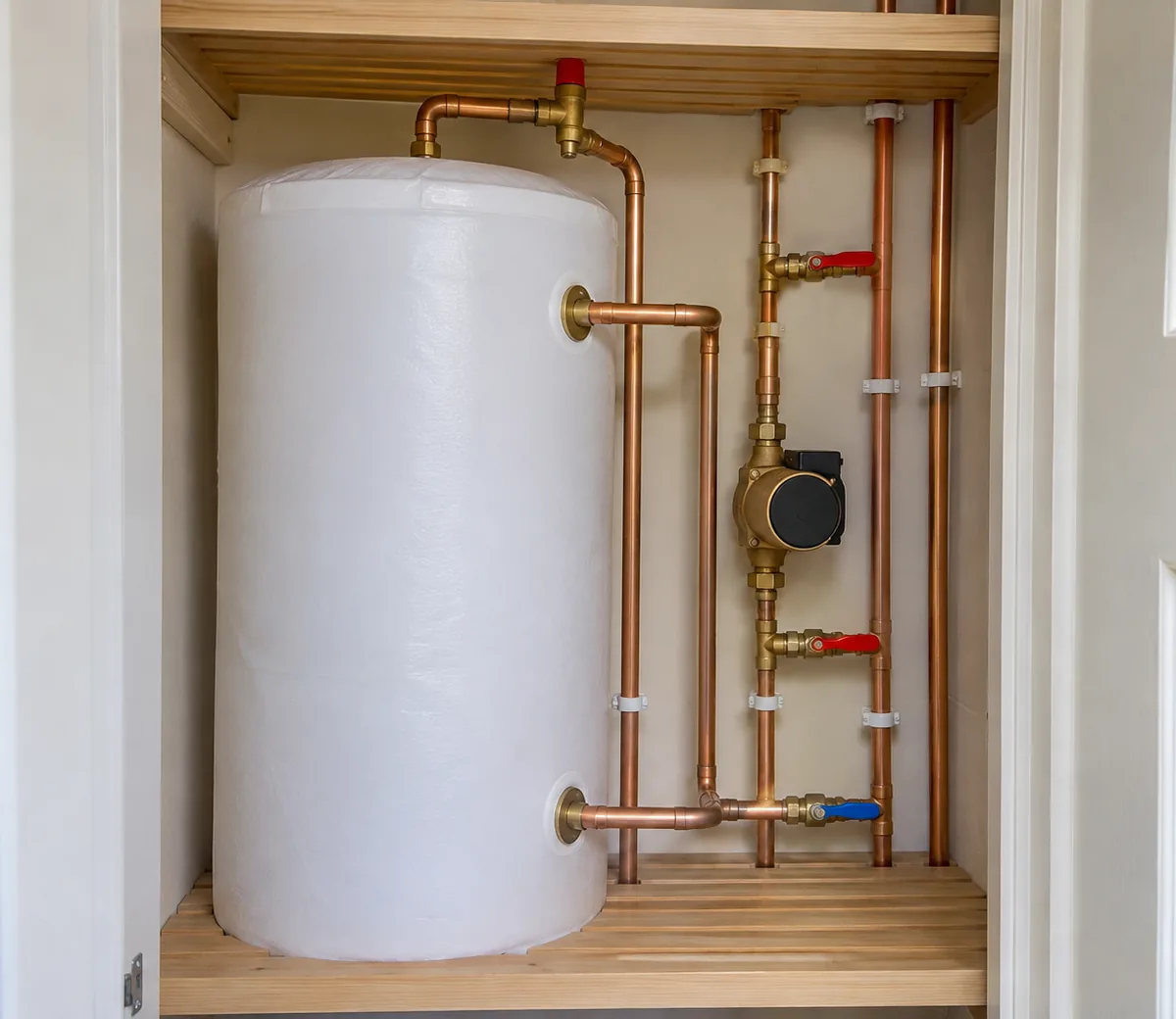
- Which valve isolates it and whether that valve holds
- Whether the finished end will sit behind a surface
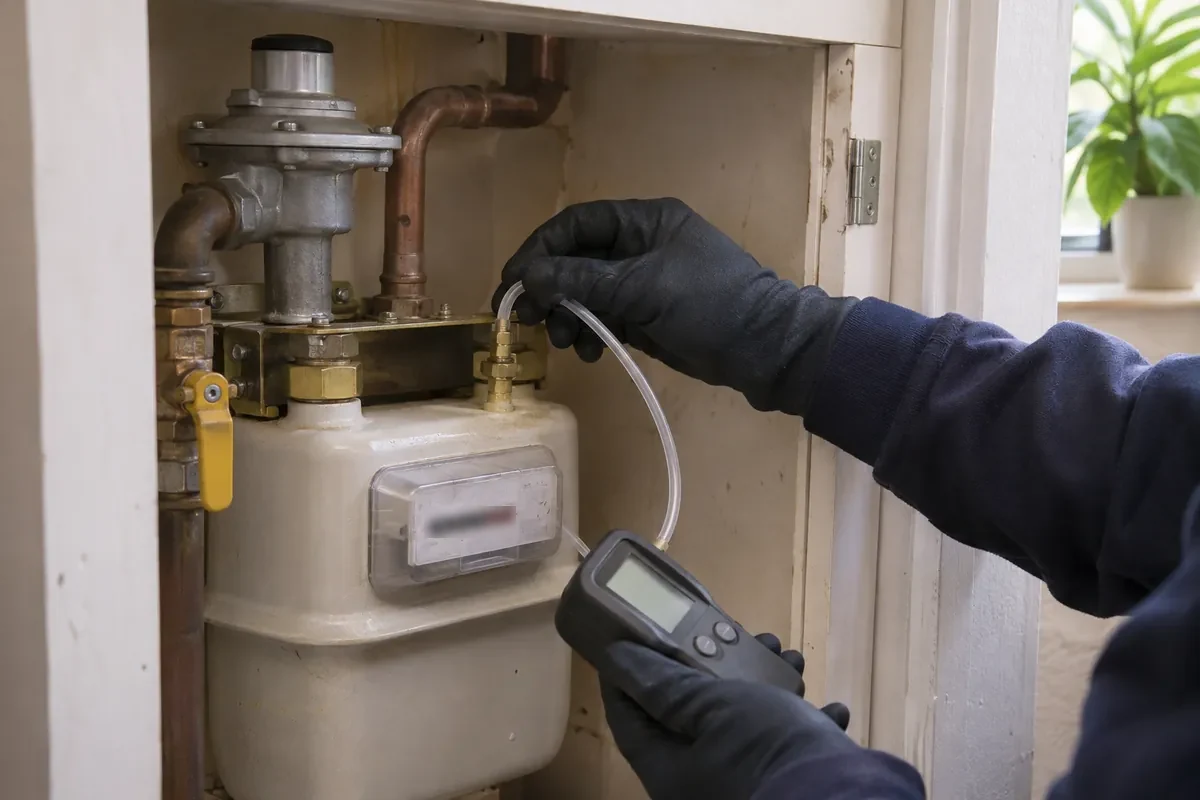
Positively identifying the pipe comes first. Cutting the wrong one, including anything carrying gas or a cable sleeve mistaken for pipe, is the serious risk. Capping gas pipework is a different job, carried out only by Gas Safe registered engineers.
Joint options
| Stop end | Strengths | Limits |
|---|---|---|
| Compression | Tools only, can be undone | Needs spanner access; plastic pipe needs a support insert |
| Push-fit | Quick, no flame | Pipe end must be clean, square and undamaged |
| Soldered | Compact, permanent | Heat, and the pipe must be dry |
| Remove the tee and join the main run | No blind end at all | More cutting at the branch |
Schedule 2 of the Water Fittings Regulations does not allow a joint to be concealed where access is lost, or fittings to be embedded in walls or solid floors. A capped end plastered into a wall is therefore a problem, however sound it looks on the day. Remove it back to an accessible point or provide a panel.
For plastic pipe, makers require an internal support sleeve. The Hep2O installer guide calls it essential for its push-fit joints and requires one in compression joints too.
Checking the work
Open the water slowly, run nearby taps to clear air and wipe the joint with dry tissue. Check again after the system has been under pressure for a while, and before flooring or panels go back.
Problems after capping
| What you see | Possible cause | What to do |
|---|---|---|
| Drip at the new stop end | Pipe not fully home, scored or out of round, or a compression nut not tight enough | Close the supply, then remake the joint to the maker's instructions |
| Push-fit cap slides off under a firm pull | Grab ring not engaged, or the wrong pipe size | Do not restore pressure; check diameter and insertion mark |
| Spluttering at nearby taps | Air let in while the pipe was open | Run the cold taps gently until the flow settles |
| Another outlet has stopped | The capped length was still feeding it | Reopen the route; trace the pipework again |
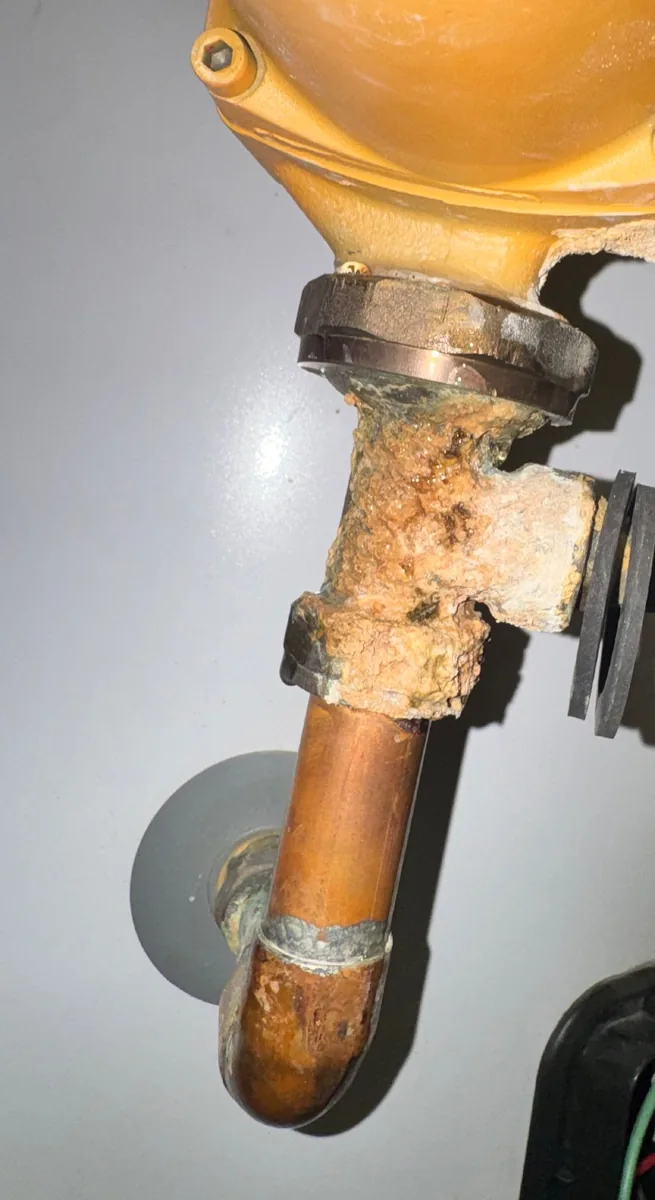
| Knock or tick from the capped spur | A loose, unsupported end moving | Clip it, or cut back to the branch |
Call a plumber if you cannot find a valve that holds, cannot prove what the pipe carries, or the cut is on an incoming supply. See pipework and repiping.
What changes the price
Number of pipes, floors or tiles that must be lifted to reach the branch point, a failed isolating valve, draining a tank-fed system and combining the work with other visits.
Ask for a quote
Email photos of the pipe and of the nearest visible junction, say what it used to serve and whether the area will be covered. Describe it on the contact form first; pictures go by email.
Related reading
Choosing a fitting for the cut end draws on compression fitting types, how push-fit fittings grip, push-fit against compression, press-fit joints, solder fittings and avoiding dead legs.
At a glance
- Service
- Capping off a water pipe
- Area
- All of Greater London (service-area business, no showroom)
- Quote
- Free. Get the price in writing before work starts
- Phone
- 020 3961 8088
Questions
Can I just close the valve and leave the pipe?
A closed valve with a disconnected pipe is a temporary measure. A redundant length full of still water should be removed back towards the live pipe.
Can a capped pipe go under a floor or inside a wall?
Not if the fitting cannot be reached. Water fitting rules do not allow a joint to be concealed without ready access, or embedded in a wall or solid floor. Cut back to an accessible point or fit a removable panel.
How do I know the pipe is water and not gas or heating?
Trace it to what it served and back to its source, and confirm that closing the water valve and draining affects it. If you cannot identify it with certainty, do not cut it. Gas pipework is work for a Gas Safe registered engineer only.