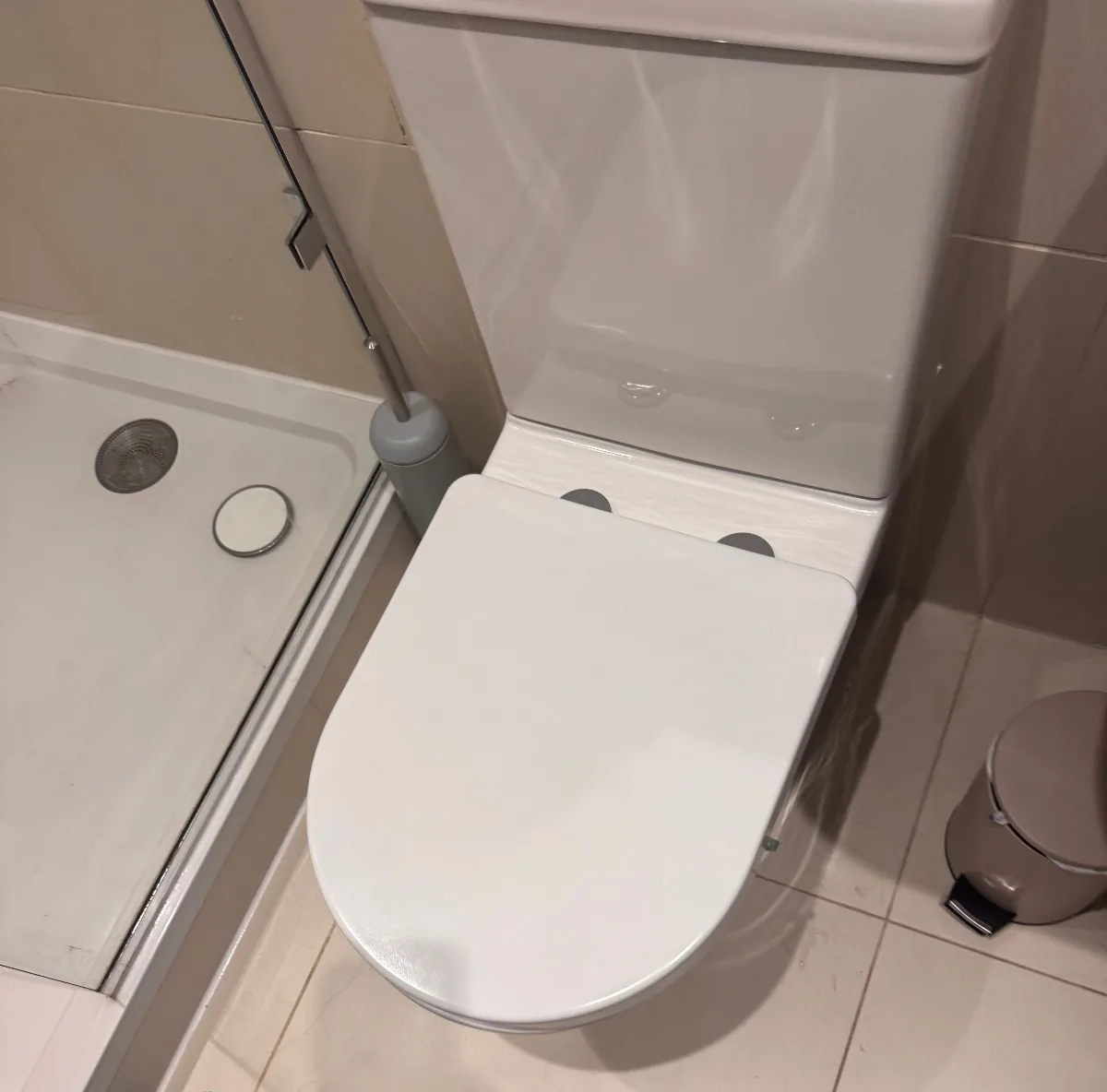
Toilet repairs in Greater London from Proper Plumbing London start from £95 labour, and replacing a WC starts from £180. Parts are extra and agreed first; the quote is free.
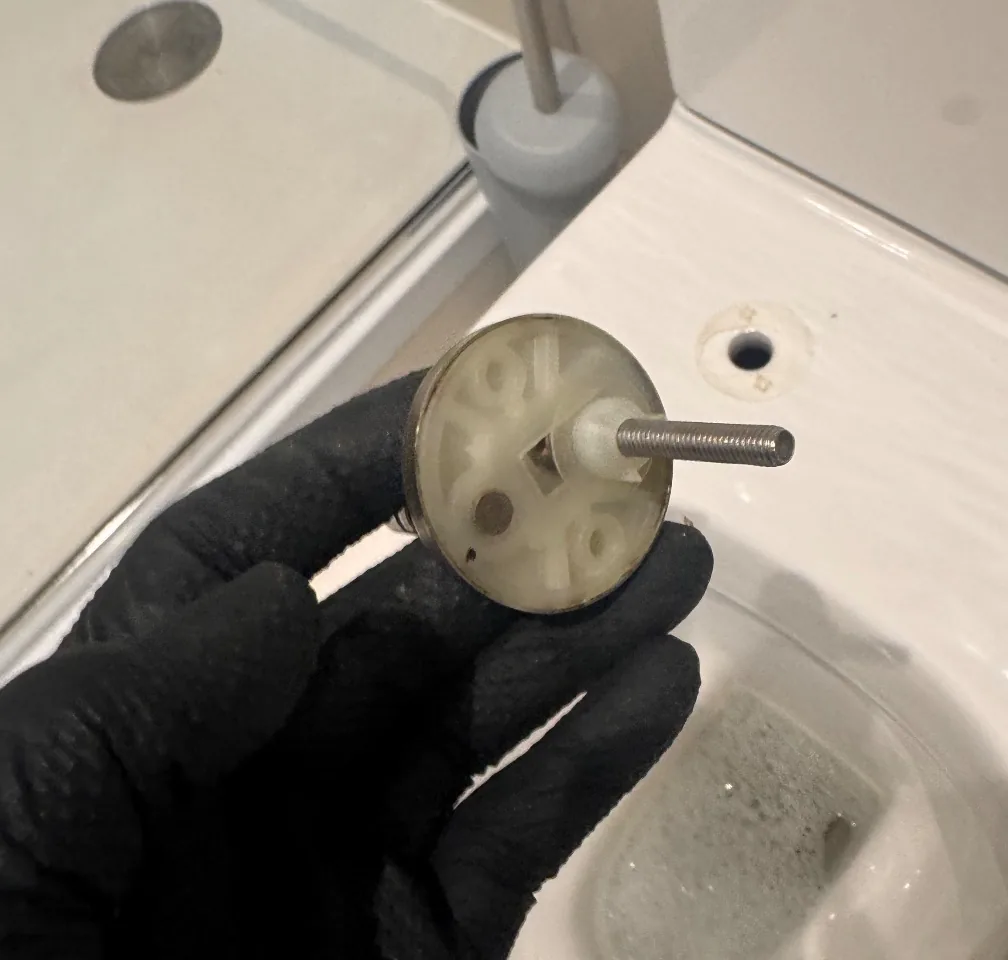
Most toilet faults sit in one of three places: the valve that fills the cistern, the valve or siphon that releases it, or the joints between cistern, pan and soil pipe. Lifting the lid and watching one full cycle normally shows which.
How the cycle works
A flush releases stored water into the pan. As the level drops, the float opens the fill valve. The valve closes when the float reaches its set height, below the overflow. A dual-flush mechanism releases two different volumes; an older siphon lifts water over a bend to start the flow.
Fault finding
| Symptom | Check |
|---|---|
| Pan never stops running | Flush valve seal, or level set above overflow |
| Filling never stops | Fill valve, float position, debris on the seat |
| Slow refill | Inlet filter, isolation valve, valve suited to wrong pressure |
| Button or lever does nothing useful | Linkage, cable, diaphragm in a siphon |
| Puddle after flushing | Pan connector or inlet seal |
| Damp all the time | Supply joint, cistern fixing seal, condensation |
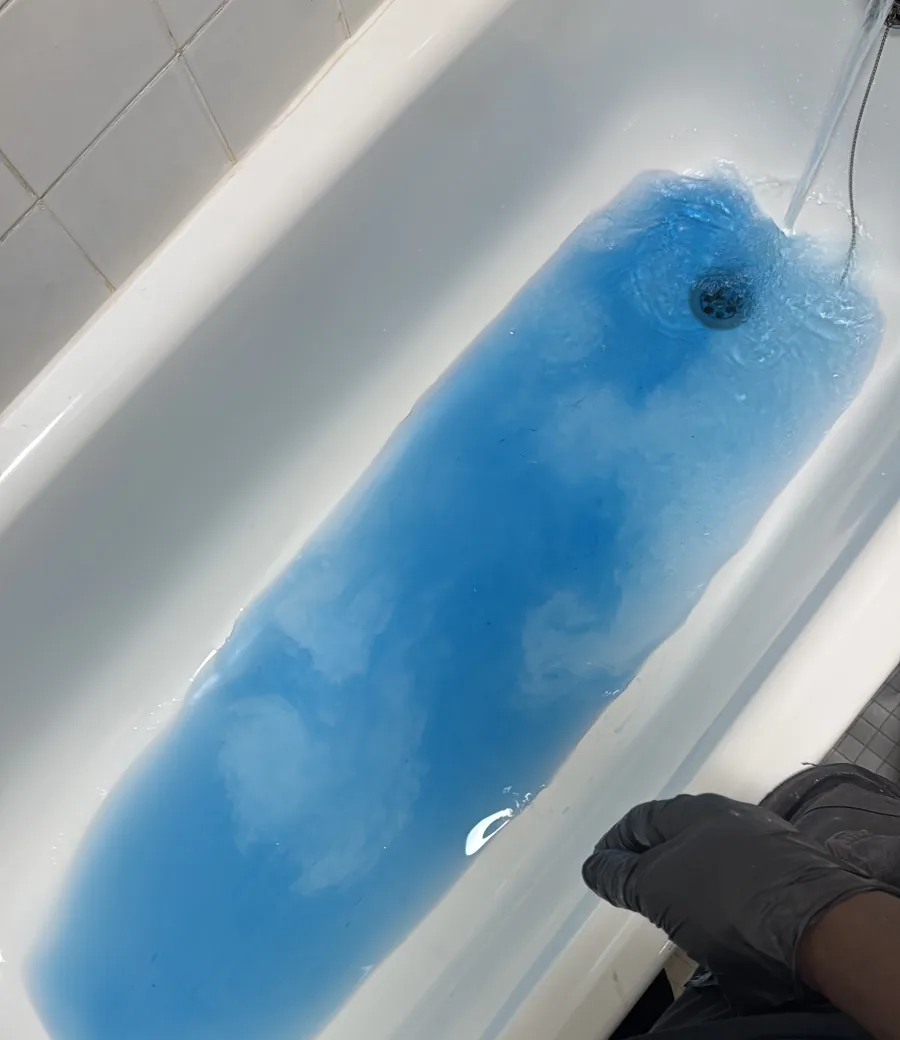
A little dye in the cistern, left unflushed, will show a passing outlet seal when colour reaches the pan.
Repair work
The supply is isolated, the cistern emptied and the mechanism identified by maker and size. Seals or the whole valve are renewed. Fill valves must suit the supply: one intended for high pressure fills very slowly from a tank, and some low-pressure arrangements are noisy or fail to shut on mains. Concealed cisterns are serviced through the flush plate or an access panel, so confirm that opening exists before parts are ordered.
Close-coupled cisterns need the joining gasket and fixings renewed together if leaking between cistern and pan. Tightening ceramic hard to stop a leak risks cracking it.
Schedule 2 of the Water Fittings Regulations covers WC cisterns, including inlet control, warning of overflow and servicing valves.
A pan that rocks should be fixed firmly before a new connector is fitted, otherwise the joint will open again. A cracked pan or cistern is replaced; surface sealing is not a dependable repair for ceramic holding water. Replacement also means checking the outlet position against the new pan and confirming the connector will sit straight.
Testing
- Fill to the marked level and confirm the valve closes fully
- Operate both flush buttons several times
- Check that nothing moves in the pan once full
- Run tissue around every joint after flushing
- Verify the overflow route is unobstructed
Noise during and after filling
Hissing, knocking or a long whistle points to the fill valve, its restrictor or the pressure behind it. A valve that reopens briefly every so often is replacing water lost through the flush seal, so fix the seal first. Condensation on a cold cistern can look like a leak: wipe it dry, run dye in the water and see whether colour appears in the droplets or on the floor.
Billing for WC work
| Operation | Labour |
|---|---|
| Repair | from £95 |
| Replacement | from £180 |
| Evening or weekend time | from £140 per hour |
24/7 emergency visits: £110 an hour plus a £60 call-out on weekdays in the daytime, from £140 an hour plus £60 in the evening or at weekends. Booked jobs carry no call-out fee. Materials are extra and agreed first. VAT is not added. Quotation free. Rates verified 28 November 2026: billing detail.
What to send
Photograph inside the cistern, any printed marks, the supply valve and the back of the pan. Mention whether the cistern is concealed, then use the contact form.
Related reading
Where the cistern is fed from a loft tank, see float valve types, replacing a tank float valve, knocking from the loft tank, insulating the tank and cleaning the tank.
At a glance
- Service
- Toilet repairs
- Area
- All of Greater London (service-area business, no showroom)
- Quote
- Free. Get the price in writing before work starts
- Phone
- 020 3961 8088
Questions
Why does the cistern keep refilling?
Water is leaving it, either past the flush valve into the pan or through the overflow because the fill valve does not shut off. Each is checked separately.
How can I check for water passing into the pan?
Put a little dye in the cistern and leave it unflushed. Colour reaching the pan shows the outlet seal is passing.
Can a concealed cistern be repaired?
It is serviced through the flush plate or an access panel, so that opening has to exist before parts are ordered.