Proper Plumbing London repairs central heating faults in Greater London, from pumps and motorised valves to lost pressure. Gas parts go to Gas Safe registered engineers only. Weekday time is £110 an hour.
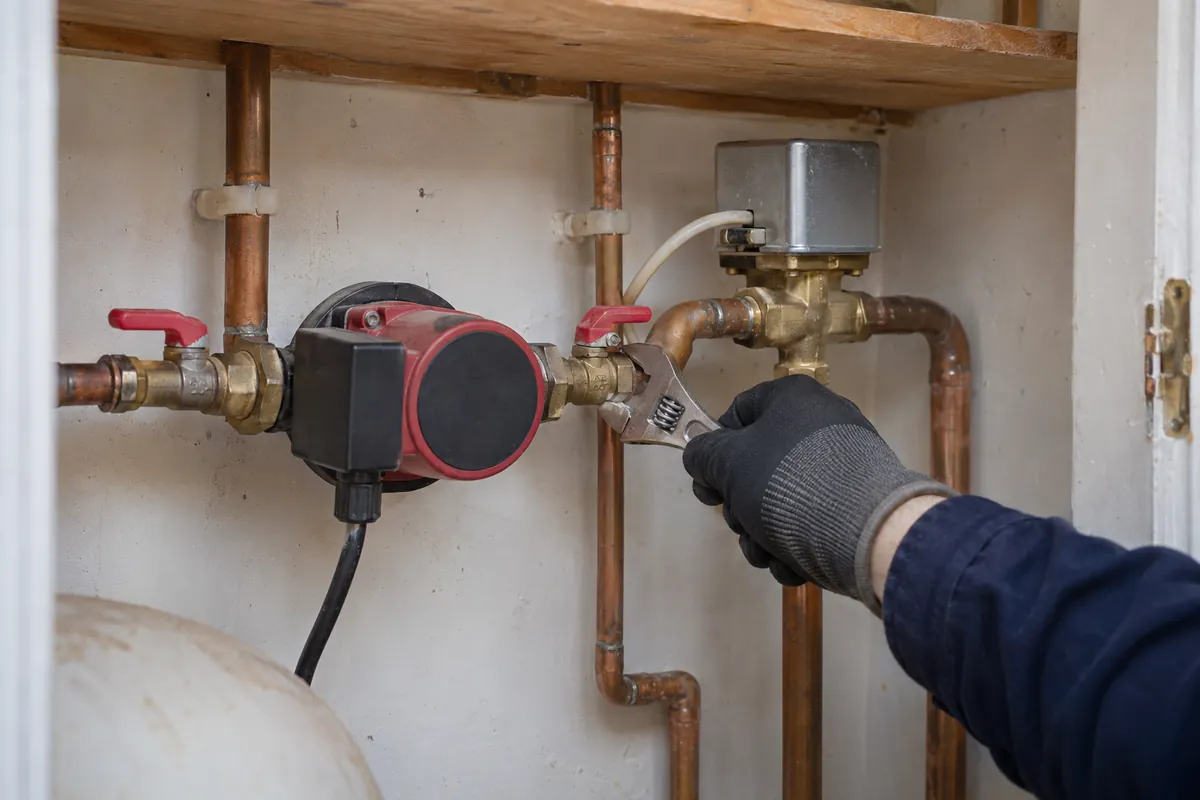
A heating system moves heat from the boiler to the radiators through pipes, a pump and valves, told what to do by controls. Fault finding follows that chain, which separates a circulation problem from an appliance problem.
First separation
| Observation | Likely part of the system |
|---|---|
| Nothing calls for heat | Programmer, thermostat, wireless receiver, power |
| Valve moves but pump is silent | Pump, its supply or the valve end switch |
| Boiler fires then stops quickly | Poor circulation, bypass, blocked exchanger |
| One floor or zone cold | Zone valve, air or a closed branch |
| Radiators warm when only hot water is selected | Passing motorised or diverter valve |
| Banging or kettling | Flow restriction, scale or sludge |
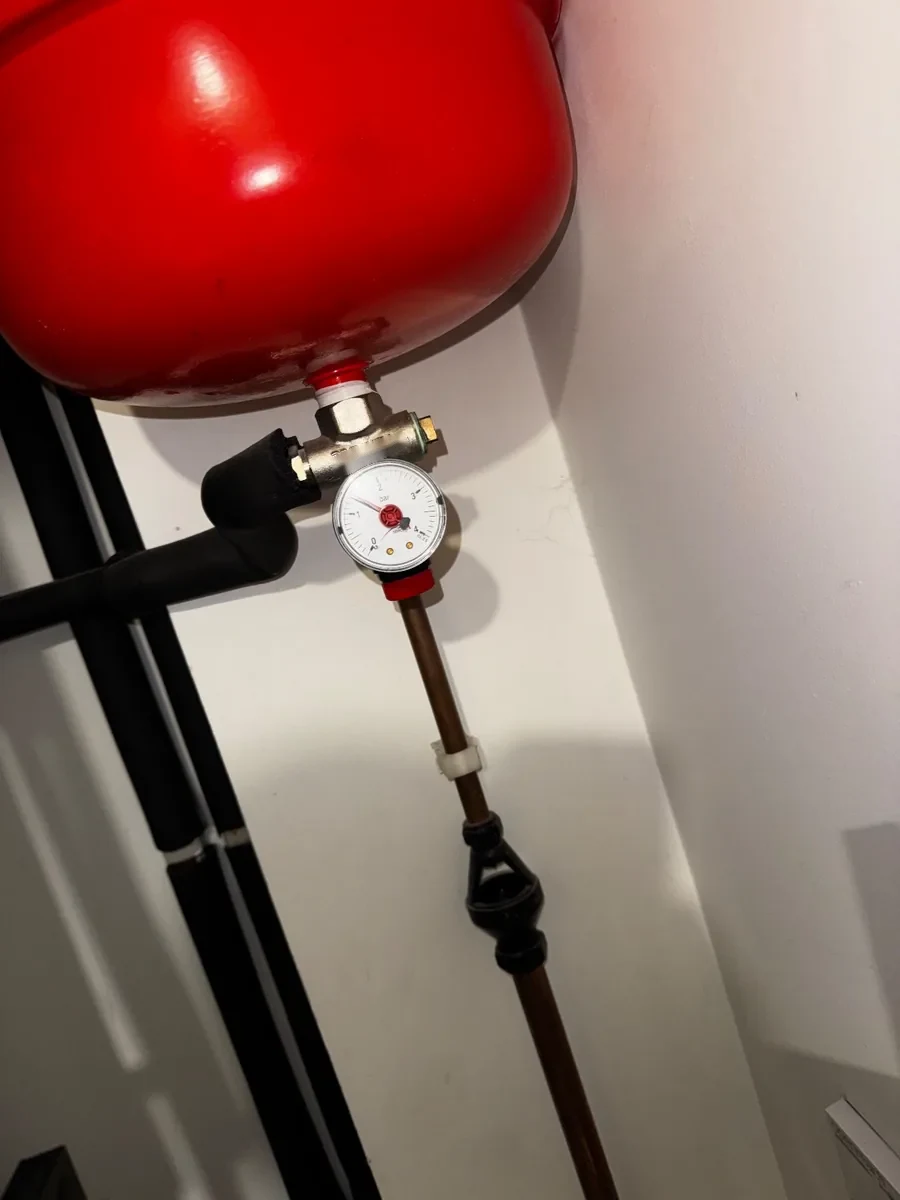
| Gauge climbs sharply when hot | Expansion vessel or overfilling |
Pumps and motorised valves
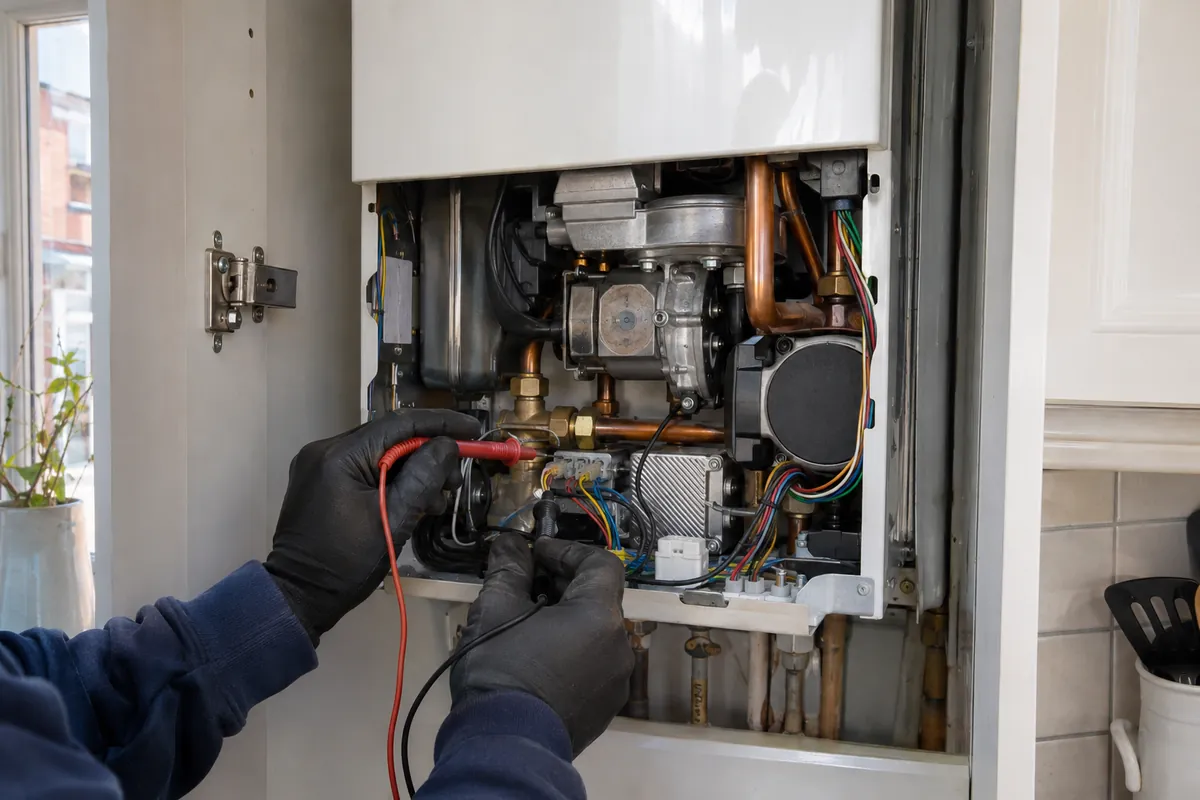
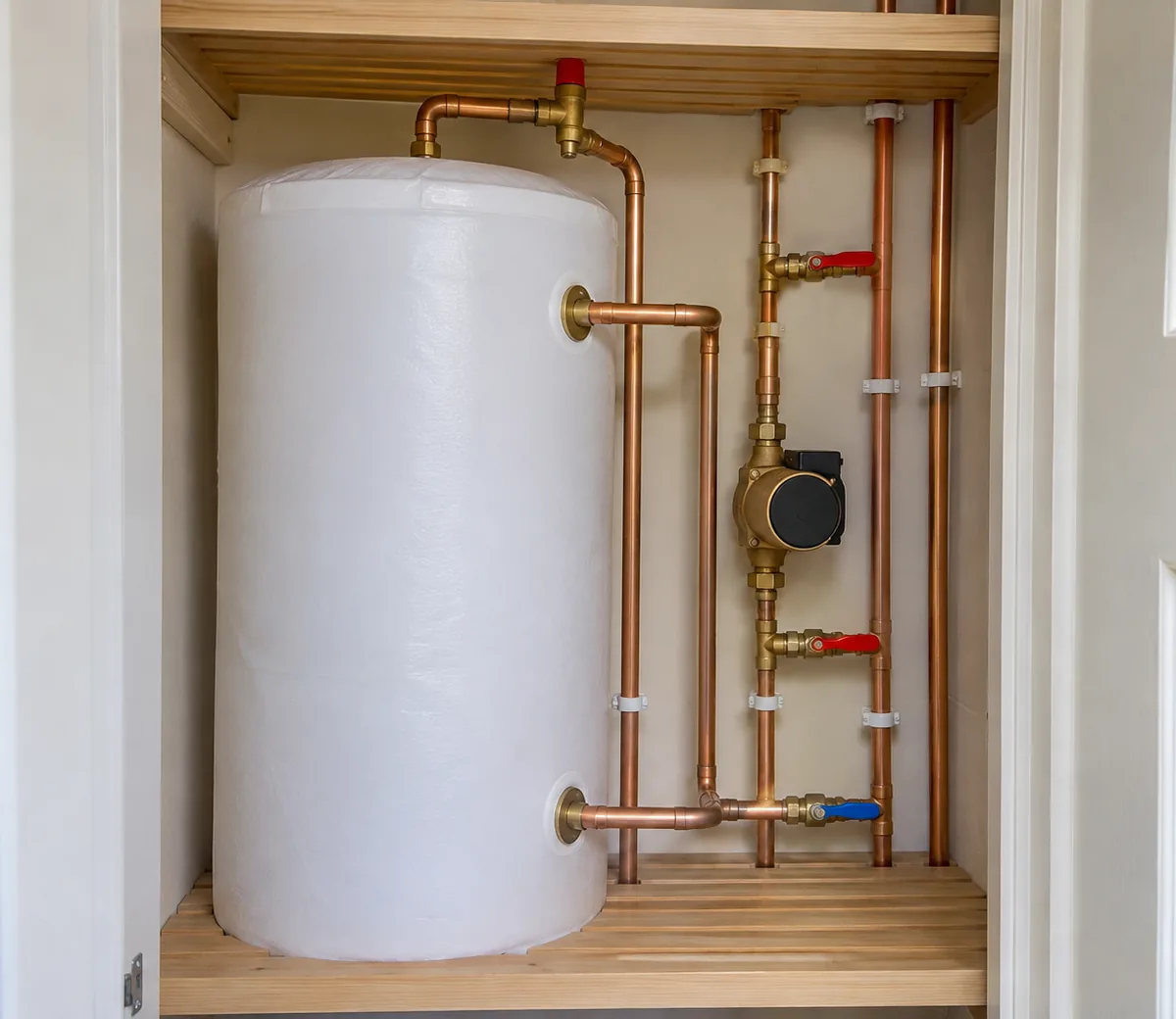
A pump is judged by whether it has a supply, turns, moves water and sits on the right setting. Temperature on the pipes either side shows whether flow is real. A motorised valve is tested through its actuator, body and switch: the actuator head can often be changed without opening the pipework, whereas a seized body means draining down. Wiring and mains connections are electrical work for a competent person.
Sealed and open-vented circuits
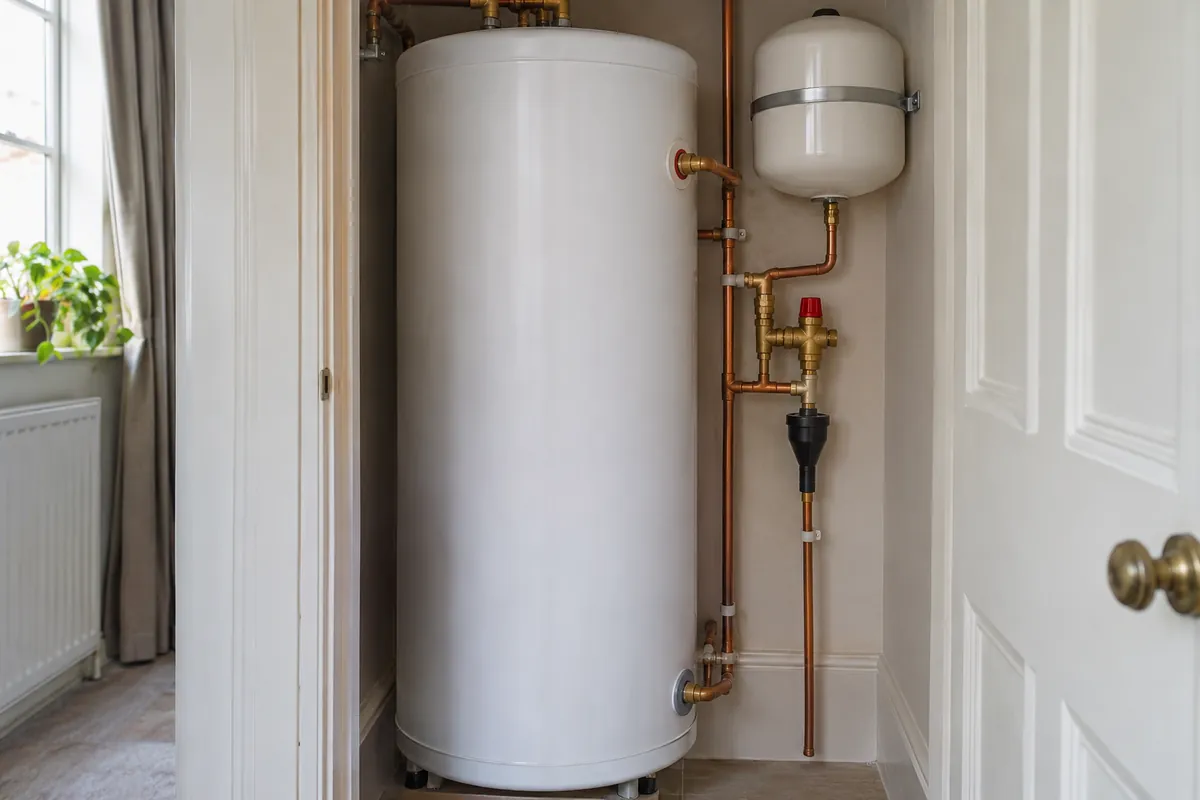
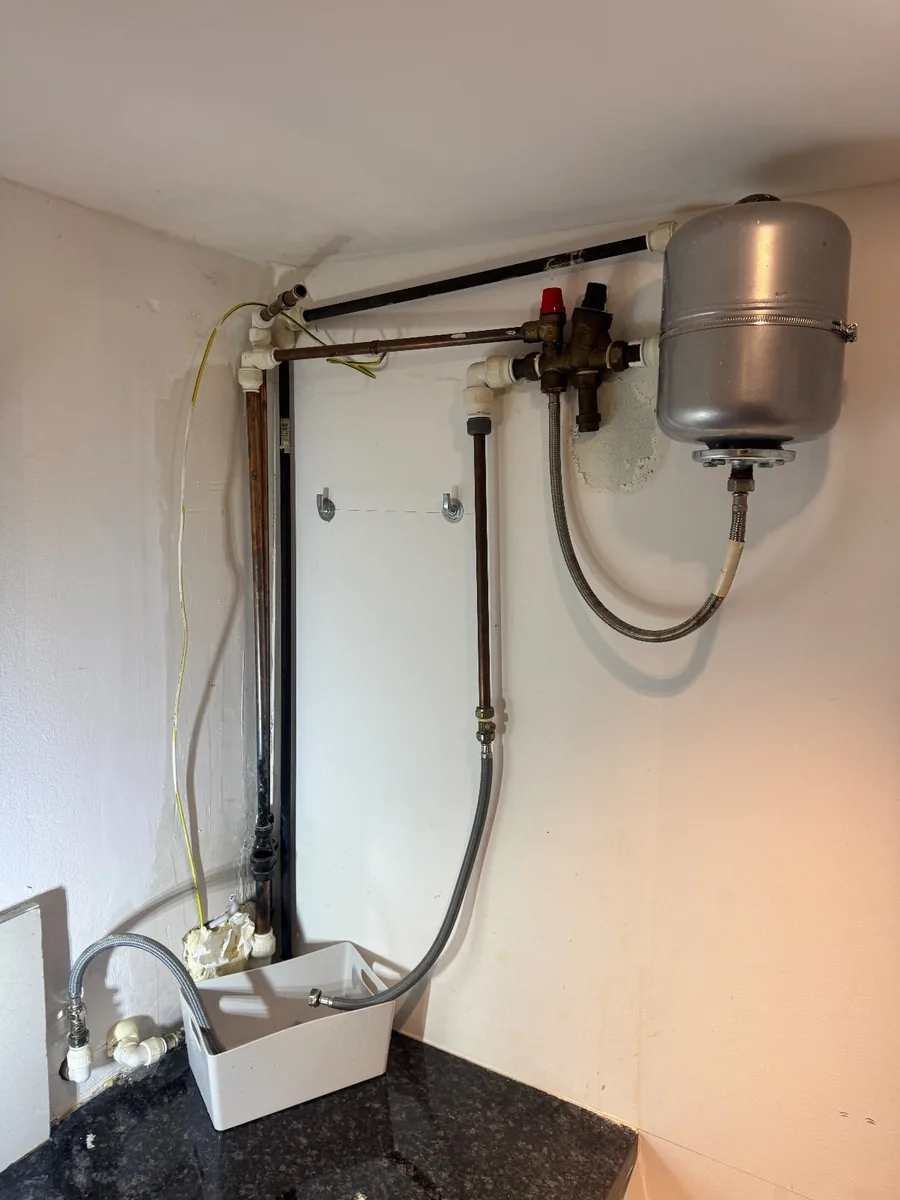
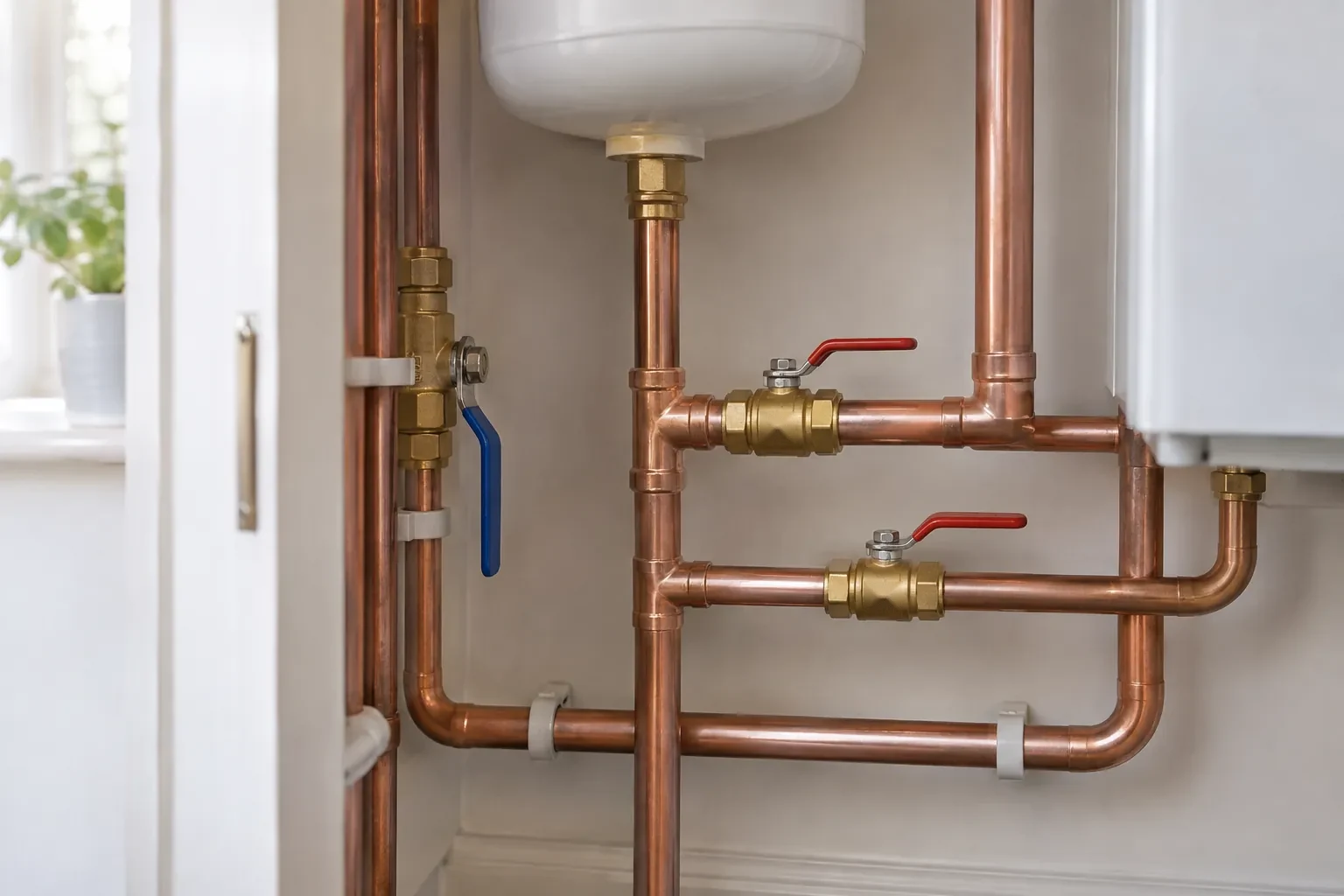
A sealed circuit has a gauge, expansion vessel, filling point and relief valve. Water dripping from the relief discharge outside is evidence. An open circuit has a feed and expansion tank and vent; water pumping over into that tank, or a tank run dry, points to blockage, pump position or a stuck float valve.
Leaks and air
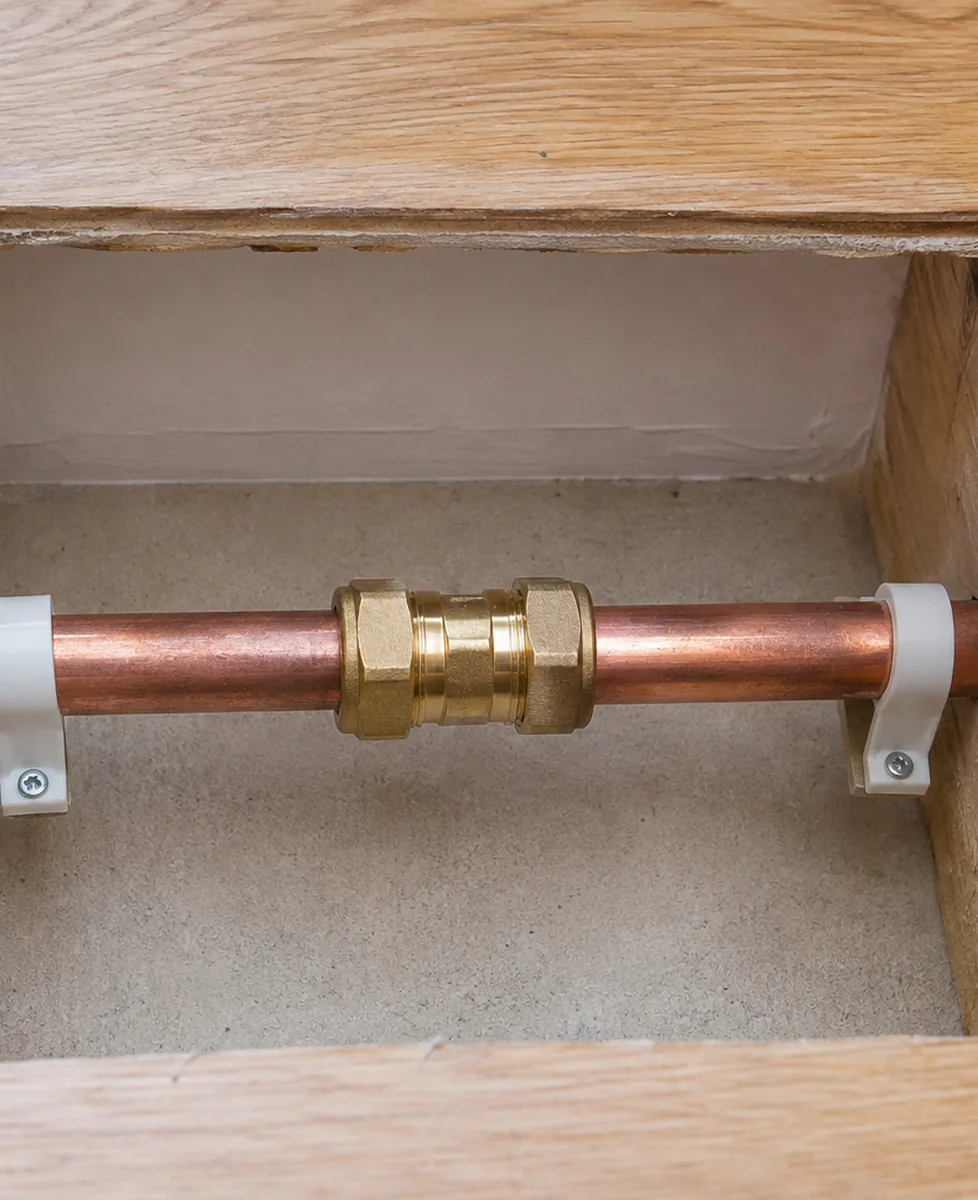
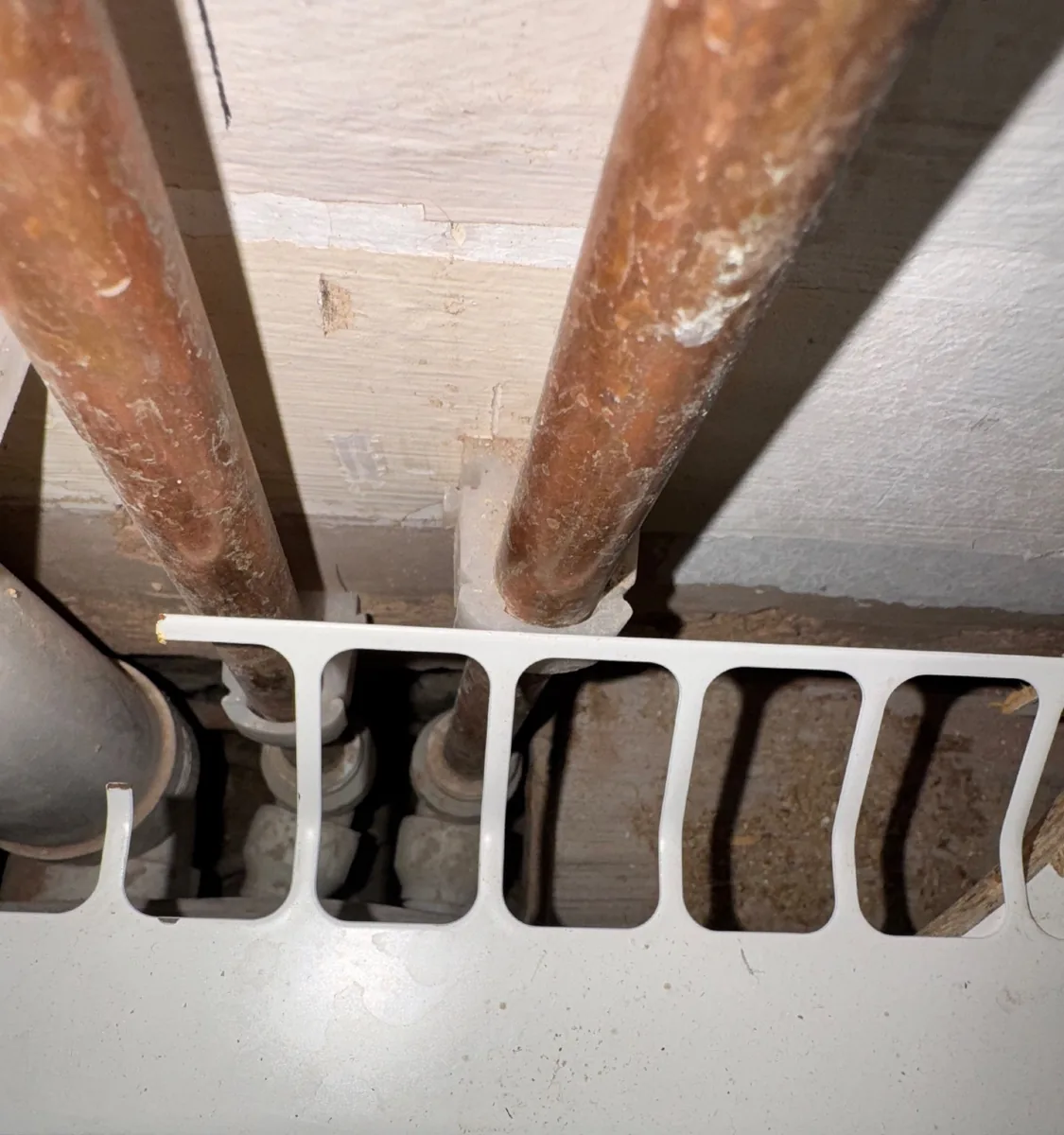
Pressure loss with no visible drip may come from a radiator valve gland, an automatic air vent, a pipe under the floor or inside the boiler. Each branch can sometimes be isolated to narrow it down. See leak detection and repair. Air collects at high points; repeated bleeding means air is getting in or gas is being produced by corrosion.
Where gas rules begin
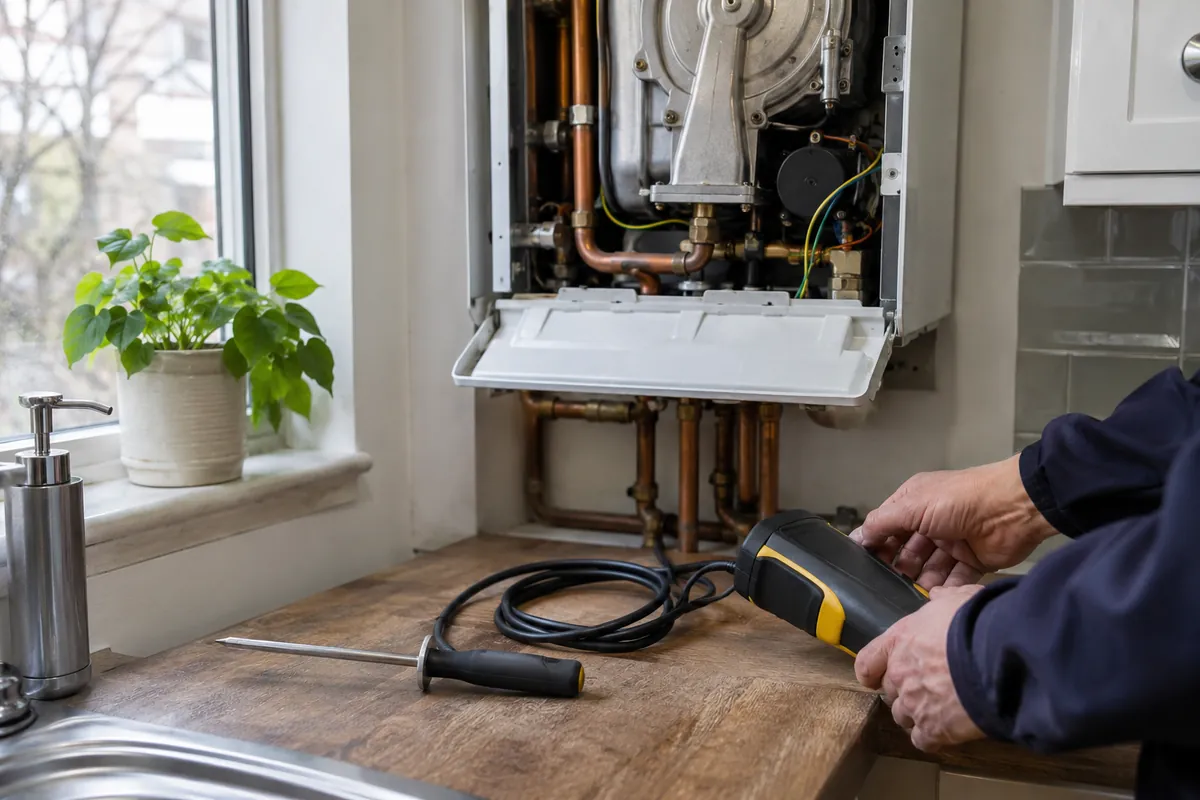
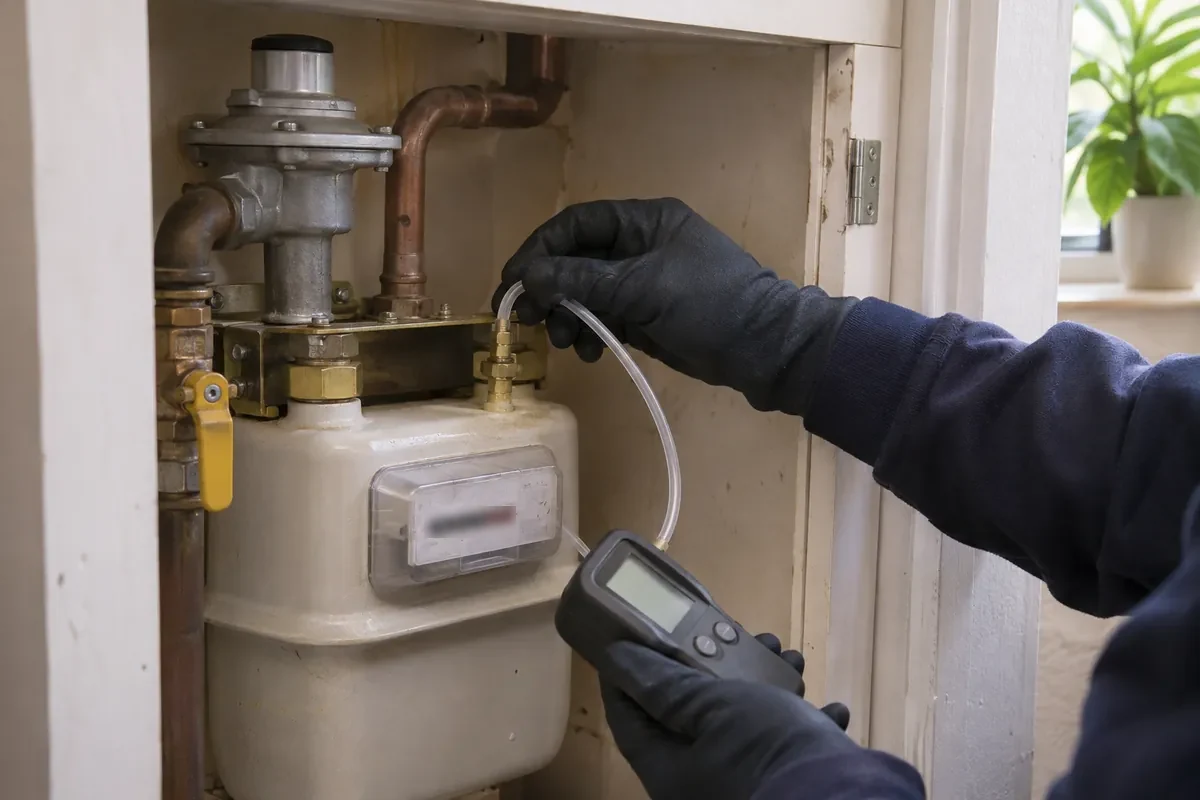
Pipes, radiators and external valves are water-side work. The flue, gas supply and combustion circuit of a gas boiler are for a Gas Safe registered engineer alone, as described under boiler repair.
Proving the repair
- Run each zone alone, then all together.
- Compare flow and return temperatures once stable.
- Check every radiator top, middle and bottom.
- Note cold pressure, then hot pressure.
- Revisit disturbed joints after cooling.
- Confirm controls switch the system off as well as on.
Billing for this work
| Time | Rate |
|---|---|
| Weekday, 1 hour minimum | £110 per hour |
| Evening or weekend | from £140 per hour |
24/7 emergency visits: £110 an hour plus a £60 call-out on weekdays in the daytime, from £140 an hour plus £60 in the evening or at weekends. Booked jobs carry no call-out fee. Materials are extra and agreed first. VAT is not added. Quotation free. Rates verified 28 November 2026: billing detail.
Details worth writing down
Note on the contact form which radiators heat, which do not, whether hot water behaves, the gauge reading cold and hot, recent work such as a new radiator or floor, and any noise with its location. Pictures of the pump, valves, controls and cylinder are worth having. Email photographs to info@properplumbinglondon.co.uk after sending.
Related reading
Related water-side pages cover radiator valves, drain cocks, corrosion between metals and expansion in pipes.
At a glance
- Service
- Central heating repairs
- Area
- All of Greater London (service-area business, no showroom)
- Quote
- Free. Get the price in writing before work starts
- Who does it
- Gas work only by Gas Safe registered engineers
- Phone
- 020 3961 8088
Questions
Why does topping up the pressure only work for a few days?
A sealed system that keeps losing pressure is losing water or has a failing expansion vessel or relief valve. The cause is found before more water is added, because fresh water feeds corrosion.
Why are radiators warm when only hot water is selected?
A motorised or diverter valve that is letting water pass is a likely cause.
Which heating jobs need a Gas Safe registered engineer?
Anything on a gas boiler's combustion circuit, gas supply or flue. Pipes, radiators and external valves are water-side work.