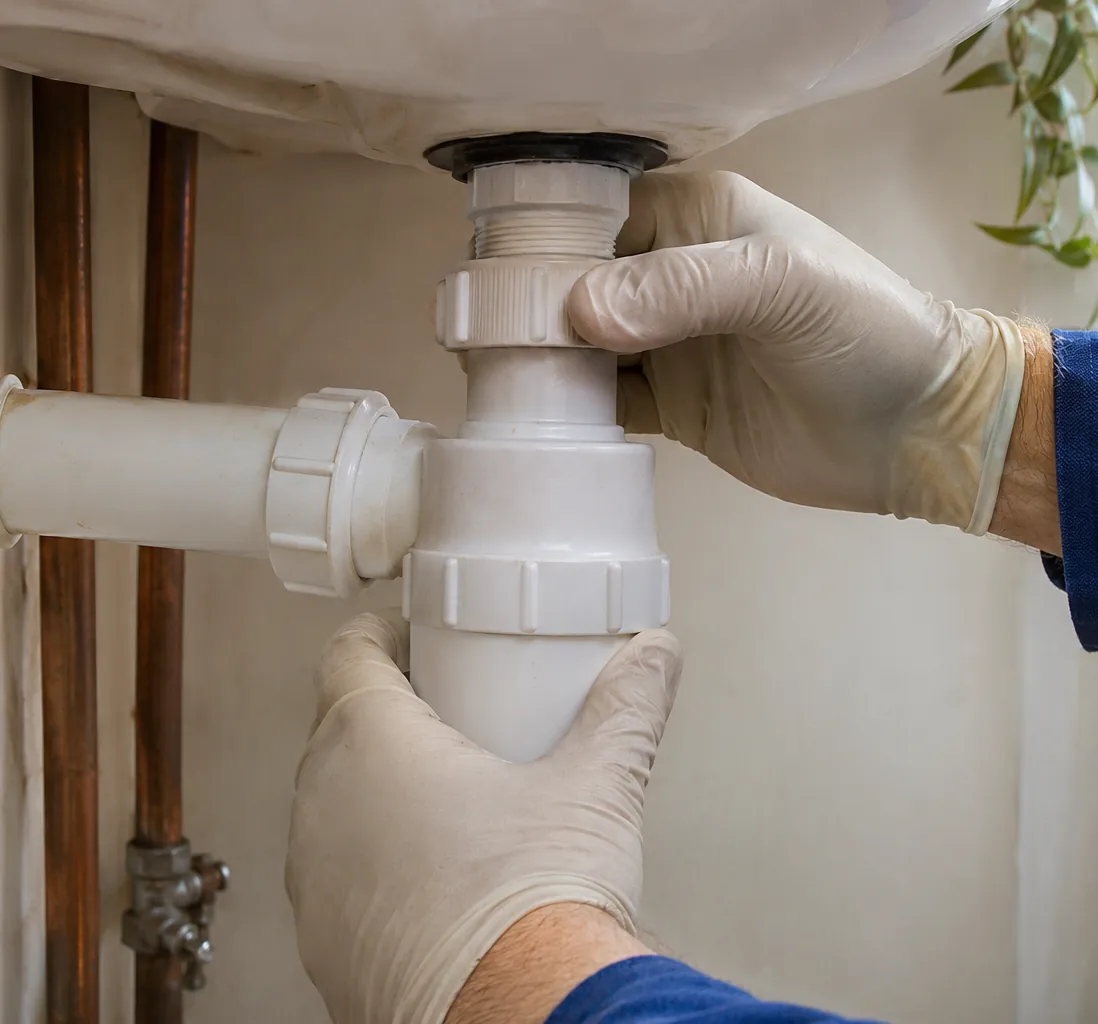
Waste pipes
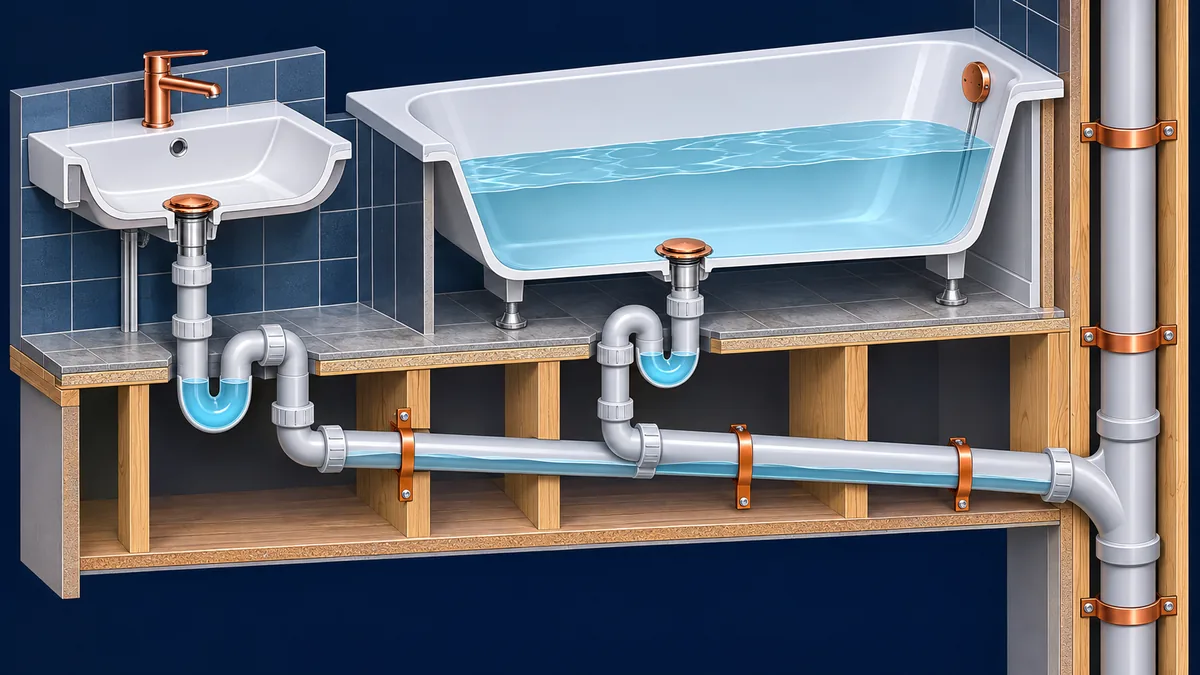
A waste pipe carries used water from a basin, bath, shower, sink or appliance to a stack, gully or drain. It works by gravity, so size, slope, length and air supply decide whether it behaves. Choose the page that matches your situation.
| Situation | Page |
|---|---|
| A cracked, sagging or badly jointed run | Waste pipe repair |
| A basin, sink, bath or appliance is moving | Extending or moving a waste pipe |
| Bubbling or sucking noises from traps | Gurgling waste pipes |
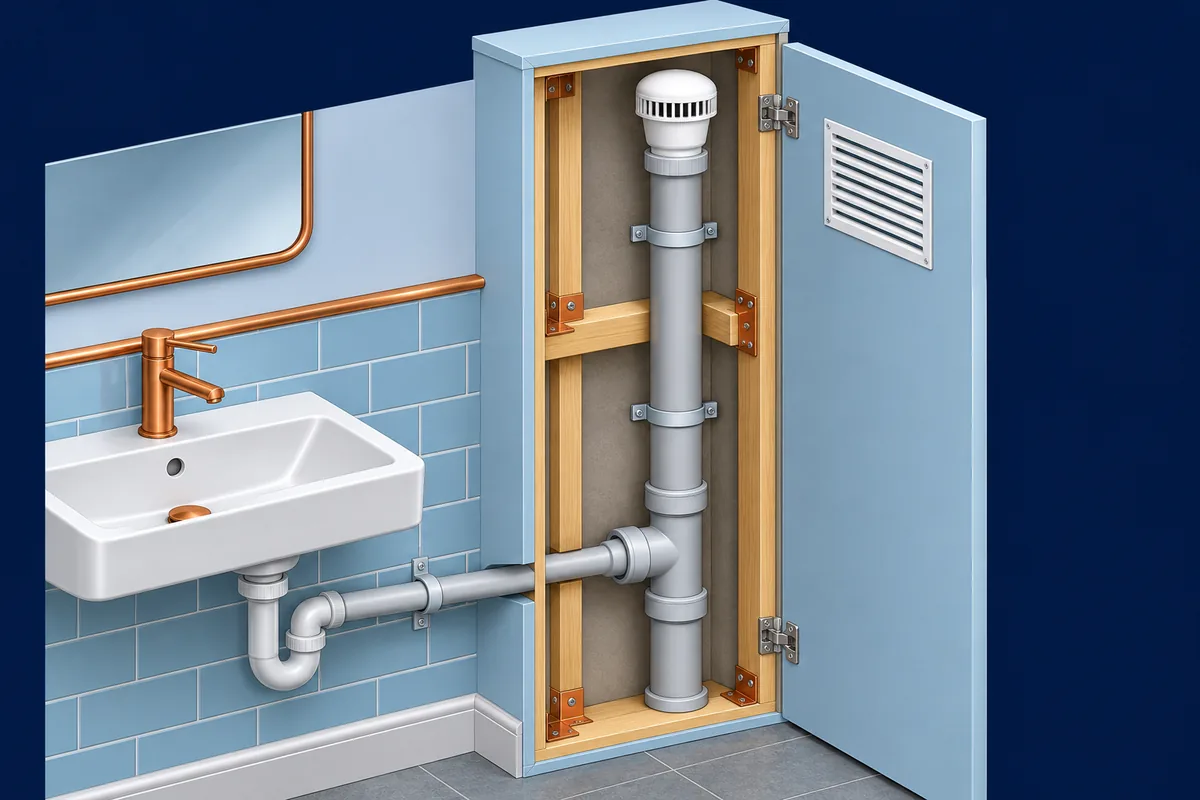
| A branch or stack needs air without a new roof vent | Air admittance valve fitting |
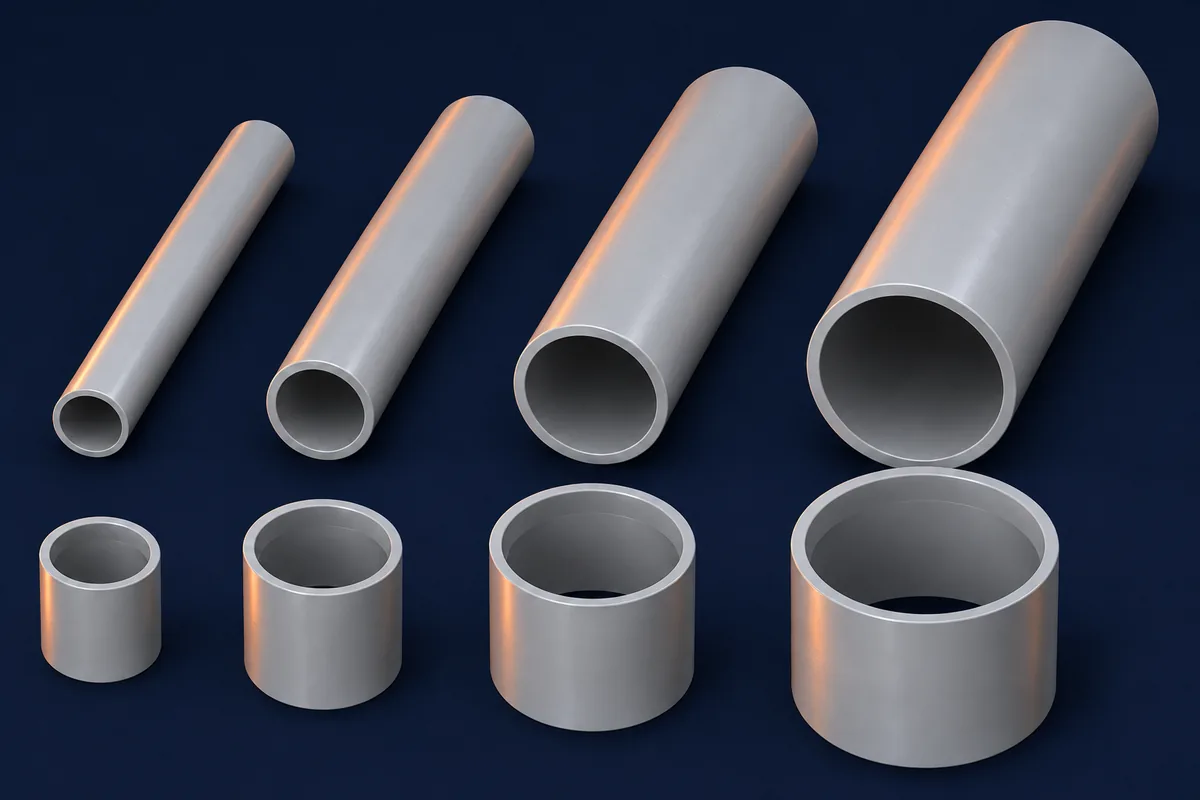
| You need diameters, falls and lengths | Waste pipe sizes |
| Pipes need covering but must stay reachable | Boxing in pipes |
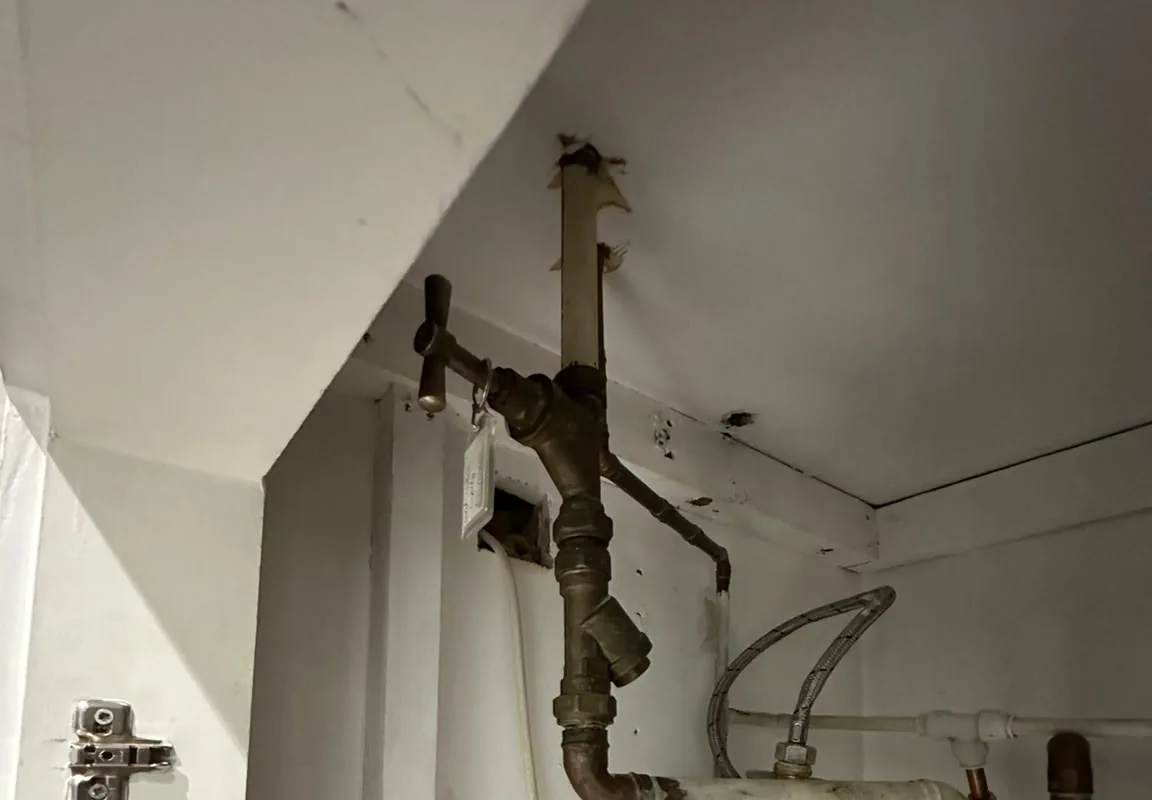
| Nothing drains in freezing weather | Frozen toilet or waste pipe |
| Two fittings are to share a run | Combining waste pipes |
| Smells return after a trap empties | Trap siphonage |
| A sink or basin is standing full | Blocked sinks |
| An underground run has backed up | Blocked drains |
For homes in England, the guidance behind most of these pages is Approved Document H, 2015 edition, which covers sanitary pipework and drainage under the Building Regulations. Ask your local building control body whether a particular alteration needs an application.
Foul or waste water coming indoors: put every connected fixture out of use and find immediate help. To describe planned work, use the contact form.