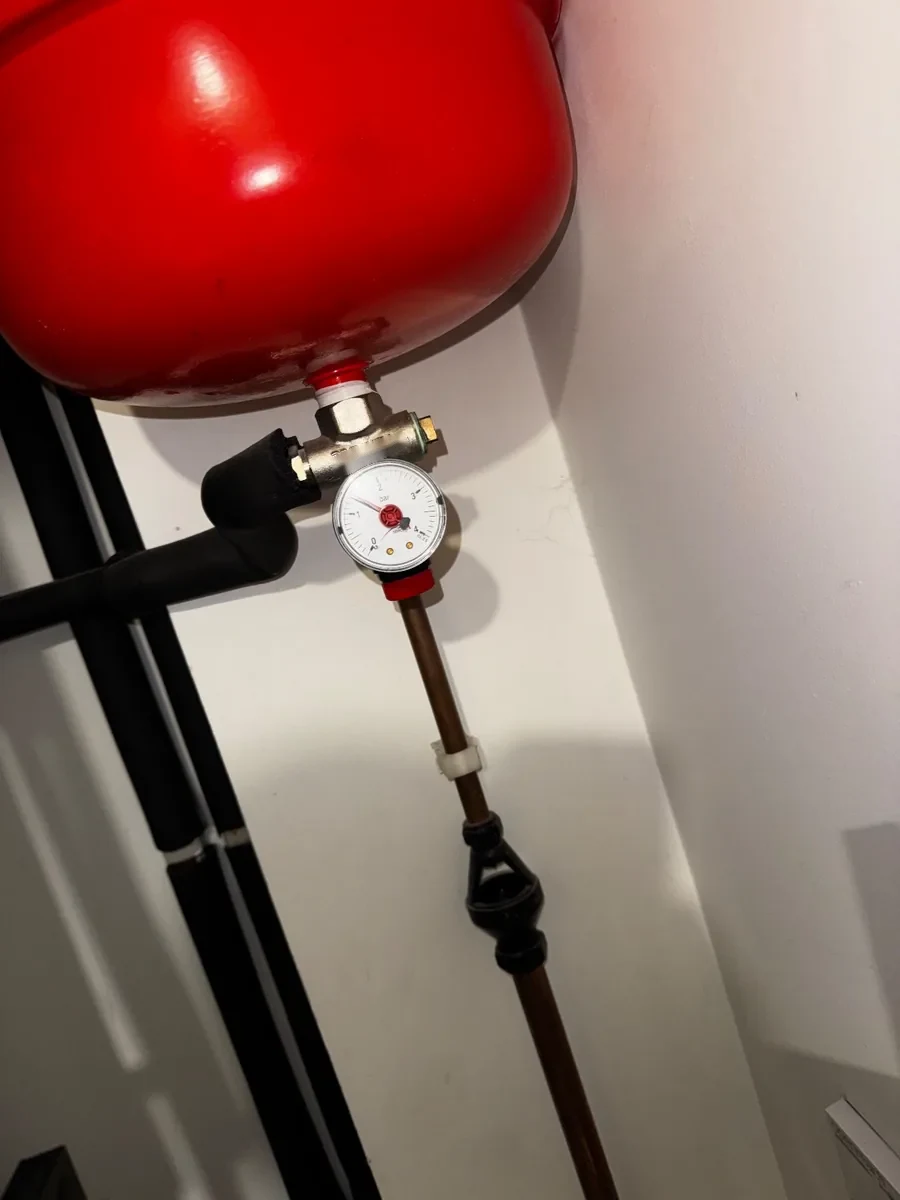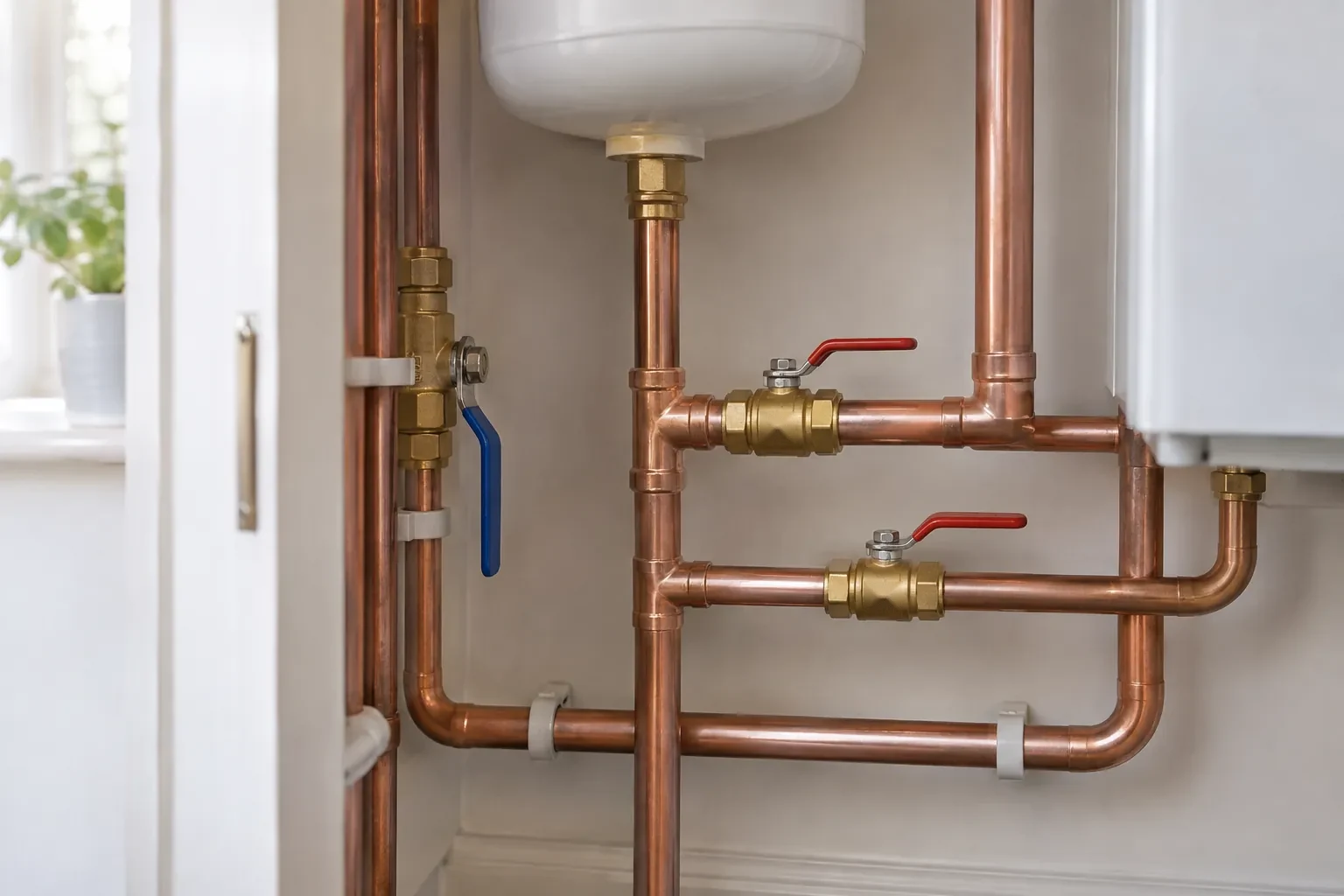
Noise and water flow
In a London home, a pressure reducing valve holds the pressure in your pipework at a set level when the incoming supply is higher. It is worth fitting when measured pressure is high enough to cause noise, drips or wear, or when an appliance manufacturer sets a lower maximum inlet pressure than your supply delivers. It cannot raise pressure, and it is the wrong remedy for weak flow.
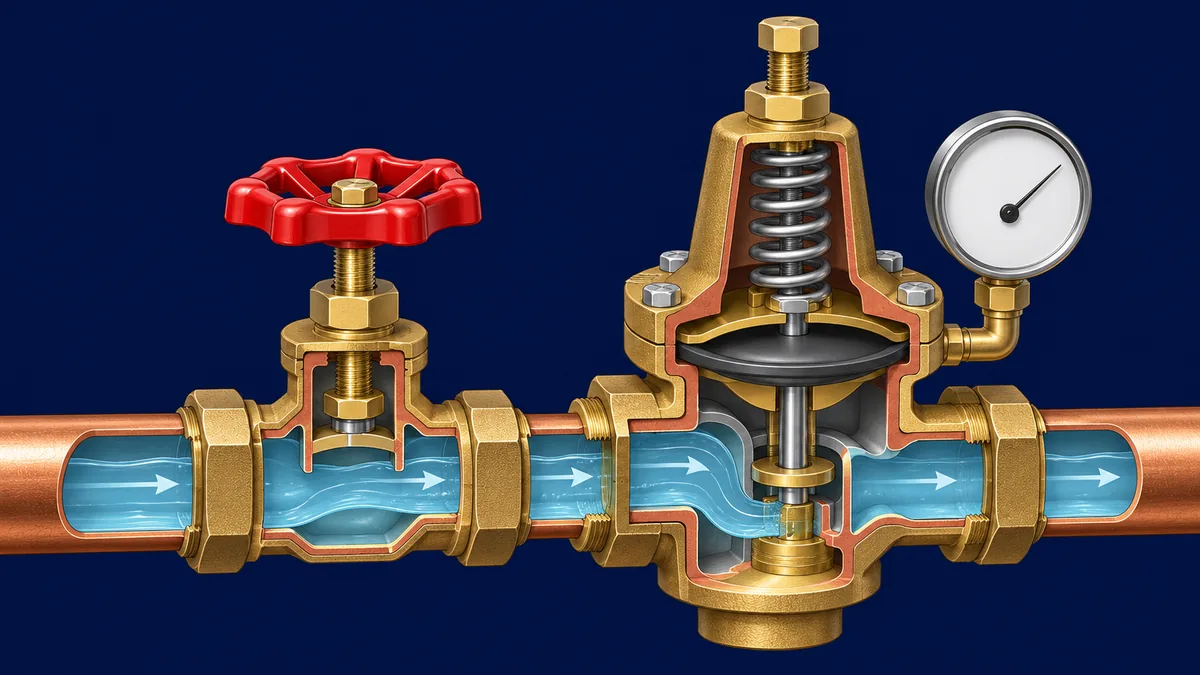
When it is needed
- Gauge readings that stay high, particularly overnight
- Whistling or banging at several outlets
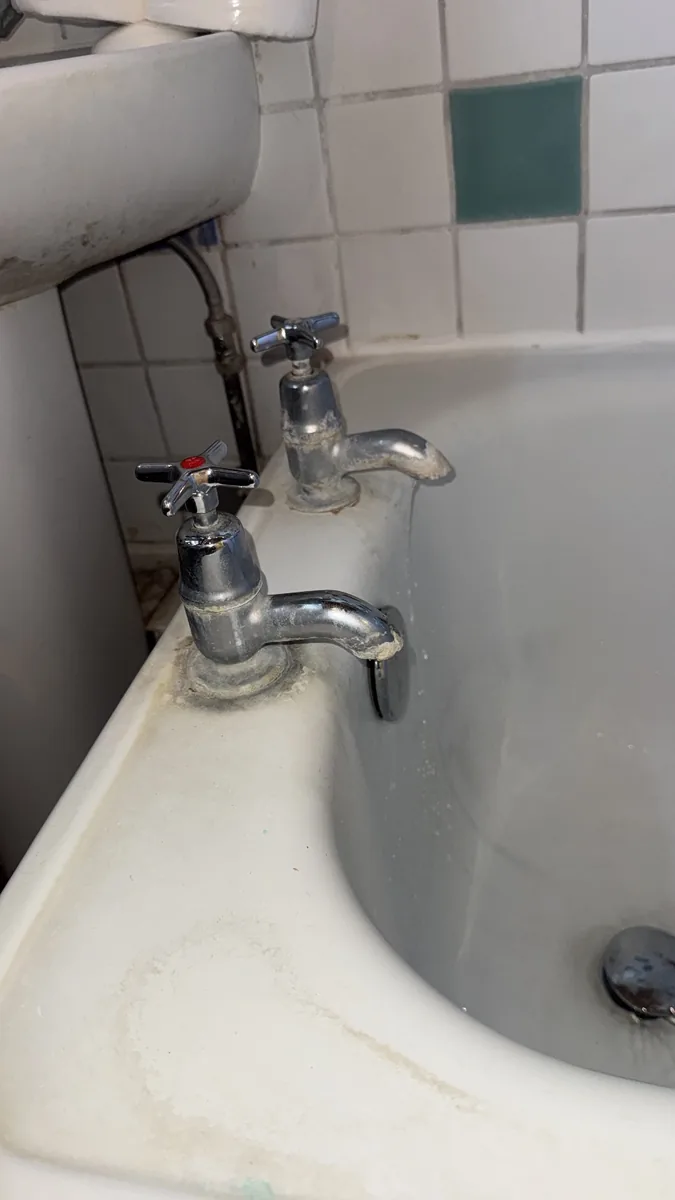
- Float valves and tap parts failing repeatedly
- Written appliance instructions requiring a lower inlet pressure
WaterSafe suggests a reducing valve where excessive pressure contributes to banging pipes. Measure first with the method in testing pressure and flow. One noisy tap is more likely to need a part than a new valve.
What gets looked at
- Static and running pressure, ideally at more than one time of day
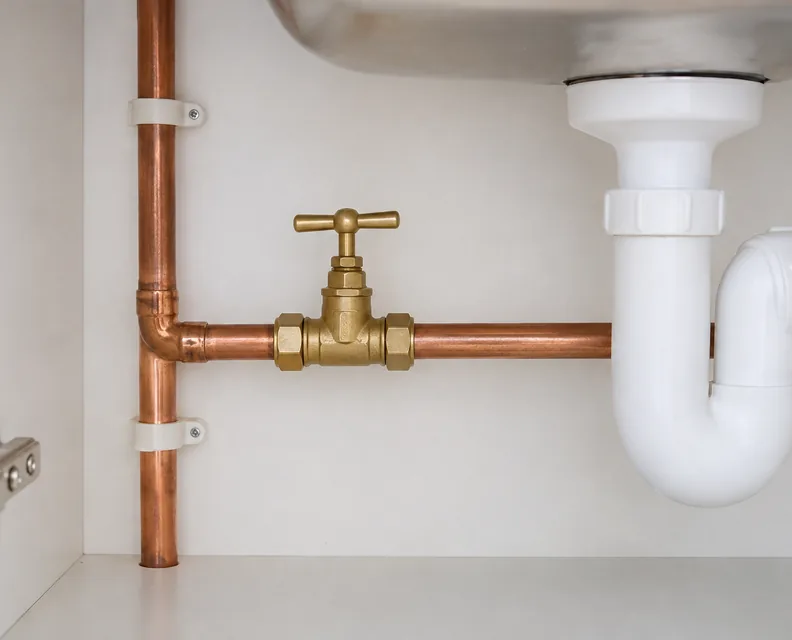
- The incoming stop valve: whether it closes fully and what comes after it
- Pipe size and material, and enough straight, reachable length for the valve
- Whether outside taps or other branches leave before the proposed position
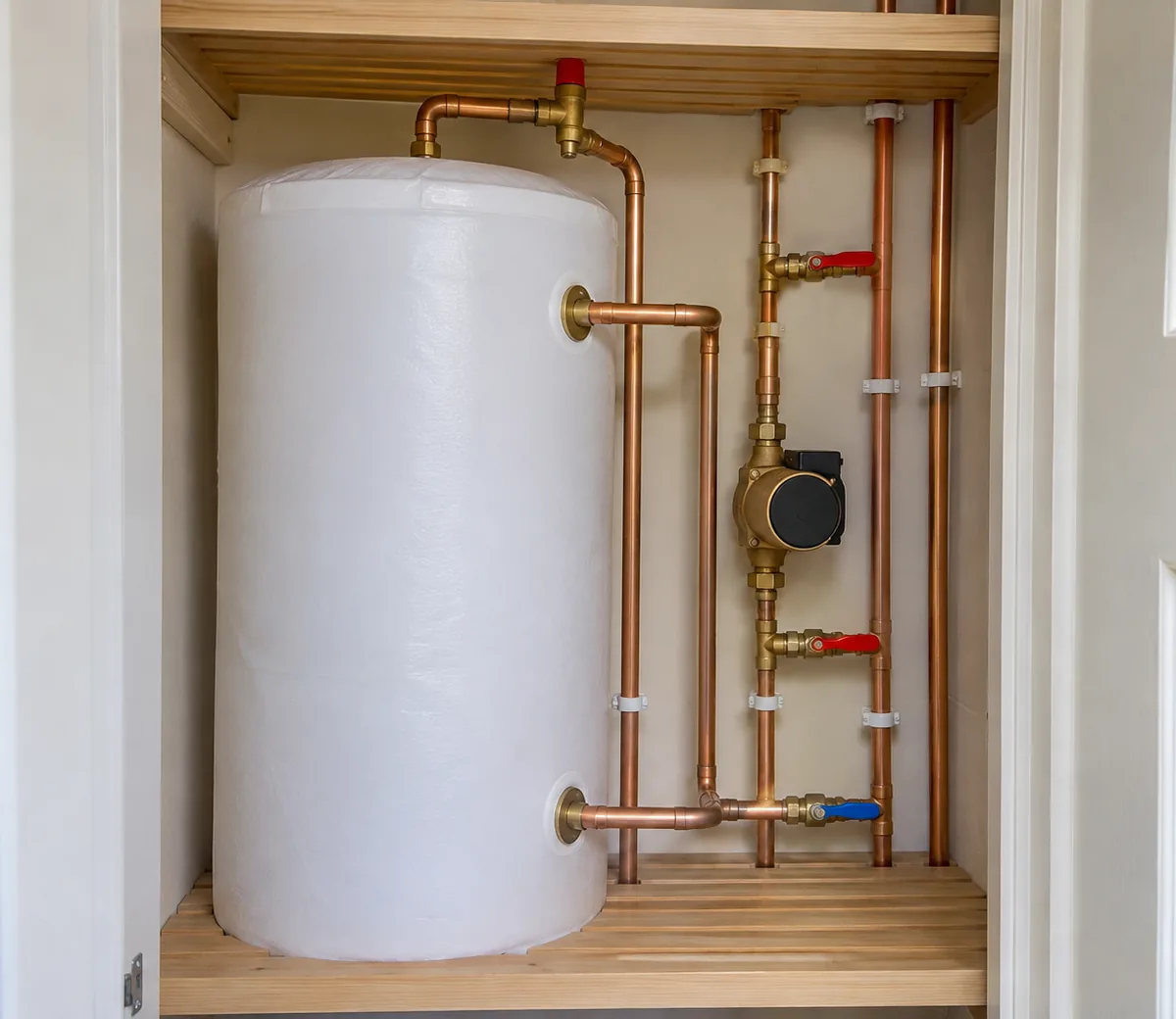
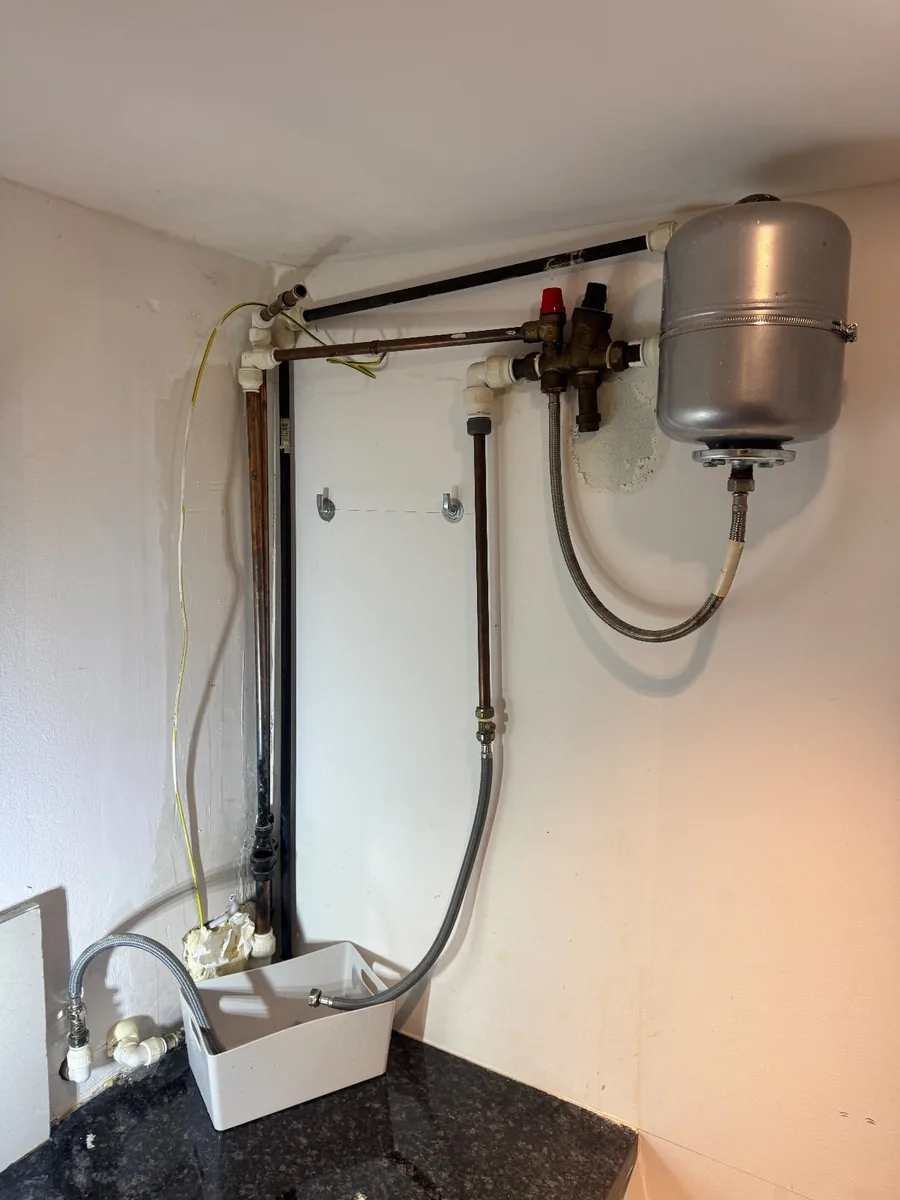
- Existing reducing valves, for instance as part of an unvented hot water set
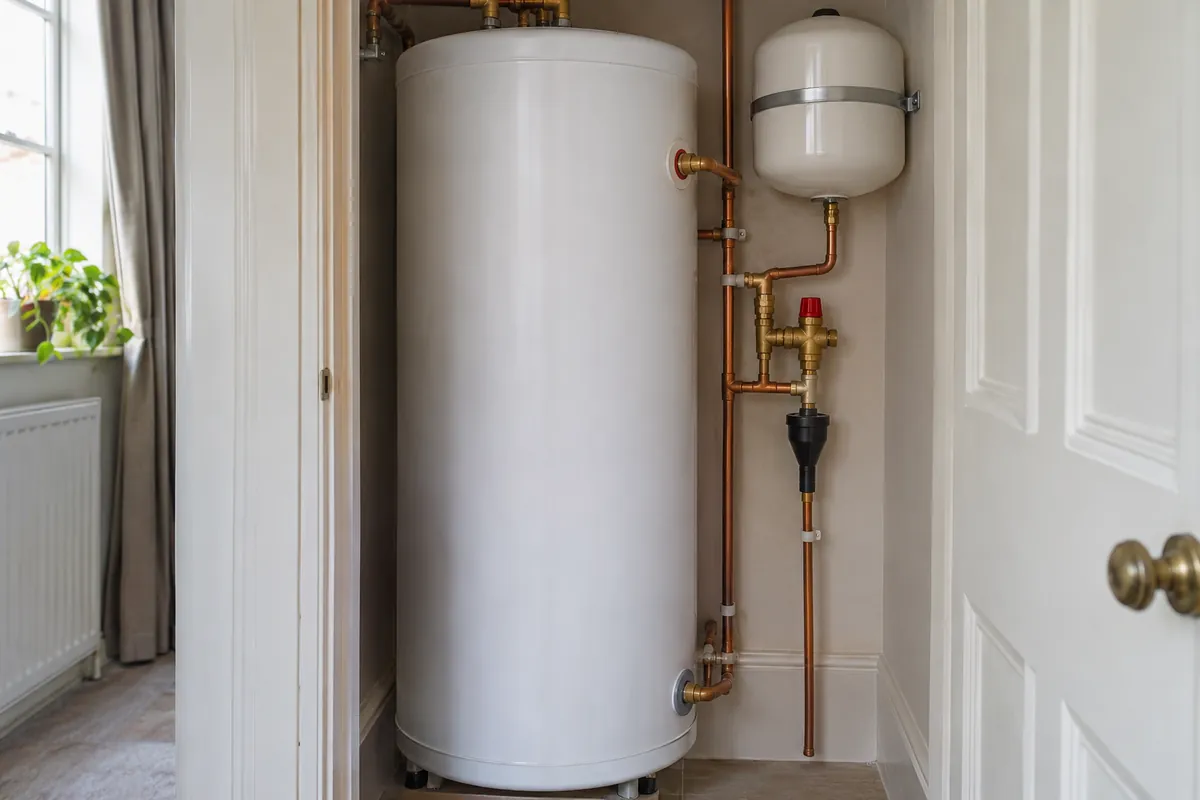
An unvented cylinder normally has its own matched pressure controls. Changes around it belong with someone qualified for unvented systems, because hot and cold balance depends on the arrangement.
Position options
| Position | Effect | Trade-off |
|---|---|---|
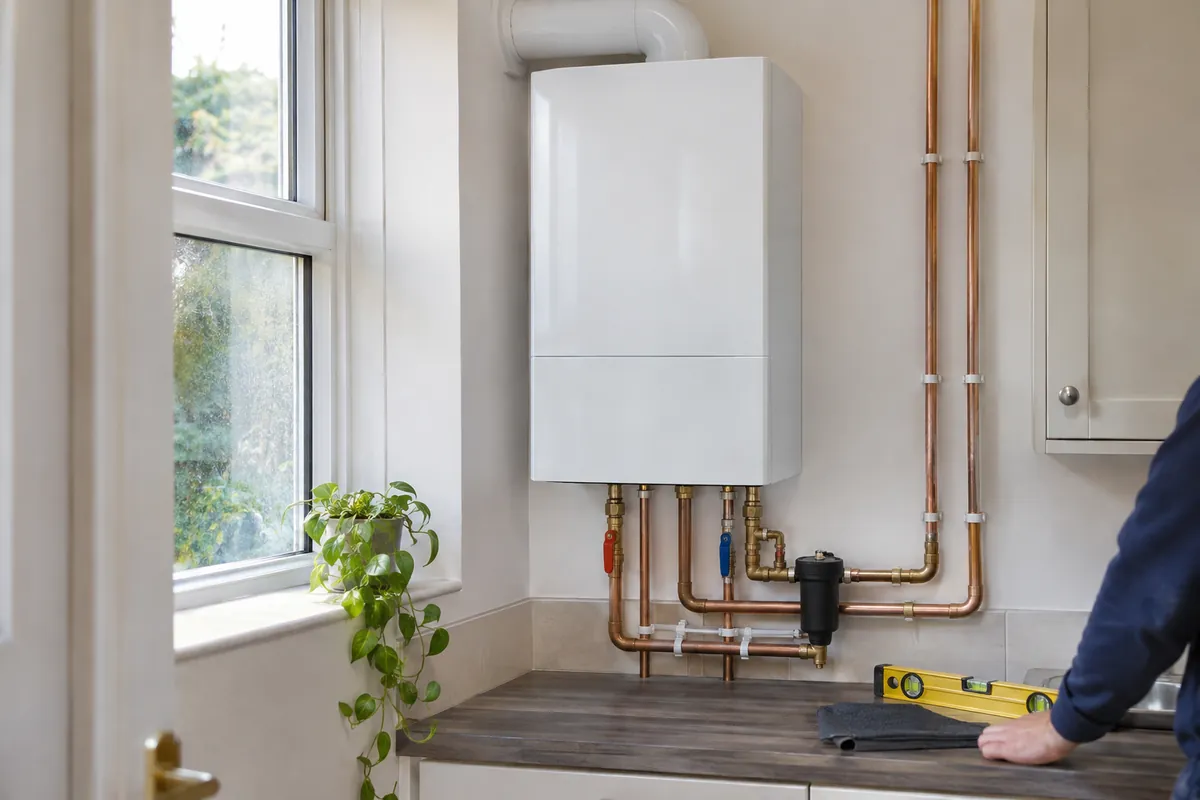
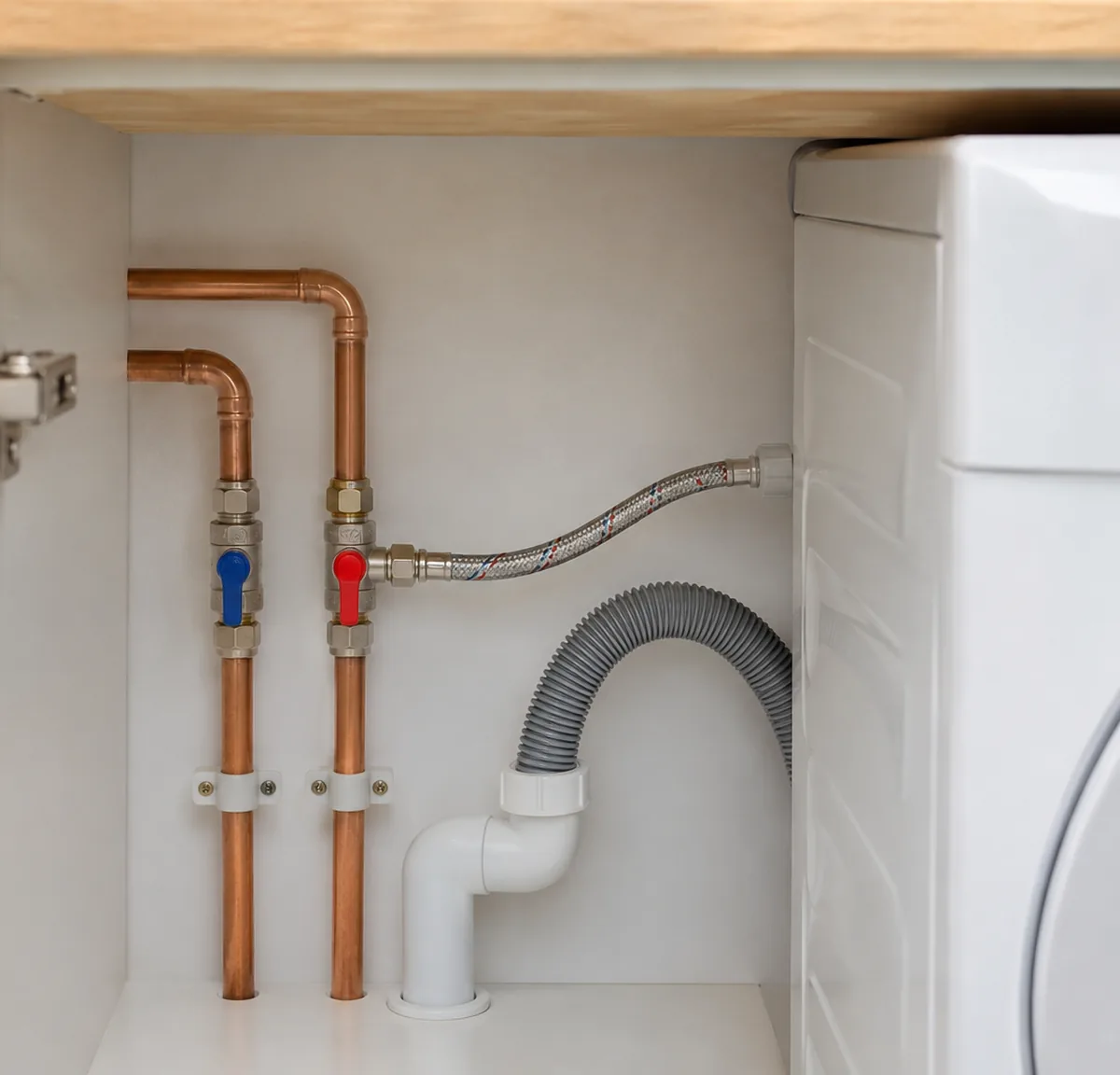
| Just after the inside stop valve | Protects the whole home | Needs room at the entry point; reduces every branch |
| On one branch | Protects a single appliance or area | Other fittings stay at full pressure |
| Ahead of one appliance only | Smallest change | Does nothing for noise elsewhere |
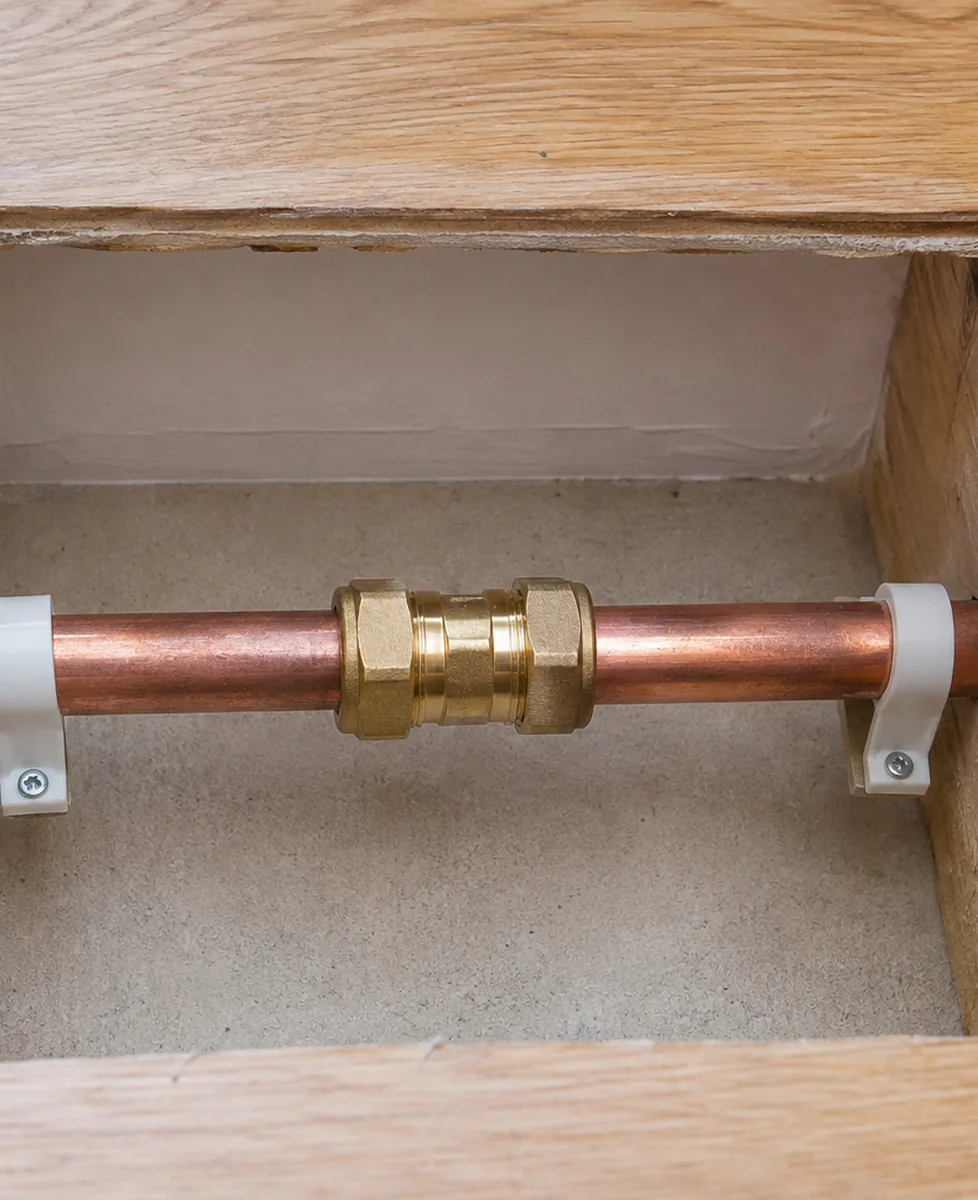
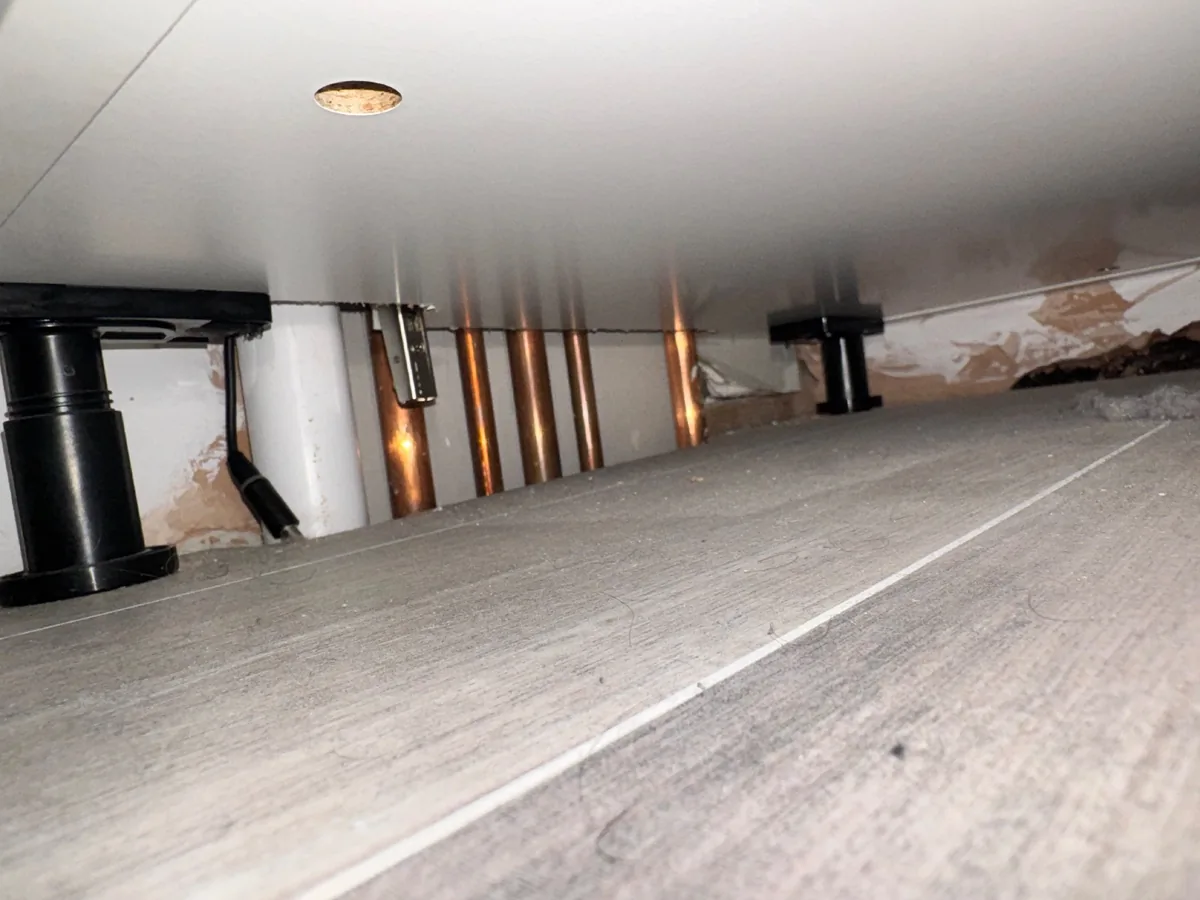
The valve is a fitting that needs setting and maintenance, so it must stay reachable. Schedule 2 of the Water Fittings Regulations rules out concealing any fitting meant for operation or maintenance, and treats poor access as concealment.
How the work usually runs
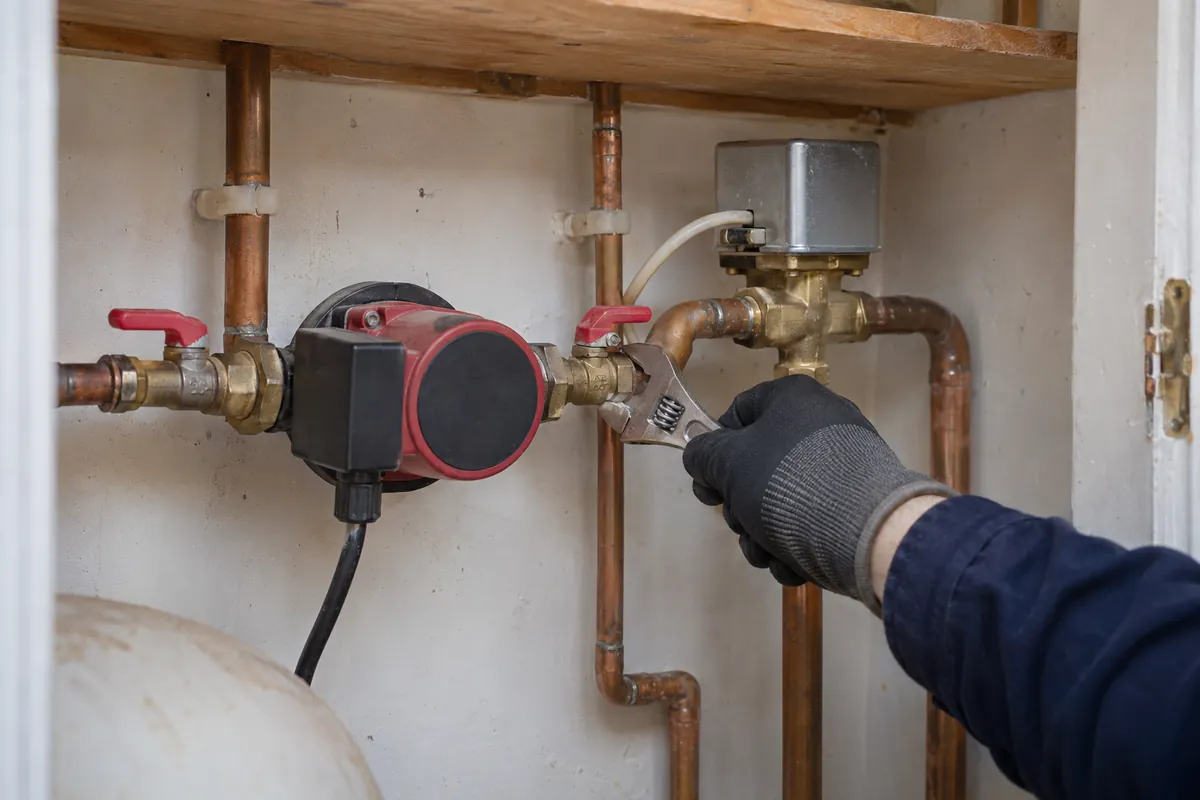
- Close the incoming stop valve and drain the pipe.
- Cut in the valve with the flow arrow in the right direction, following the maker's instructions on orientation.
- Flush grit from the pipe before it can lodge in the valve seat or strainer.
- Provide isolation and, where practical, a gauge point downstream.
- Restore water, set the outlet pressure, check under flow and again with everything shut.
Set the figure to suit the most sensitive fitting while keeping adequate flow on upper floors. Turning it too low trades noise for a weak shower.
What changes the price
- Whether the stop valve holds, or needs replacing first
- Access: an open cupboard against boxed or tiled-in pipework
- Pipe material, especially older metric or imperial mismatches
- Valve quality, size, gauge and strainer options
- Making good any panels that must be opened, and creating an access hatch
Ask for a quotation that lists the valve model, position and what is excluded. How we price explains the approach.
Afterwards
Note the set pressure and keep the instructions. A reading that creeps upwards with all taps shut suggests the seat is dirty or worn, or that thermal expansion is raising pressure downstream; report it.
Ask for a quote
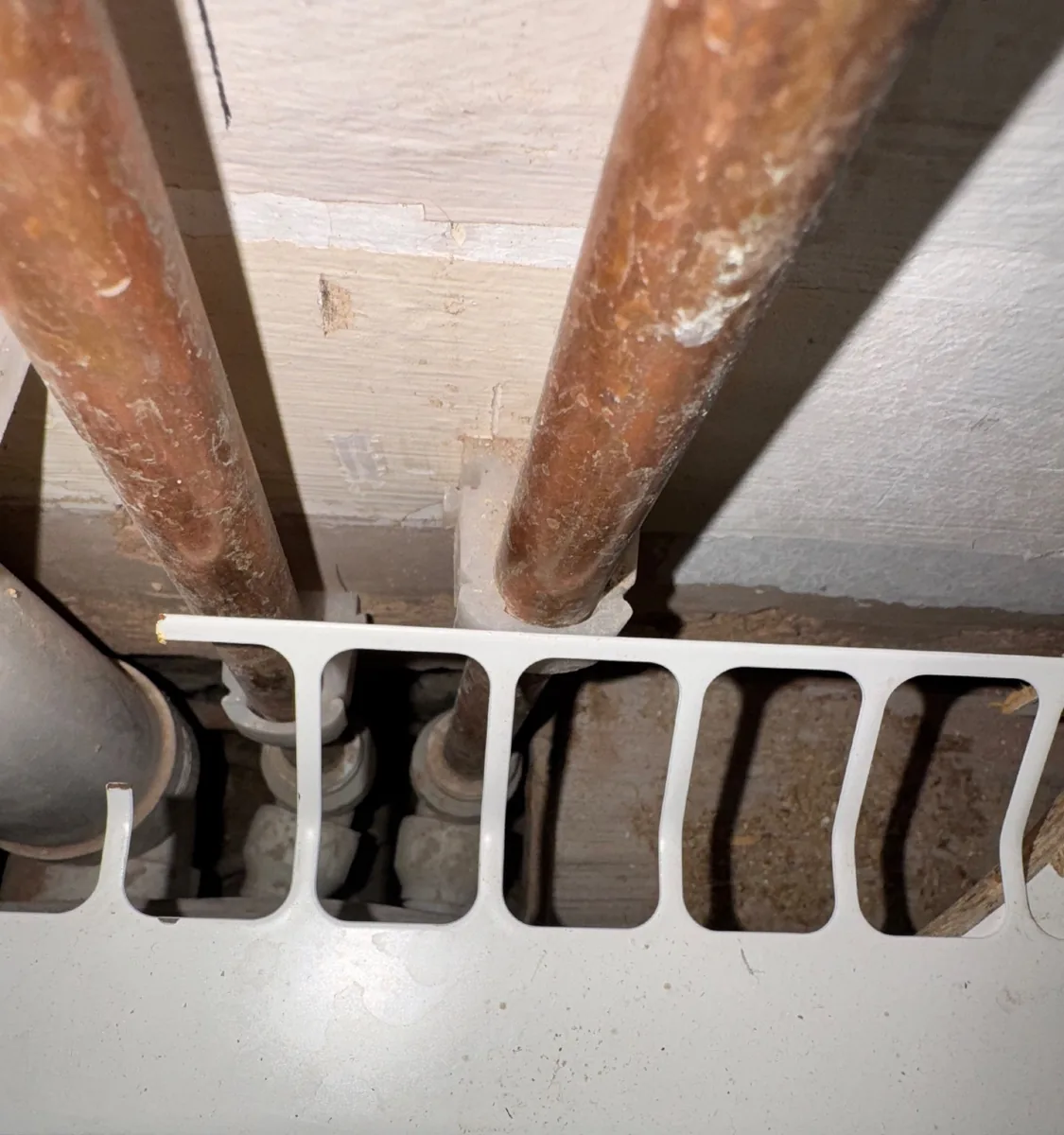
Email your readings, photos of the incoming stop valve and surrounding pipe, floor count and the symptoms. Text belongs in the contact form, ahead of any email.
Related reading
The wider picture includes how a reducing valve works, a booster pump that keeps cycling and humming or vibrating pipes.
At a glance
- Service
- Fitting a pressure reducing valve
- Area
- All of Greater London (service-area business, no showroom)
- Quote
- Free. Get the price in writing before work starts
- Phone
- 020 3961 8088
Questions
Do I need a pressure reducing valve?
Measure first. A gauge reading that stays high, together with noise, failing valves or an appliance limit that your supply exceeds, points towards one. One noisy tap or weak flow does not.
Where does a pressure reducing valve go?
To protect the whole home, usually just after the inside stop valve. It can also serve one branch or appliance. It must stay accessible for setting and maintenance.
Is it the same as the valve on an unvented cylinder?
Treat them separately. An unvented cylinder has its own matched pressure controls, and work on them is only for a G3 qualified engineer.