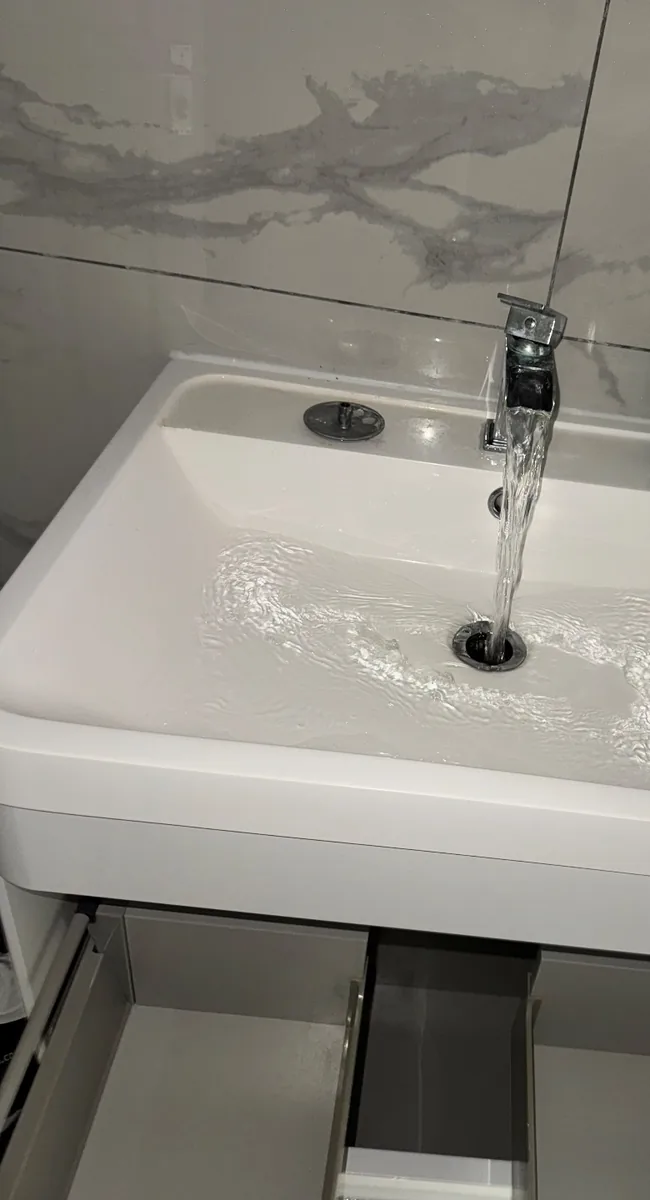
A kitchen sink or basin that will not empty can be cleared by Proper Plumbing London anywhere in Greater London. Booked weekday work is £110 an hour, minimum one hour, and quoting costs nothing.
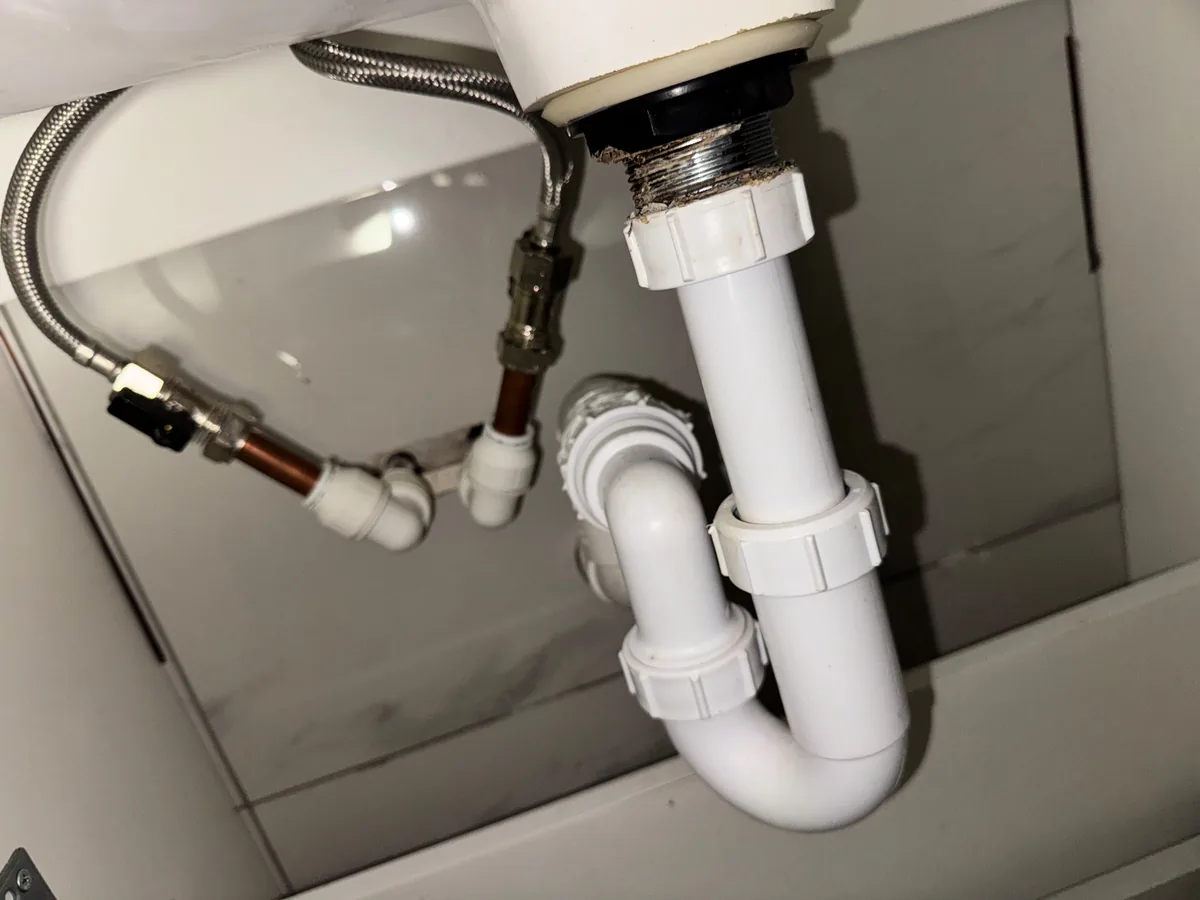
When a sink is slow or holding water, the cause sits somewhere between the waste outlet and the point where its branch pipe joins a stack or gully. Finding which part holds the obstruction decides the method, and a single affected sink usually means the fault is local.
The path water takes
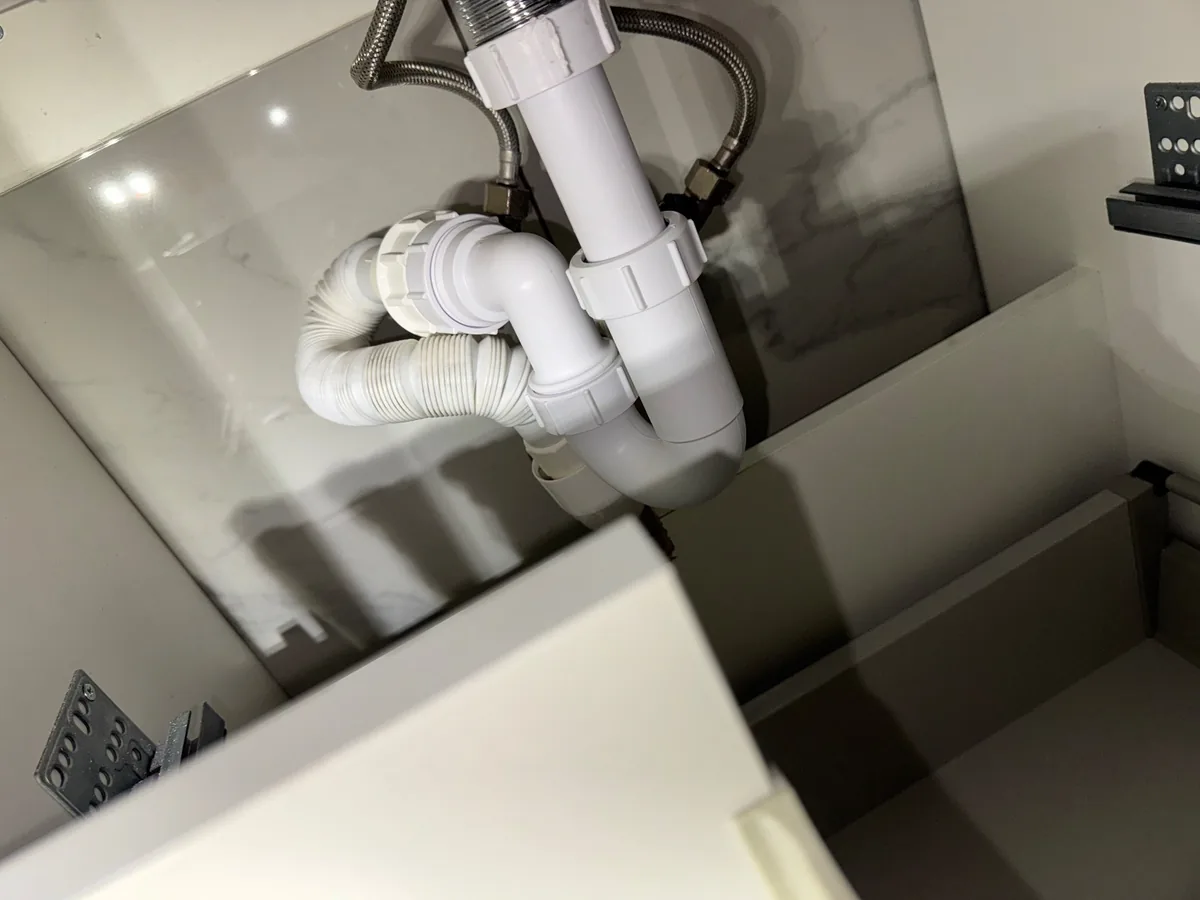
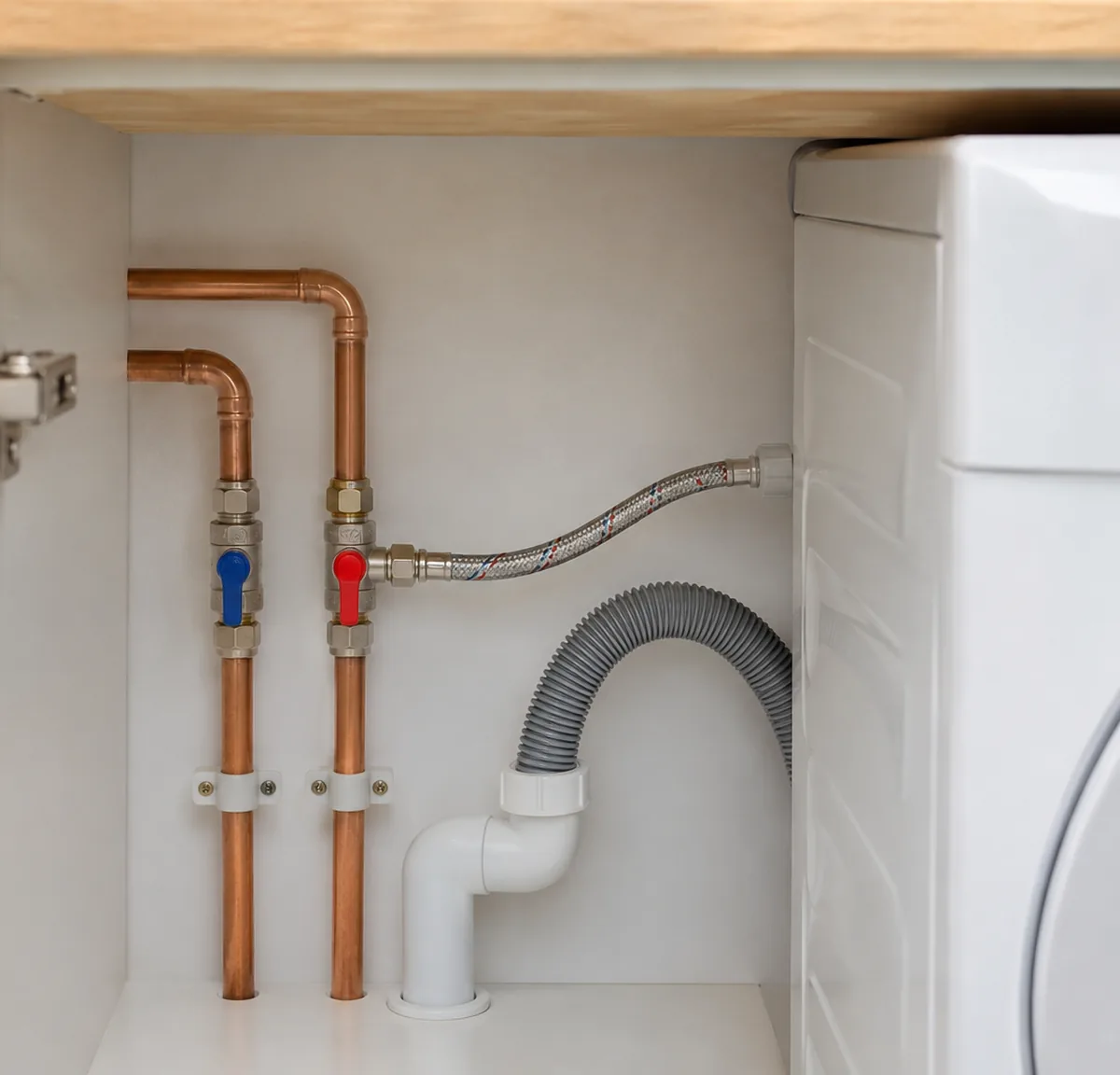
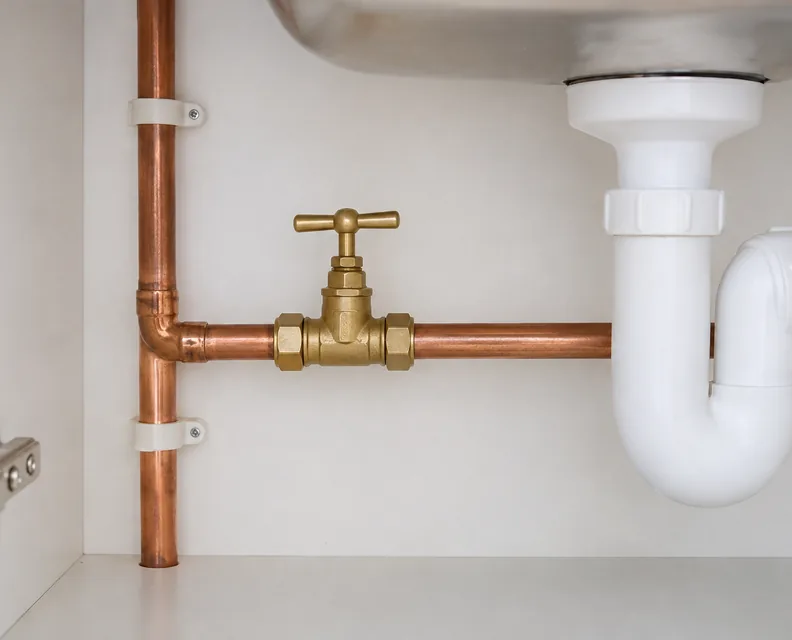
Water passes the strainer, drops into a trap that holds a seal against drain odour, then runs along a branch pipe with a shallow fall. Kitchen branches collect cooled fat and food particles; basin wastes collect hair, soap residue and small objects. Appliance hoses often join at the trap, so a blockage there can push water back into a dishwasher or washing machine.
Diagnosis
- Is only this fitting slow, or others nearby too?
- Does water rise in a second bowl or an appliance when this one drains?
- Does the trap gurgle, or smell after emptying?
- Did it slow gradually or stop at once?
- Has any pipework been changed recently?
Gradual loss suggests build-up along the run. A sudden stop suggests an object. Several fittings affected moves attention to a shared pipe, covered under blocked drains.
Clearing
| Method | Where it works | Caution |
|---|---|---|
| Dismantle and clean the trap | Obstruction at the sink | Washers must reseat cleanly |
| Plunger with overflow covered | Soft blockage close by | Can disturb loose joints |
| Hand-fed flexible spring | Along the branch pipe | Thin plastic bends need care |
| Remove an access cap | Deeper in the run | Contain the held water |
If chemical cleaner has already been poured in, say so before anyone opens the trap. The liquid standing there may burn skin, and products should never be mixed.
Underlying faults worth correcting
A branch that sags, runs flat, turns through several tight bends or has a narrow section will block again after clearing. Repair means re-supporting or replacing that length, with access added where it is useful. Approved Document H gives guidance on branch sizes, falls and access for building drainage in England.
Testing
Fill the bowl, release it in one go and watch the discharge. The water should leave steadily with no backing up into the second bowl or appliance. Disturbed joints get dried and watched while water runs and again afterwards. The trap should hold water afterwards; if it is being pulled dry, the venting or pipe arrangement needs attention, as explained in trap siphonage.
Keeping it clear
Wipe fat into the bin, use a strainer, and clean hair from basin wastes. Hot water alone moves grease further along, where it sets again.
Double bowls and shared wastes
Where two bowls, or a bowl and an appliance, share one trap arrangement, test them one at a time. Water crossing from one side to the other means the obstruction is beyond the point where they join. Disconnect appliance hoses with a container ready, check that the spigot is open, and refit clips fully. A crowded set of extensions and adaptors under a sink catches debris and is often worth simplifying.
Billing for this work
| Time | Rate |
|---|---|
| Weekday, 1 hour minimum | £110 per hour |
| Evening or weekend | from £140 per hour |
24/7 emergency visits: £110 an hour plus a £60 call-out on weekdays in the daytime, from £140 an hour plus £60 in the evening or at weekends. Booked jobs carry no call-out fee. Materials are extra and agreed first. VAT is not added. Quotation free. Rates verified 28 November 2026: billing detail.
What to send
Say on the contact form what drains slowly and for how long, then email a photograph of everything under the sink.
Related reading
For the pipe behind a slow sink, read about grease in kitchen wastes, combining two waste pipes, running traps, waterless waste valves, trap seal depth and gurgling wastes.
At a glance
- Service
- Blocked sinks
- Area
- All of Greater London (service-area business, no showroom)
- Quote
- Free. Get the price in writing before work starts
- Phone
- 020 3961 8088
Questions
Why does the other bowl fill when one drains?
Both bowls usually share a branch, so a restriction beyond the point where they join pushes water into the other side.
Should I say if chemical cleaner has gone down the sink?
Yes, before anyone opens the trap. The liquid standing there may burn skin, and products should never be mixed.
Why does a sink block again soon after clearing?
A branch pipe that sags, runs flat, has several tight bends or a narrow section can keep collecting debris until that length is corrected.