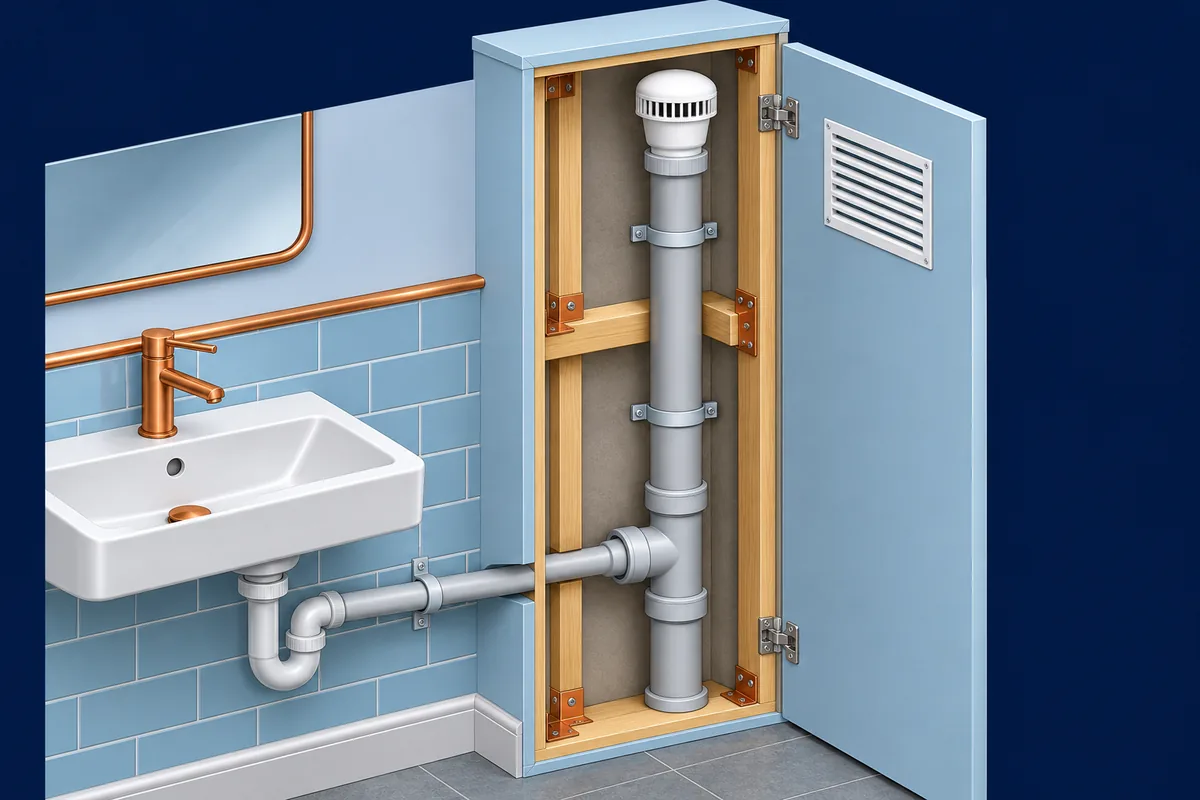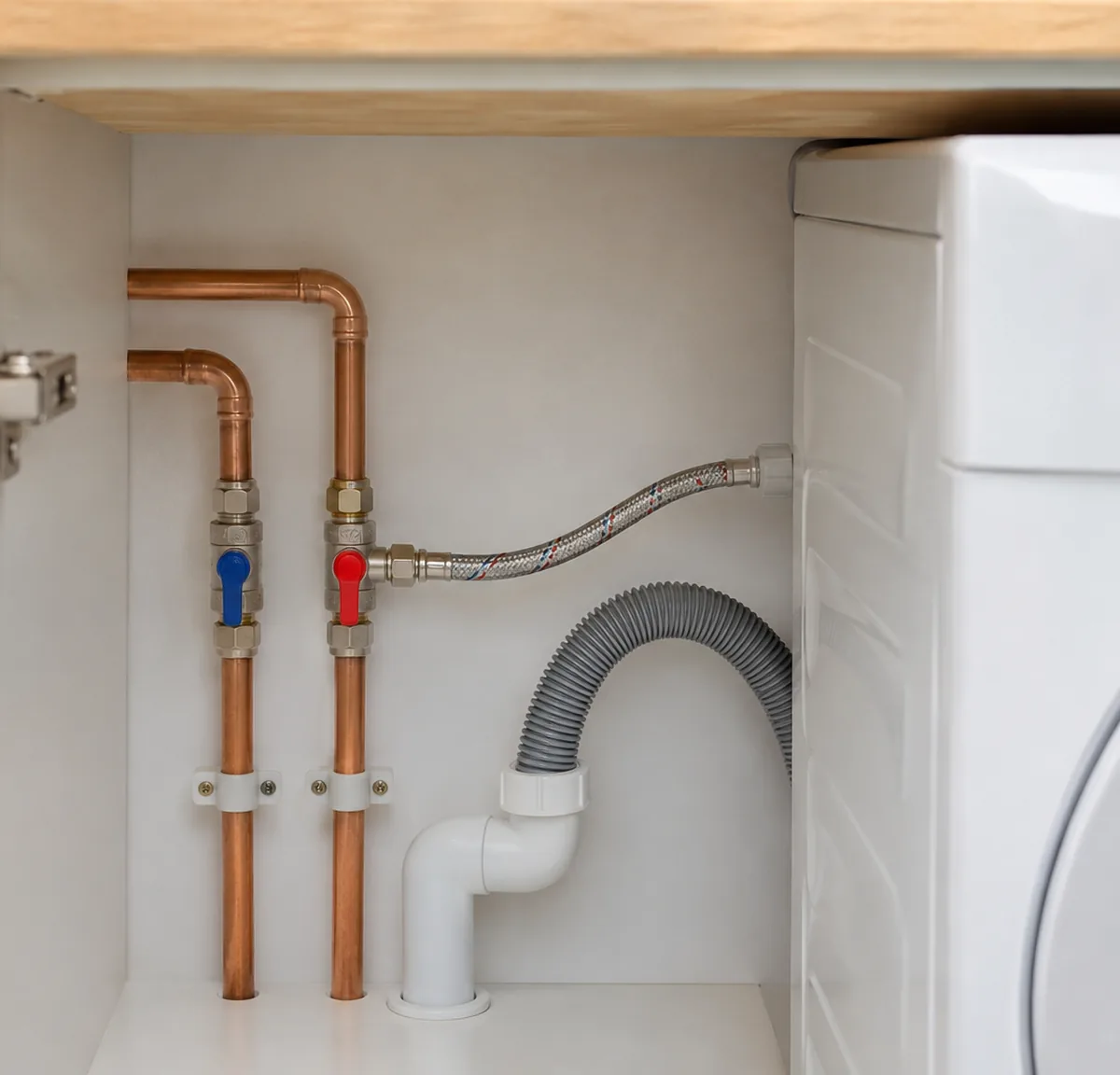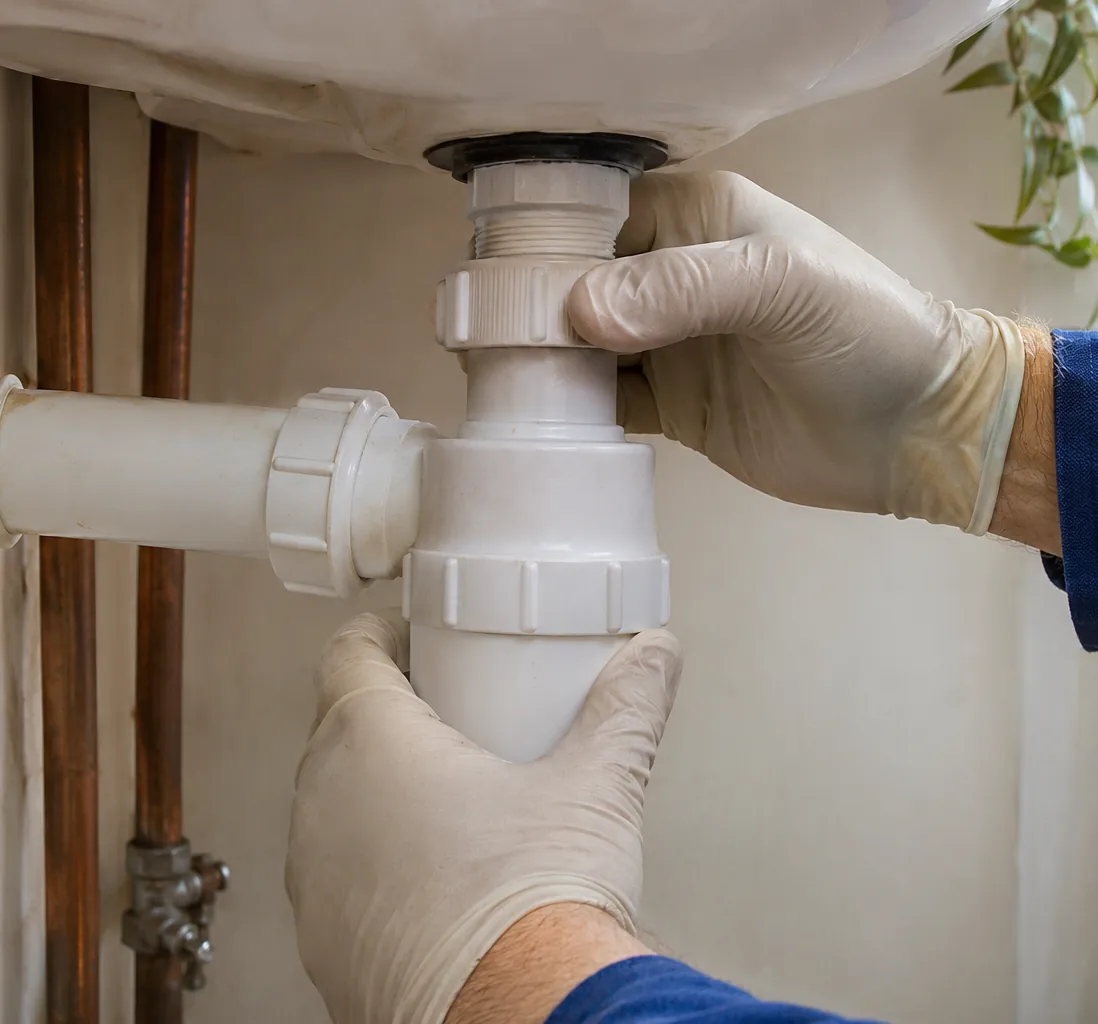
Gurgling is air moving through water, normally the water held in a trap. The pipe is not getting the air it needs as waste flows, or something is narrowing it. Which fixture makes the noise, and which fixture was draining at the time, usually separates the two.
This page deals with noises along waste runs from baths, basins and appliances, in the pipe, boxing or wall.
Two-minute check
- Run one fixture at a time and listen at the others.
- Note whether each drains at its usual speed.
- After the noise, smell at the traps. A drain odour suggests a seal has been drawn down.
- Run a little water into a fixture that smells to refill its trap.
- Remove hair or debris from accessible waste grids. Do not pour mixed chemicals down the pipe.
Decision table
| Observation | Likely cause | Who can fix it |
|---|---|---|
| One fixture gurgles as it drains itself | Run too long or steep for its size, emptying the trap behind it | Plumber |
| Fixture A drains, trap B bubbles | Shared branch under-sized or short of air | Plumber |
| Slow draining along with the noise | Partial blockage | Trap cleaning first, then plumber or drainage specialist |
| Several fixtures, including ground floor, slow or backing up | Blockage further down the stack or drain | Drainage specialist promptly |
| Began after a new appliance or extension | Added load, poor connection or inadequate venting | Return to the installer or ask a plumber |
| Came on after years of quiet, upstairs only | Blocked vent terminal or failed air admittance valve | Plumber |
When the toilet gurgles
A toilet pan that bubbles as a bath, basin or machine empties, or whose water level rises and falls, suggests air trapped by a restriction or poor ventilation in the shared pipe or stack. One slow-clearing WC may be blocked locally; see blocked toilets. If the level climbs towards the rim, or other fixtures back up, stop flushing and treat it as a blockage further along.
A gurgling radiator or boiler is a different fault; see central heating repairs. The appliance itself is covered by the annual check on a gas appliance.
Why length and slope matter
Under Approved Document H, traps should keep at least 25 mm of water seal in use. Separate branch ventilation is not needed while length and slope stay within its limits: for instance 3 m for a 40 mm sink or bath waste, or 1.7 m for a 32 mm basin waste at a suitably gentle fall. Outside those limits, a full slug of water can siphon the seal out behind it and the last of it gurgles away. The size tables give the rest.
A discharge stack also needs ventilation, either open to air above the building or through a suitable air admittance valve.
Do not assume it needs a valve
A valve admits air to relieve suction. It does not clear a blockage, correct a pipe that holds water or let air out under positive pressure. Find the cause first.
Clues from timing
Note the weather and the hour as well as the fixture. Gurgling that appears only in heavy rain suggests the drain outside is carrying more than usual or is partly obstructed, which is not a fault in the indoor pipe. In a block of flats, noise while nothing of yours is draining may come from another home's discharge passing your connection on a shared stack. Both are worth recording, because a visit at a quiet, dry moment may not reproduce them.
Stop and get help
Waste water rising in a bath or shower, leaking from boxing or appearing outside from a gully means stop using water in the building that drains that way, and get urgent help. In a flat, tell the managing agent, because the stack is likely to be shared.
What a visit involves
The plumber would reproduce the noise, check trap depth, measure the run and fall where reachable, look at stack venting and open a rodding point if flow seems restricted. Remedies range from cleaning a trap, through correcting a slope or increasing diameter, to adding ventilation. Drain blockages beyond the above-ground pipework need drainage equipment.
Send this
A recording, which fixture was draining, which one made the noise, floor level, smells and recent alterations. Use the contact form.
Questions
Why do pipes gurgle when the washing machine empties?
A pumped discharge fills the pipe quickly. If the run is restricted, long or poorly vented, air is dragged through a nearby trap and you hear it.
Why does the toilet gurgle when the bath empties?
The two usually share a stack or drain. As bath water passes, restricted flow or poor venting changes the air pressure and moves water in the pan. Slow draining as well points to a part blockage.