Proper Plumbing London repairs and replaces hot water cylinders across Greater London, with unvented work restricted to G3 qualified engineers. Weekday time is £110 an hour with a one hour minimum.
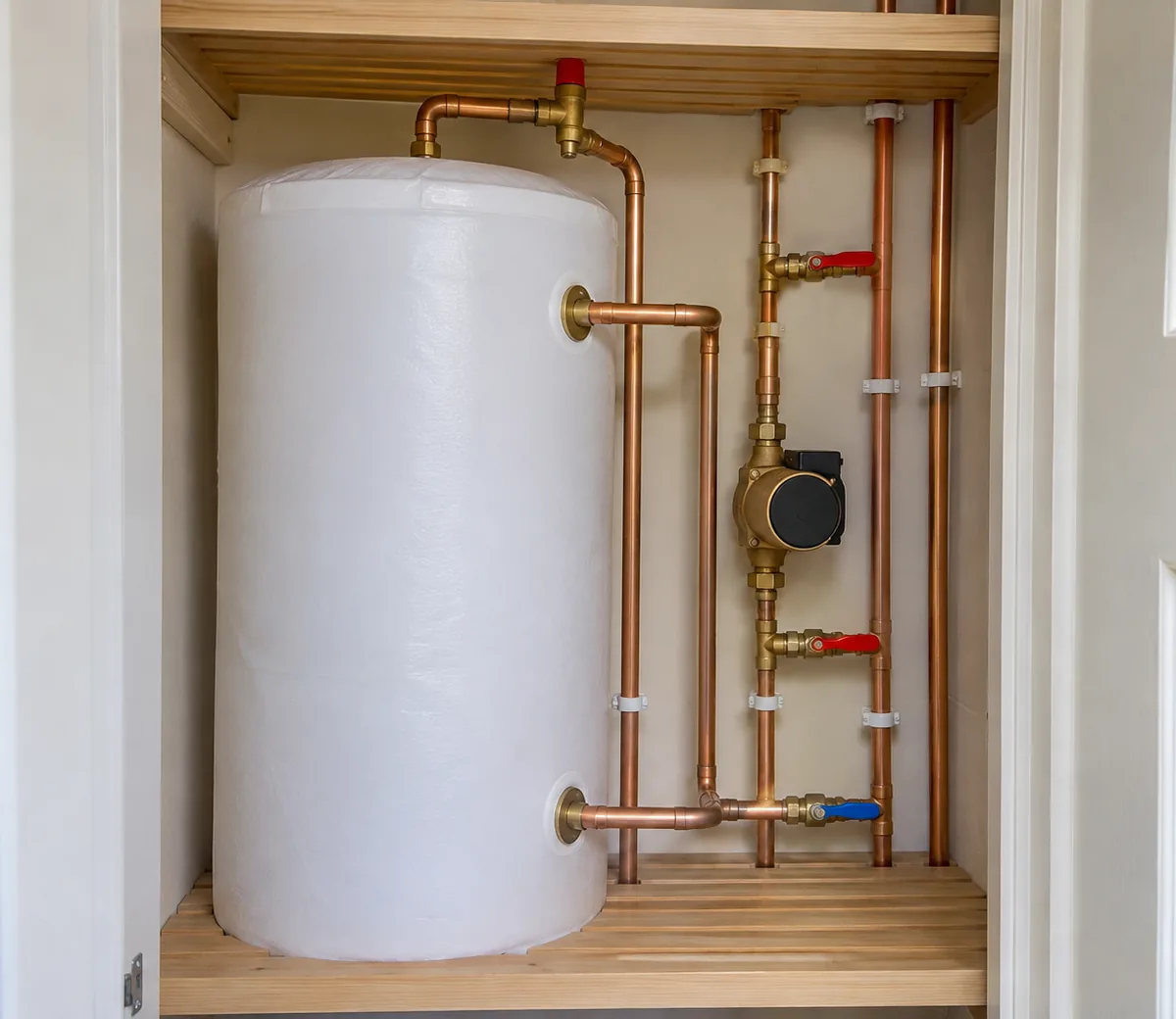
A hot water cylinder stores water heated by an immersion element, a coil connected to a heating source, or both. Diagnosis separates the stored water, the means of heating it and the controls that tell it when.
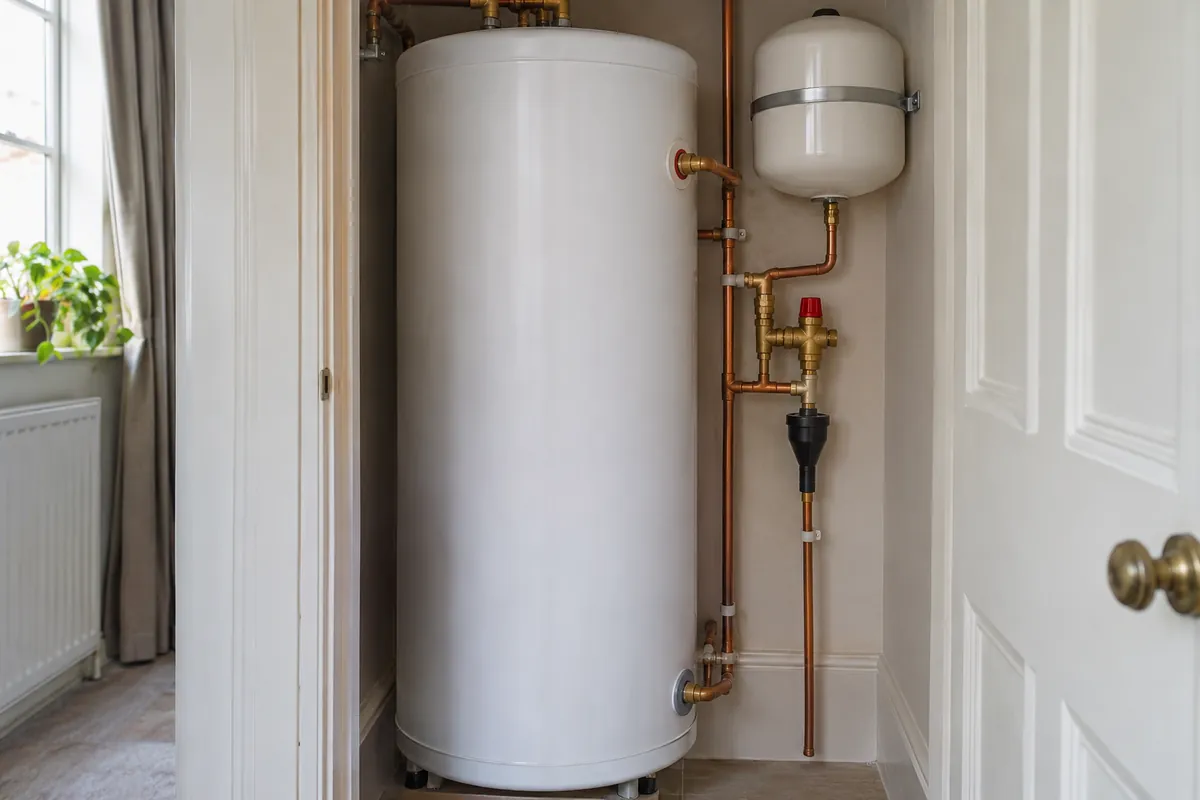
Which type is fitted
| Clue | Vented | Unvented |
|---|---|---|
| Cold supply | From a storage tank above | Directly from the main |
| Open vent pipe over a tank | Yes | No |
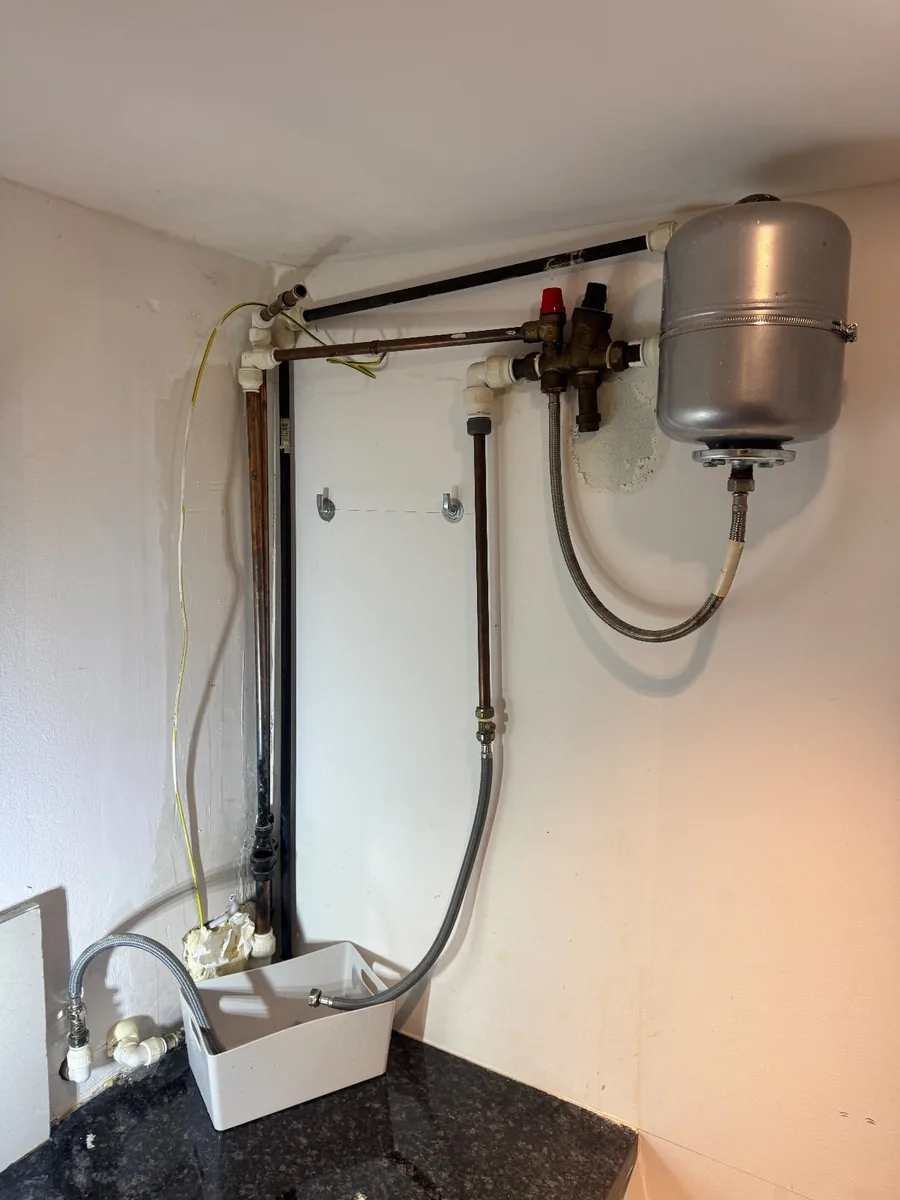
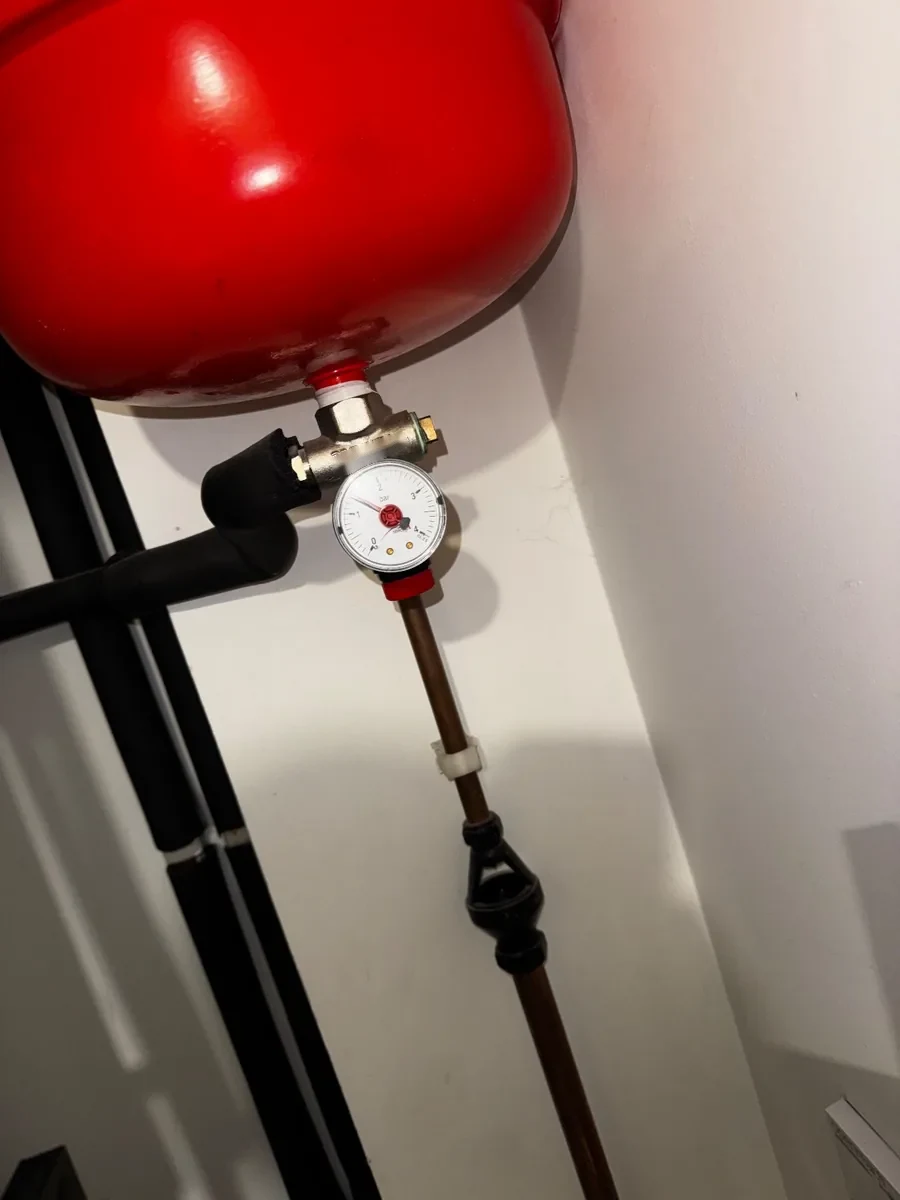
| Valve group, expansion vessel or bubble, tundish | Not usually | Yes |
| Pressure at hot taps | Set by tank height | Near mains pressure |
| Who works on it | Plumber, with an electrician for wiring | G3 qualified engineers only |
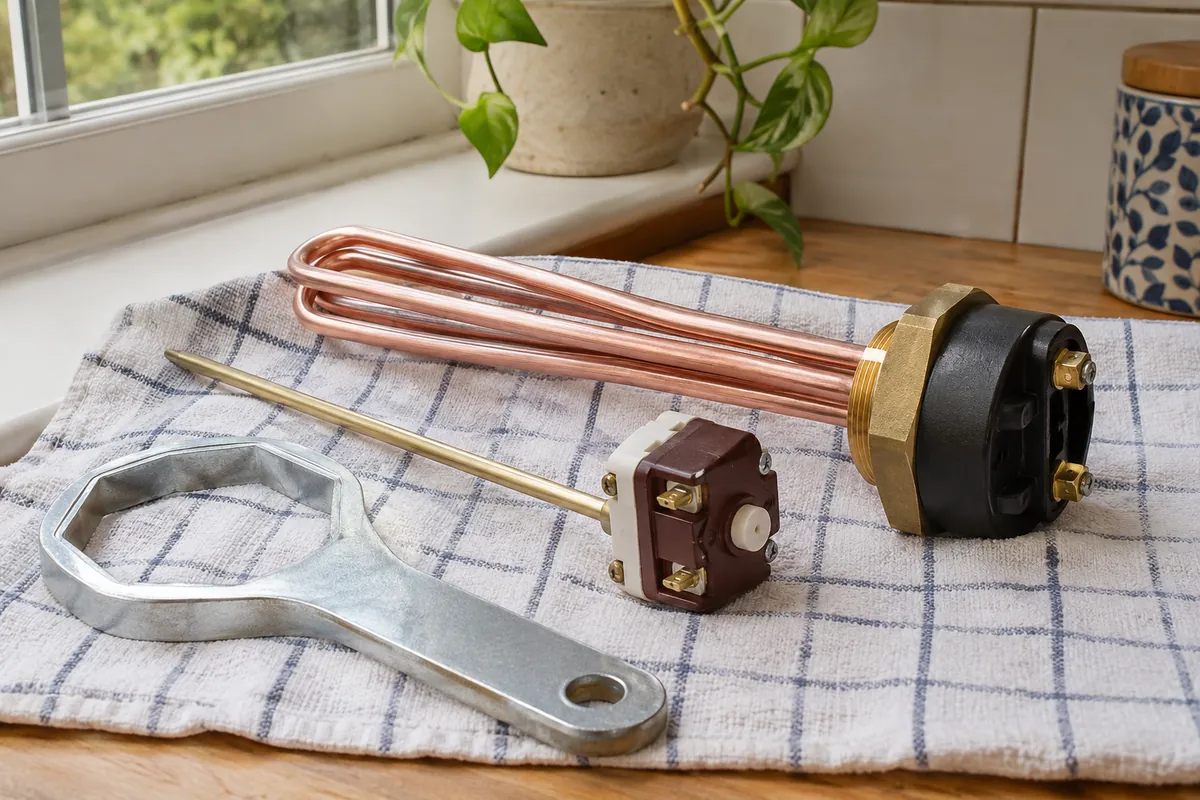
Unvented cylinders have their own safety controls and service schedule. Electric heating of either type is covered under immersion heaters. Cylinder specialists are available, and the label usually settles which kind you have.
Vented cylinder layout
A cold feed from a storage tank enters low down and pushes hot water out of the top. A vent pipe rises over that tank to relieve expansion. An indirect cylinder has an internal coil, so heating water warms the tap water without mixing with it. A pressurised cylinder fed from the mains has safety controls of a different kind and must be identified before any work is considered; Approved Document G sets out the requirements for hot water storage safety.
Fault finding
| Symptom | Possible cause |
|---|---|
| No hot flow at all | Closed cold feed, empty tank, airlock |
| Hot water runs out quickly | Thermostat, scale, stratification, demand |
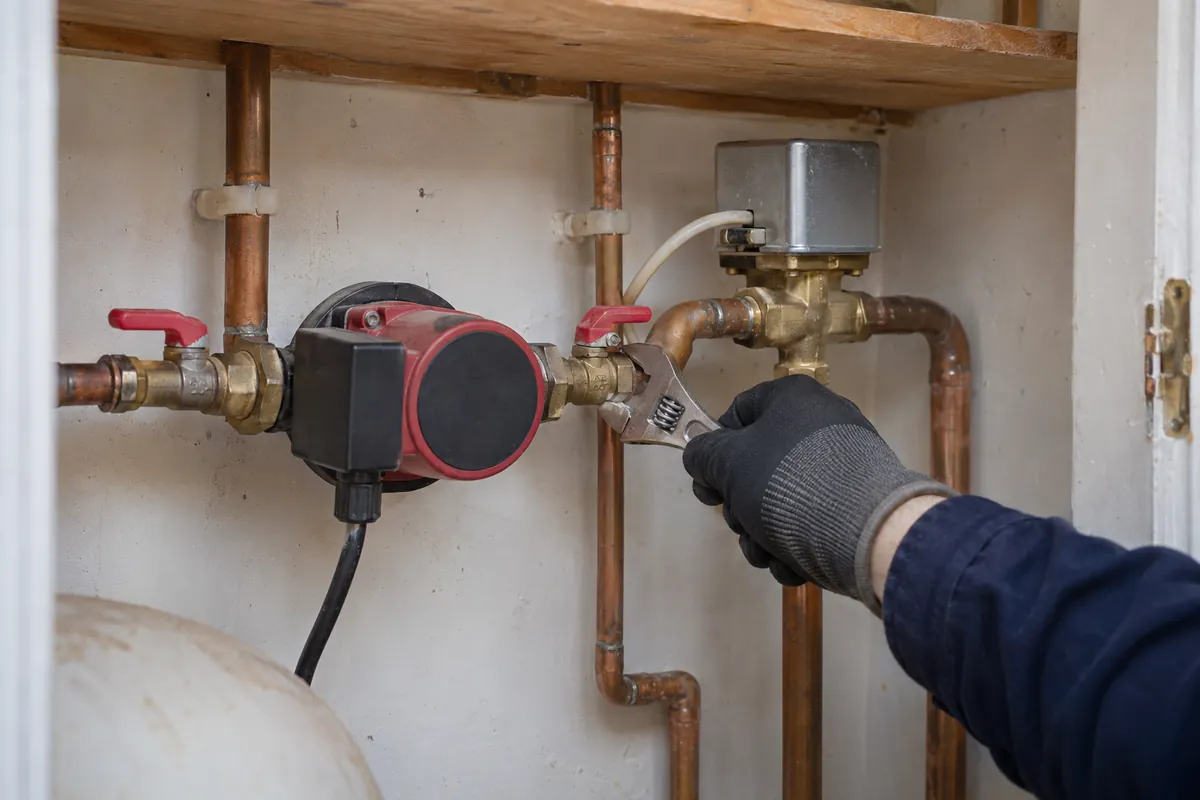
| Lukewarm from heating but fine on immersion | Valve, pump or coil circuit |
| Water from the vent into the tank | Overheating or pumping over |
| Damp at the base | Fitting leak or corroded shell |
Stop heating the water and get the fault checked if you see boiling noises, steam or scalding water from the vent. Immersion elements, thermostats and wiring are electrical items for a competent electrician. Where the coil is not being heated, the cause may be in the heating circuit or the boiler, which on the gas side is restricted to Gas Safe registered engineers.
Replacement
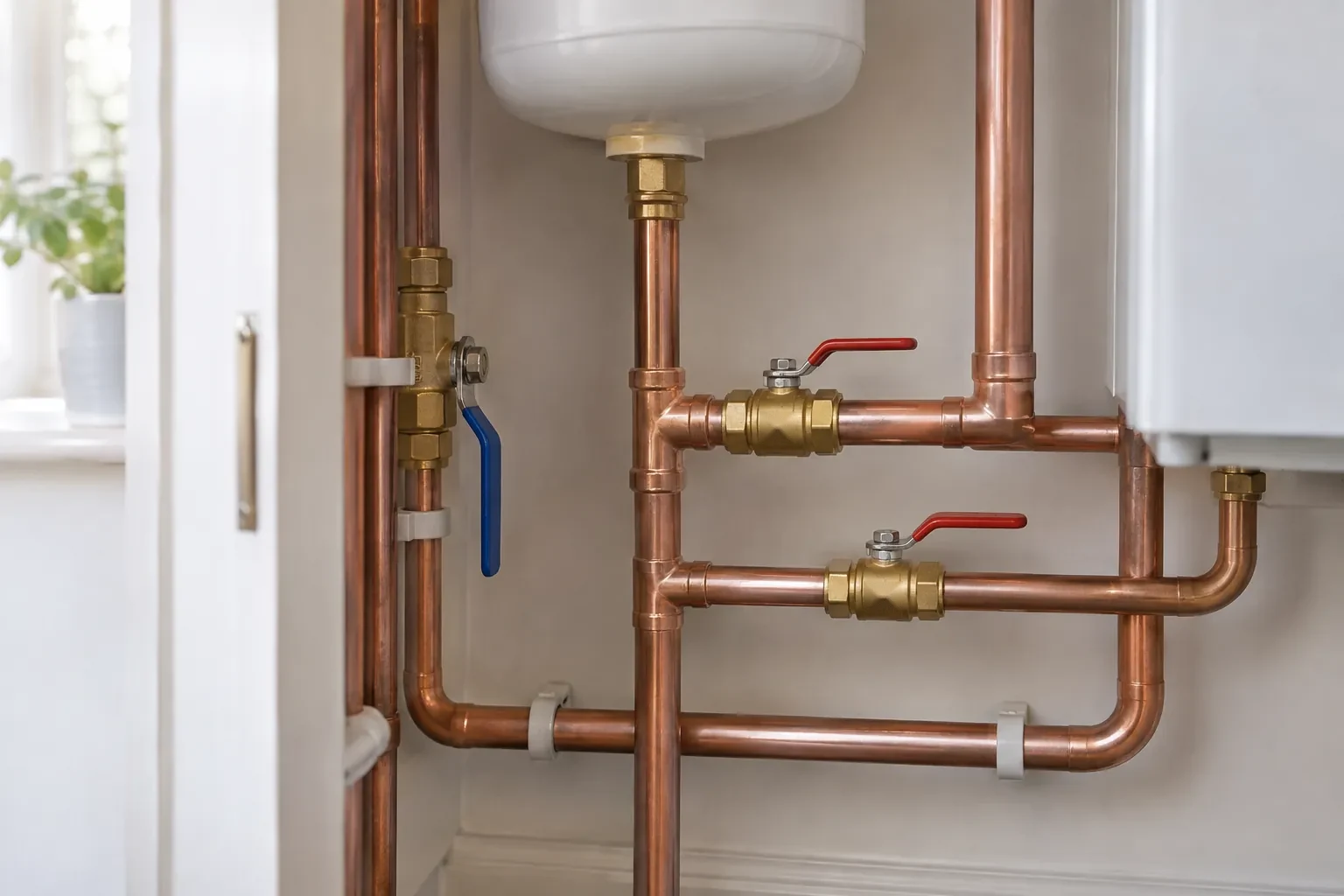
Existing connections, height, diameter, floor strength and cupboard access are measured, since a new cylinder often has pipe positions in different places. The heating source and its electrics are isolated, the cold feed shut, and both the cylinder and, where needed, the coil circuit drained. The old unit is removed, the new one set level on a sound base, and pipes remade with unions or joints that allow later service. Insulation on the cylinder and nearby pipes is restored. A drain valve at a low point makes future work far easier.
Checks after refilling
- Open hot taps while filling until water runs without spitting.
- Inspect each connection cold.
- Confirm the vent pipe terminates correctly over the tank and is unobstructed.
- Check the float level in the tank leaves space for expansion.
- Heat the water and inspect again.
- Confirm the thermostat stops heating and temperature at taps is as intended.
Heat loss and recovery
Poor hot water is sometimes a matter of capacity or insulation instead of a failed part. Compare how long the cylinder takes to recover with how quickly it is drawn down, and note whether stored heat disappears overnight. A hot pipe leaving the top can lose heat steadily if left bare. Scale on an immersion element or coil slows heating in hard water areas and may show as new noise during the heating period.
What to send
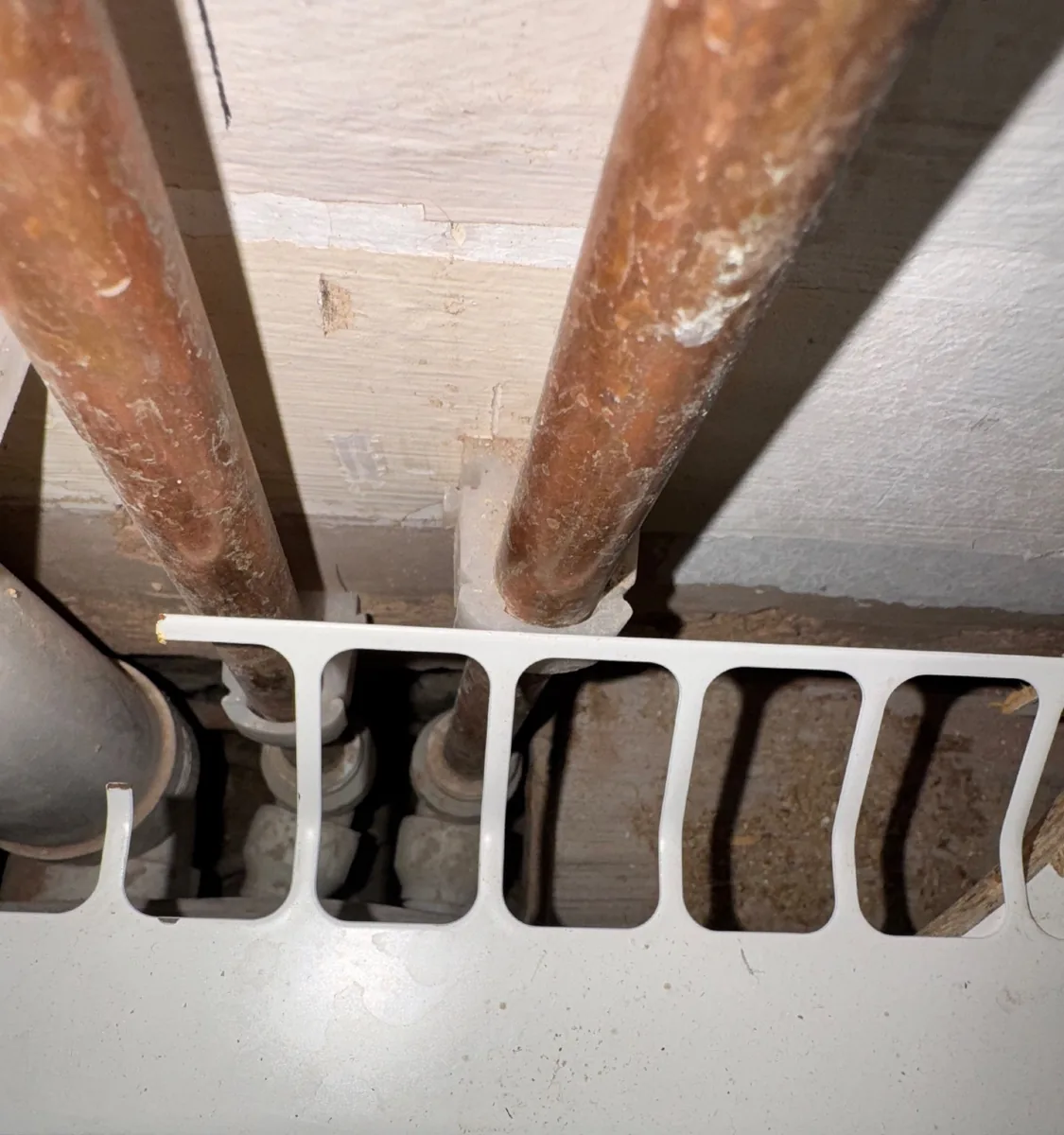
A photograph of the whole cylinder, its label, the tank above if accessible and any damp. State how it is heated and send this through the contact form.
Billing for this work
| Time | Rate |
|---|---|
| Weekday, 1 hour minimum | £110 per hour |
| Evening or weekend | from £140 per hour |
24/7 emergency visits: £110 an hour plus a £60 call-out on weekdays in the daytime, from £140 an hour plus £60 in the evening or at weekends. Booked jobs carry no call-out fee. Materials are extra and agreed first. VAT is not added. Quotation free. Rates verified 28 November 2026: billing detail.
Who does unvented work
Allocation rule: unvented units go to G3 qualified engineers only.
Related reading
Fittings and tanks around a cylinder include copper tube grades, plastic pipe bend radius, cold pipes that run warm, storage tank sizing, feed and expansion tanks and gravity pressure figures.
At a glance
- Service
- Hot water cylinders
- Area
- All of Greater London (service-area business, no showroom)
- Quote
- Free. Get the price in writing before work starts
- Who does it
- Unvented work only by G3 qualified engineers
- Phone
- 020 3961 8088
Questions
How can I tell whether a cylinder is vented?
Trace the feed. A cold cistern above the cylinder, with an open vent looping back to it, indicates vented. Unvented units run off the main and show safety valves plus discharge pipework.
Why is water lukewarm from the heating but hot on the immersion?
That pattern points to the heating side, such as a valve, the pump or the coil circuit.
What is measured before a cylinder is replaced?
The existing connections, height, diameter, floor strength and cupboard access, because a new cylinder often has its pipe positions in different places.