Proper Plumbing London connects washing machines, dishwashers and water-fed fridges across Greater London. Weekday time is £110 an hour with a one hour minimum, parts are extra, and the quote is free.
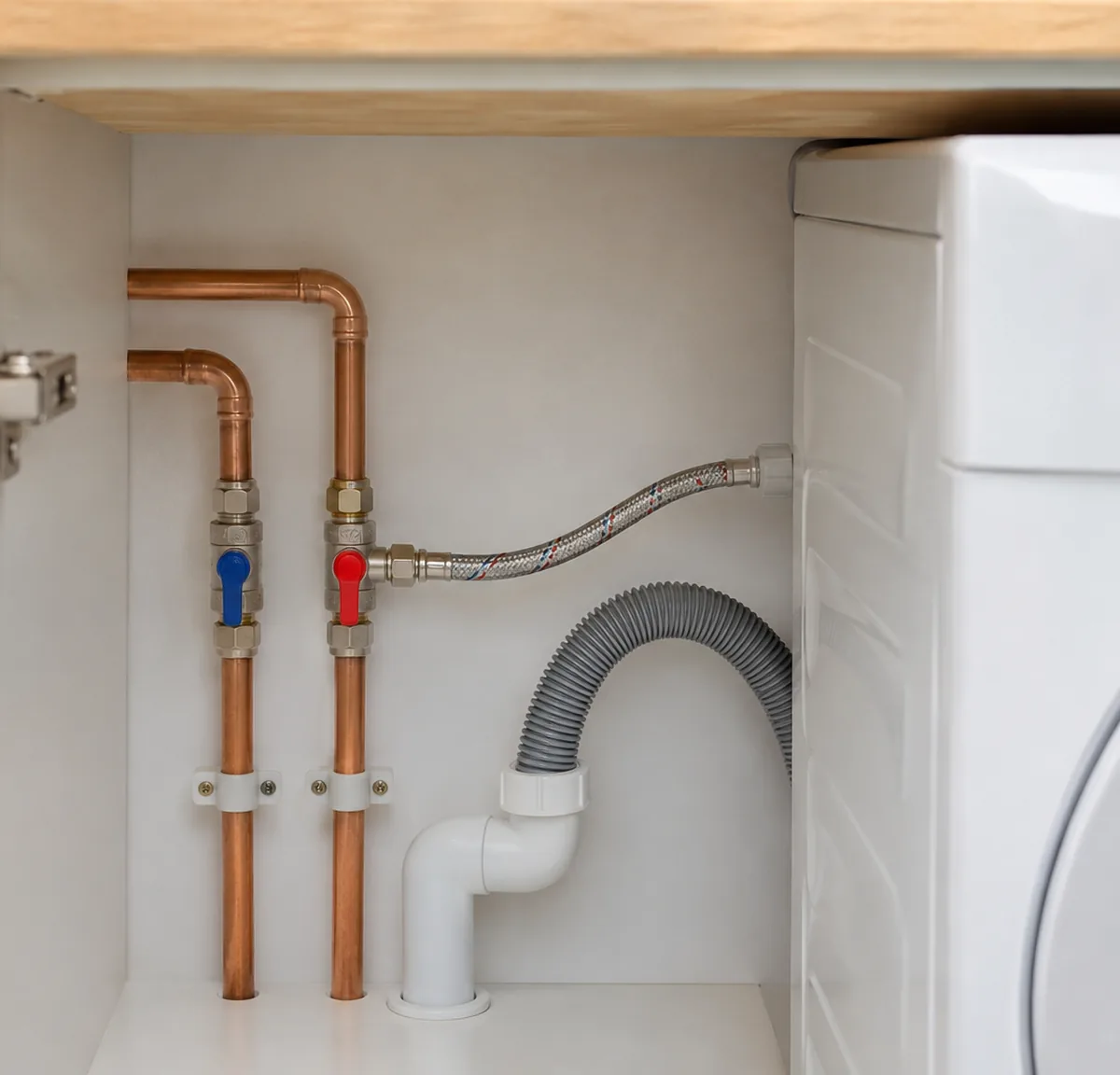
An appliance connection has a water inlet with its own valve, usually a waste point, and a power supply handled separately. Most trouble comes from hose routing, a missing service valve or a waste connection that lets dirty water travel back.
Before connecting
Read the installation sheet for inlet type, pressure range, hose reach, drain height and any limit on extending hoses. Confirm the position allows the appliance to slide in without crushing pipes. Check that existing valves close fully and that threads are sound.
By appliance
| Appliance | Water | Waste |
|---|---|---|
| Washing machine | Cold, sometimes hot and cold | Standpipe or trap spigot |
| Dishwasher | Usually cold, per maker | Spigot or standpipe, high loop where specified |
| Fridge or freezer with dispenser | Narrow cold feed, often filtered | Normally none |
| Condensing tumble dryer | None | Optional drain hose |
The work
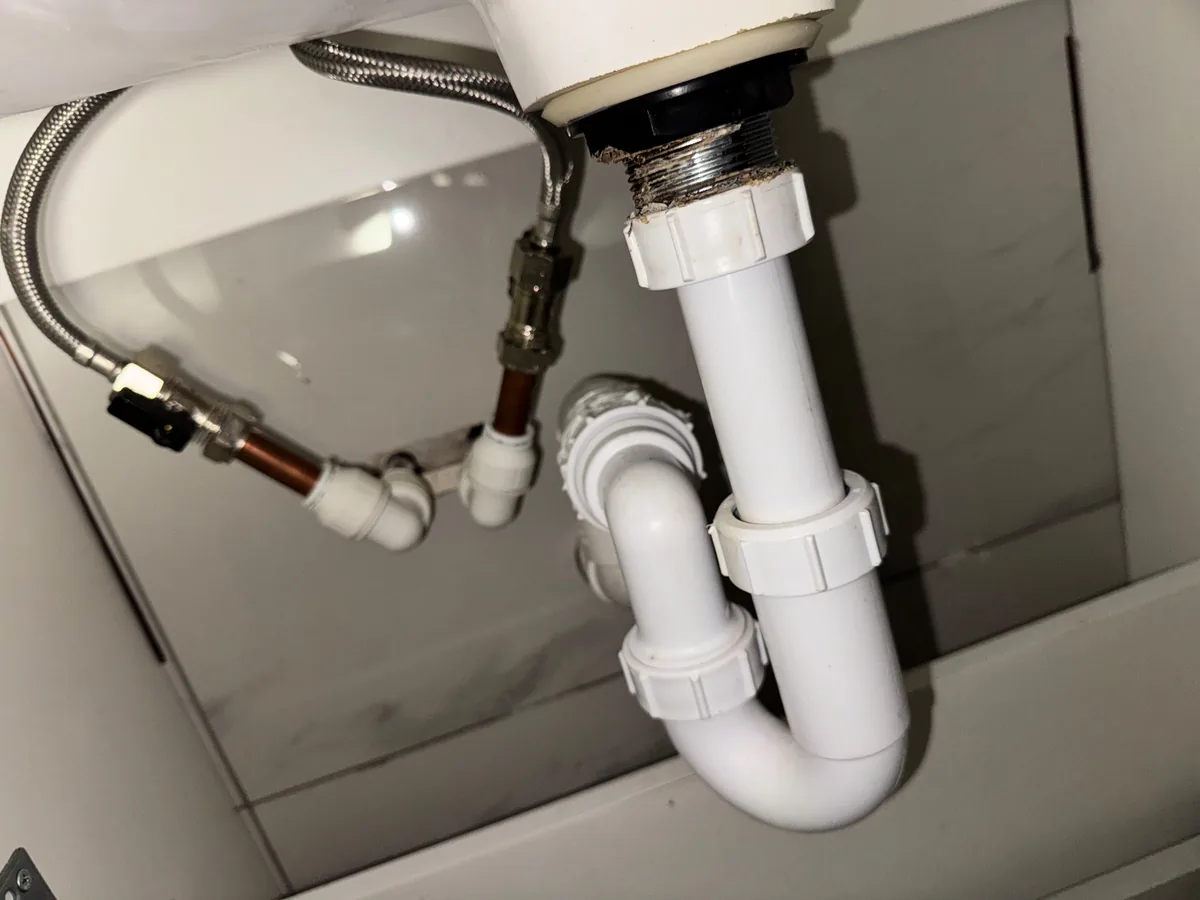
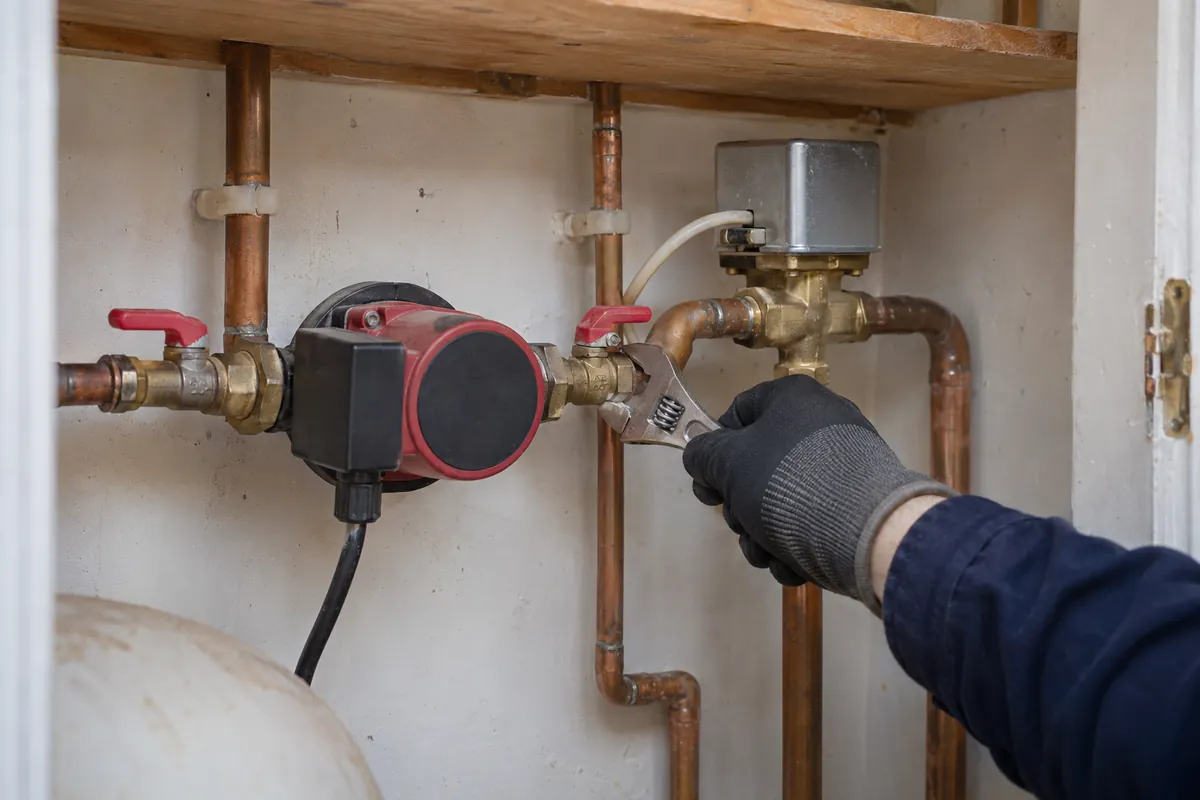
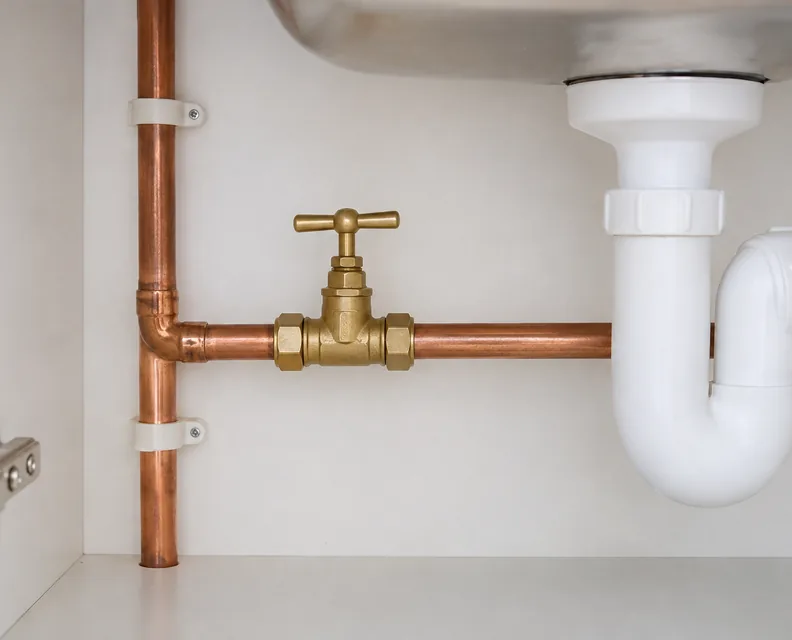
- Isolate and fit or renew a service valve in a reachable place.
- Remove transit bolts and blanking pieces where the appliance requires it, including the knock-out inside a new trap spigot.
- Fit sound washers and hand-tighten hose unions as the maker directs.
- Secure the drain hose at the stated height so it cannot jump out or siphon.
- Level the appliance and push it back while watching both hoses.
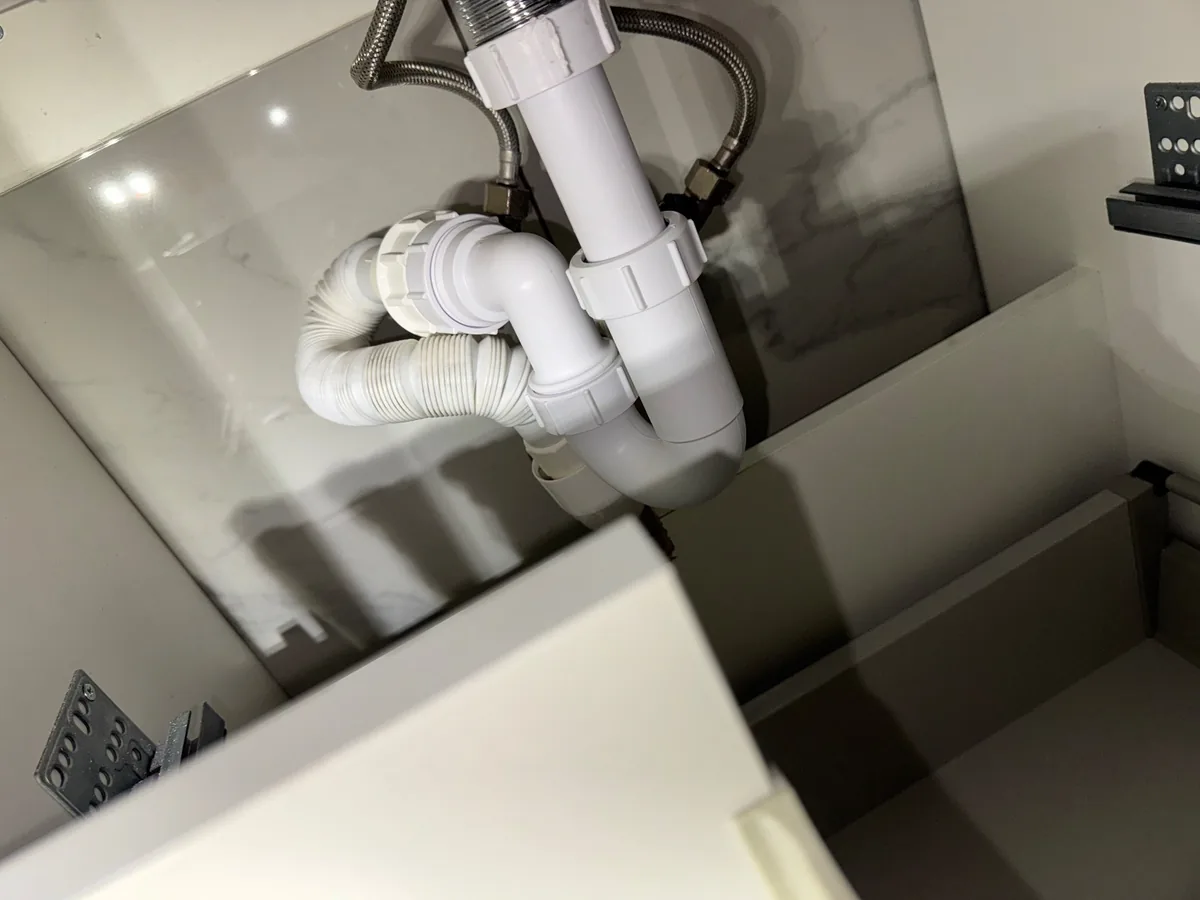
A drain hose pushed far down a standpipe and sealed tight can siphon water out of the machine. Too low a connection can let sink water drain into it.
Appliances must not contaminate the water supply. Schedule 2 of the Water Fittings Regulations requires backflow protection to suit the risk, so check in the installation sheet what is built in and what must be added. Narrow fridge feeds deserve care: a self-piercing valve is a weak choice compared with a proper tee and service valve, as explained under self-cutting tap valves.
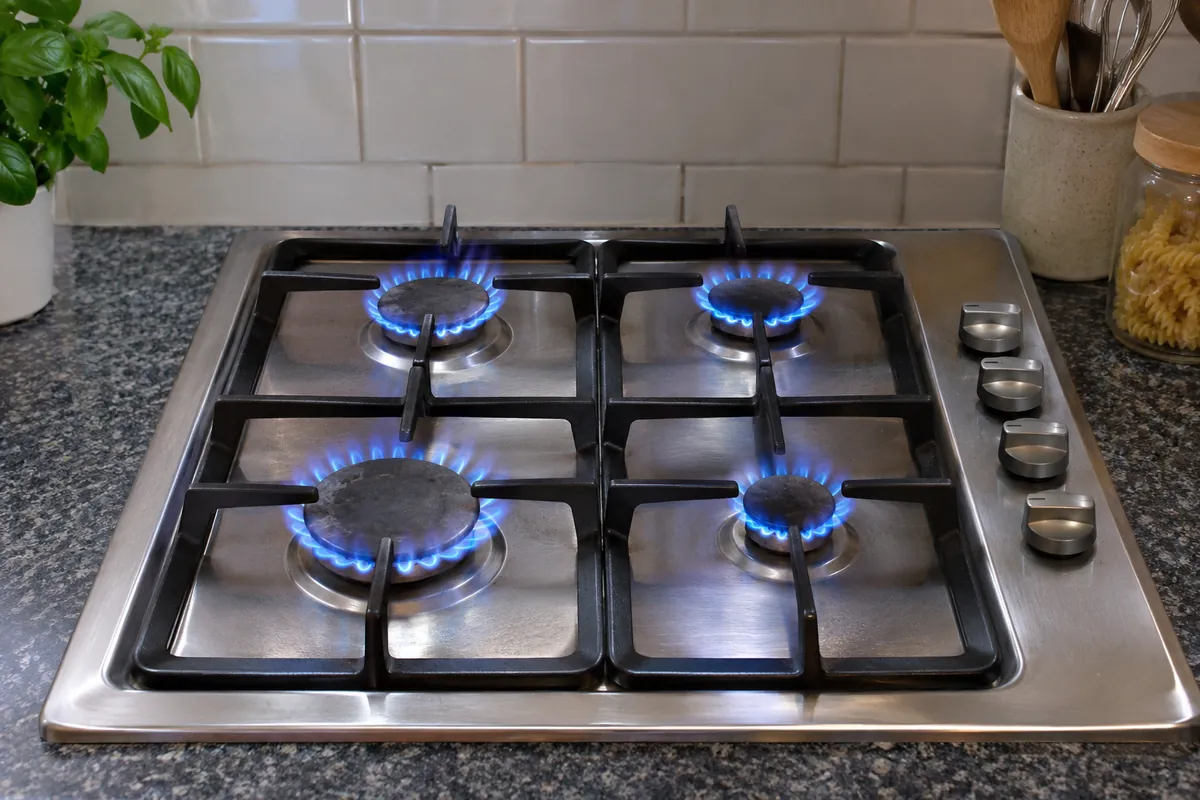
Integrated and gas appliances differ. Carpentry for door panels is separate, and a gas cooker or hob connection or gas dryer connection is restricted to Gas Safe registered engineers.
Testing
- Open the valve and inspect inlet joints before power is used
- Run a short cycle with the appliance pulled forward
- Watch filling, then the pump-out surge at the waste point
- Check for vibration pulling on hoses during spin
- Flush a new filter feed as instructed
- Floor inspected again with the machine pushed home
Faults after installation
A machine that fills slowly may have a kinked hose, a part-closed valve or a clogged inlet mesh. Water left in the drum or tub points to the drain hose, the filter or the shared sink branch before the pump is blamed. Smells from an idle appliance often mean waste water is sitting in a hose that dips below its connection. A flood protection hose that has tripped will stop the supply, and is replaced once the leak that triggered it has been found.
Billing for this work
| Time | Rate |
|---|---|
| Weekday, 1 hour minimum | £110 per hour |
| Evening or weekend | from £140 per hour |
24/7 emergency visits: £110 an hour plus a £60 call-out on weekdays in the daytime, from £140 an hour plus £60 in the evening or at weekends. Booked jobs carry no call-out fee. Materials are extra and agreed first. VAT is not added. Quotation free. Rates verified 28 November 2026: billing detail.
What to send
The model number, a photograph of the space showing valves and waste, and the distance from appliance to sink. Send it with the contact form.
Related reading
Valve and condensate details sit under a washing machine that will not fill, condensate connections and pipe interrupters.
At a glance
- Service
- Appliance connections
- Area
- All of Greater London (service-area business, no showroom)
- Quote
- Free. Get the price in writing before work starts
- Phone
- 020 3961 8088
Questions
Why does the drain hose height matter?
Use the manufacturer's figure. Too low a connection allows sink waste to run back into the machine; a sealed hose pushed far down a standpipe risks siphoning it out.
What should I check before a new appliance is connected?
The installation sheet: inlet type, pressure range, hose reach, drain height and any limit on extending hoses. Existing valves should close fully and the appliance should slide in without crushing pipes.
Why is a machine slow to fill after fitting?
Common causes are a kinked hose, a part-closed valve or a clogged inlet mesh.