Blocked drains and gullies in Greater London can be booked with Proper Plumbing London: £110 an hour on weekdays (one hour minimum), no call-out fee on a booked visit and a free quote first.
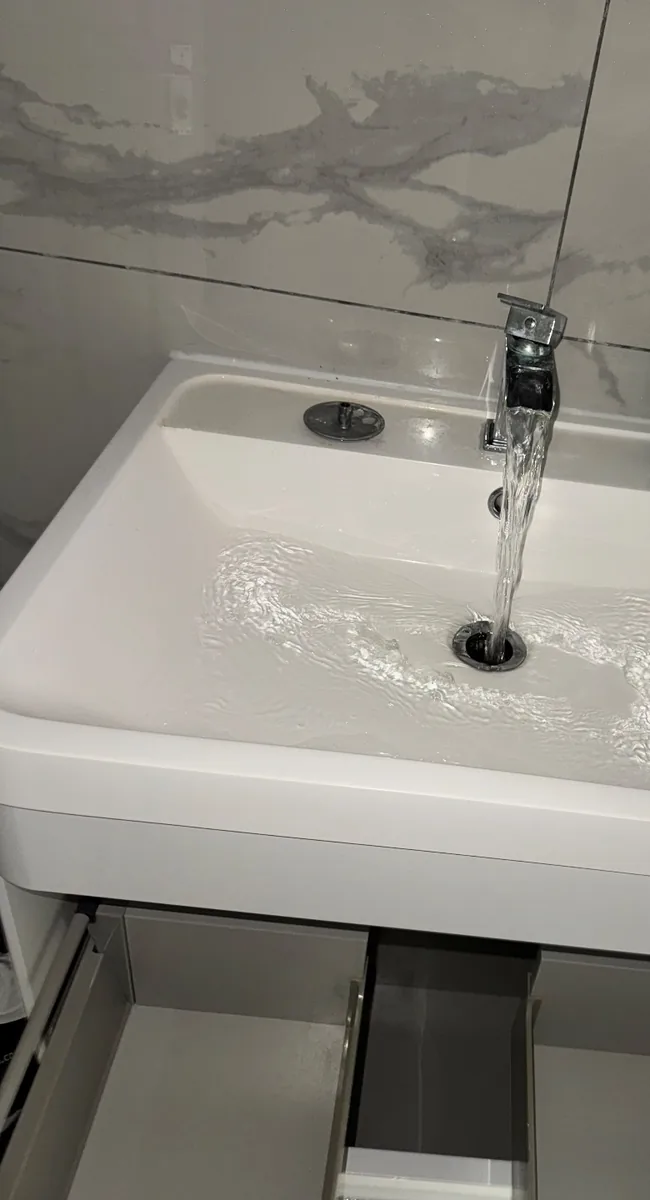
A hold-up in a drain affects more than one fitting, or shows as water standing in a gully or inspection chamber. The method is to find the last point where water is flowing and the first where it is held, then clear the length between them.
Who may be responsible
Two tests settle most cases: who the pipe serves and where it lies. A private run, one property and inside the boundary, normally falls to the owner. Sharing or crossing the boundary often makes it a water company sewer, so ask your sewerage company before funding any work.
Locating the blockage
Lift covers only if it can be done safely, and never enter a chamber.
| Chamber condition | Reading |
|---|---|
| Full | Blockage is downstream of it |
| Empty, upstream fitting backing up | Blockage is upstream |
| Slow trickle with debris on the benching | Partial obstruction nearby |
| Full only during heavy rain | Capacity or surface water issue |
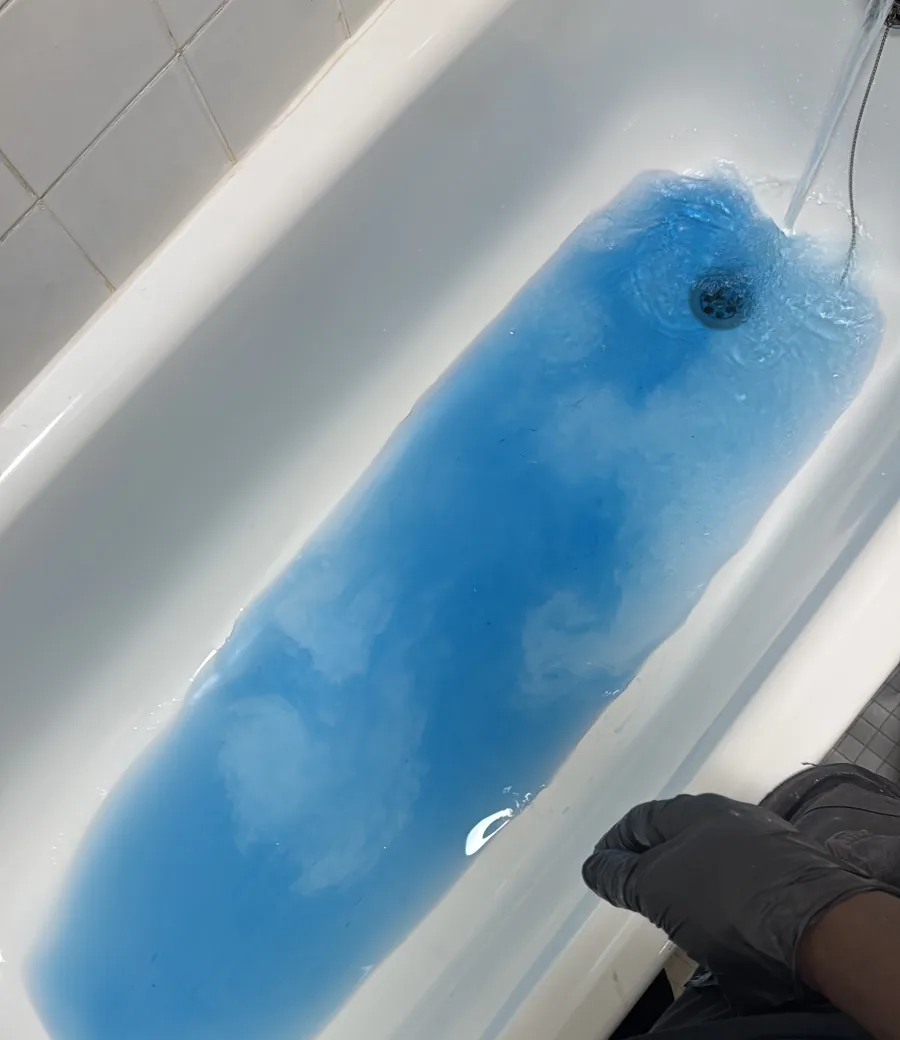
Foul water and rainwater may run separately or together. Dye in one fitting at a time confirms which pipe reaches which chamber.
Clearing
- Rods push or break a discrete obstruction from a chamber. They are turned one way only so the sections do not unscrew.
- Mechanical spring cleaners follow bends in smaller pipes.
- Water jetting scours grease, silt and scale along the pipe wall. Pressure and nozzle must suit the pipe material and condition.
- Gully clearing removes silt and leaves from the trap by hand.
Jetting a cracked or displaced pipe can worsen the defect, so condition matters before force.
Camera inspection
After water is moving, a camera can show roots, offsets, fractures, deformation or a belly that holds water. It separates a one-off obstruction from a structural fault. If repair is proposed, ask to see the footage and the distance reading that places the defect. Options range from a local excavation to lining, depending on the damage and access.
Approved Document H sets out guidance on drain access, gradients and construction in England. Building over or near a public sewer has its own approval process with the water company.
Proving the repair
- Run a sustained flow from the furthest fitting.
- Watch each chamber downstream for steady passage with nothing rising behind.
- Flush paper through and confirm it arrives.
- Check that gully seals refill and hold.
- Reseat covers properly so they are safe to walk on and sealed against odour.
When blockages keep returning
A drain that blocks again after a thorough clearance usually has something holding debris: a root mass, a displaced joint, a sharp junction or a length with too little fall. Record the dates, weather and which fittings backed up each time. That history, set against camera footage, shows whether maintenance cleaning is enough or whether a defect needs repair. It also helps establish whether the length concerned is private or shared.
Billing for this work
| Time | Rate |
|---|---|
| Weekday, 1 hour minimum | £110 per hour |
| Evening or weekend | from £140 per hour |
24/7 emergency visits: £110 an hour plus a £60 call-out on weekdays in the daytime, from £140 an hour plus £60 in the evening or at weekends. Booked jobs carry no call-out fee. Materials are extra and agreed first. VAT is not added. Quotation free. Rates verified 28 November 2026: billing detail.
Information that helps
Note which fittings back up, where covers are, whether neighbours are affected and what happened during rain. Open-chamber pictures help by email, provided lifting the cover was safe. Text belongs in the contact form, ahead of any email.
Related reading
Drainage layout questions continue in wastes that discharge into a gully, misconnected surface water drains, rodding access, Approved Document H and external soil stacks on older houses.
At a glance
- Service
- Blocked drains
- Area
- All of Greater London (service-area business, no showroom)
- Quote
- Free. Get the price in writing before work starts
- Phone
- 020 3961 8088
Questions
Is a camera inspection needed every time?
Not always. It is most useful when a blockage returns or a defect is suspected, because clearing alone does not show the condition of the pipe.
Whose drain is it when a run blocks?
Usually the owner's, where the pipe serves one property and lies inside its boundary. Past the boundary, or once shared, it is frequently a public sewer under the water company; confirm before paying.
Why does a drain block again after clearing?
Something is usually holding debris, such as a root mass, a displaced joint or a sharp junction. A camera inspection can show which.